Who is Stephen Miller? Trump’s new chief of staff is architect of ICE cr…
Immigration hardliner Stephen Miller is set to replace Susie Wiles as White House chief of staff, signaling a confrontational strategy following midterm losses.
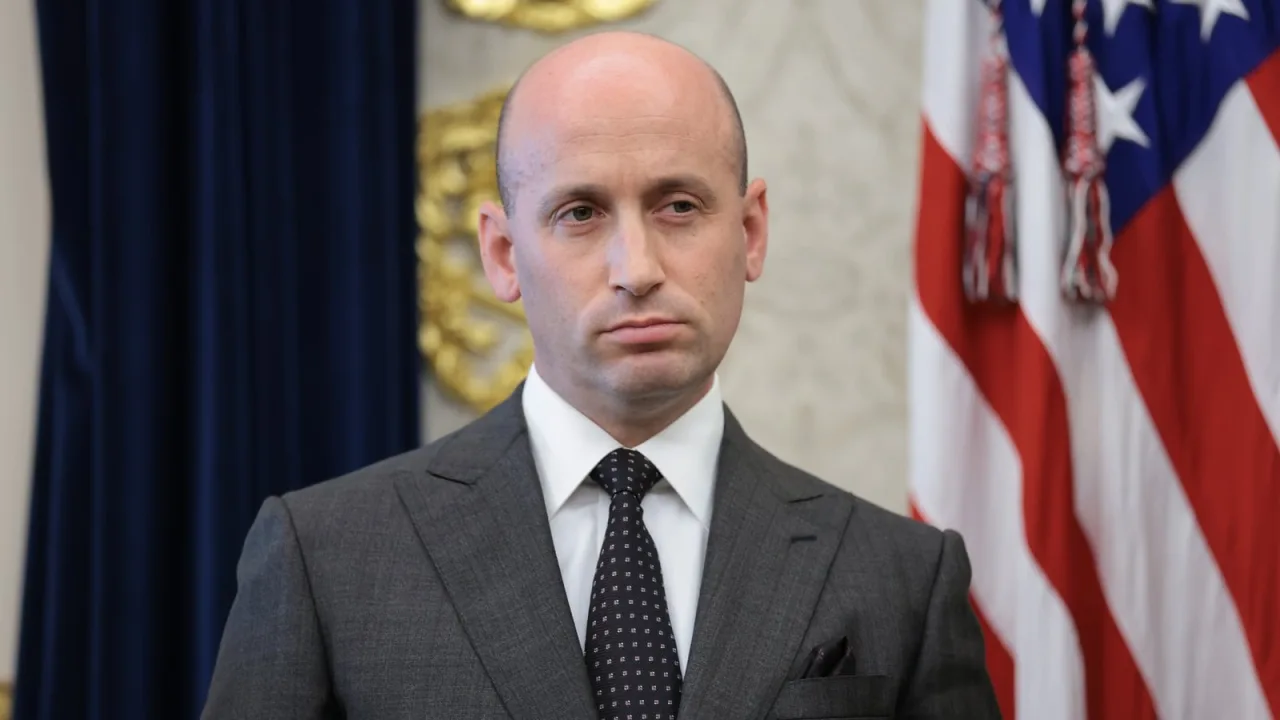
Who is Stephen Miller? Trump’s new chief of staff is architect of ICE crackdown and Middle East hawk
Ordinary readers watching the White House prepare for a newly empowered, Democratic-led Congress will soon face a sharper, more confrontational administration, as immigration hardliner Stephen Miller takes over as President Donald Trump's chief of staff on Monday, November 9. Miller replaces Susie Wiles, who served from day one as the nation's first female chief of staff and built a reputation for reducing staff turnover and containing press leaks. Announcing the shift on his Truth Social platform, President Trump said, I am pleased to announce that Mr. Stephen Miller, the current Deputy Chief of Staff of the Trump Administration, and one of my most trusted advisors, will become the Chief of Staff
and told reporters, Stephen's been with me since the beginning. He gets it.
Wiles will transition to Trump's political operation, while Miller steps into the most powerful gatekeeper role in Washington after a bruising midterm election where Republicans lost control of both the House of Representatives and the Senate.
The elevation of Miller signals that the president is choosing to double down on his cornerstone domestic policies rather than moderate in the face of congressional losses. During his 2017-2021 term, Trump burned through four chiefs of staff as they struggled to rein in his unpredictable style. Wiles brought a measure of disciplined management to the second term, but her departure leaves behind an administration whose signature immigration crackdown has weighed heavily on public opinion. Just 36 percent of respondents to a Reuters/Ipsos poll completed early this week approve of the enforcement push, while 54 percent disapprove. That leaves the White House reliant on executive power and loyal gatekeepers as congressional investigations loom.
What does Stephen Miller's record reveal about his ideology and foreign policy stance?
At 41 years old, Miller has been a fixture in Trump's inner circle for more than a decade, moving from a combative conservative columnist at Duke University's student newspaper and a congressional aide in the 2010s to a speechwriter and adviser on the 2016 campaign. Born in California in 1985 to a Jewish family, he emerged as an early advocate for restricting immigration before that position gained mainstream traction within the Republican Party, developing ties with right-wing activist David Horowitz at Duke where he opposed Palestinian solidarity activism. In Trump's second term, he has served as deputy chief of staff and homeland security adviser, wielding outsize influence over a sweeping domestic agenda that included the dismissal of tens of thousands of civil servants in 2025 as part of an effort to remake the federal bureaucracy.
His promotion also raises questions about American policy towards the Middle East. Miller is a staunch Israel supporter and Iran hawk who helped devise the 2017 Muslim travel ban, which initially restricted entry into the US from seven predominantly Muslim countries before a revised version was upheld by the Supreme Court in 2018. Journalist Jean Guerrero, author of Hatemonger, has argued that Miller's interpretation of Zionism is connected to his broader nationalist ideology, describing his outlook in a 2020 interview with the Jewish Telegraphic Agency as disregarding Palestinian national claims and meaningful negotiations. Miller has defended visa restrictions on Palestinian officials seeking to attend the United Nations and efforts to deport foreign nationals accused of supporting Hamas amid a wider crackdown affecting pro Palestinian student activists. Furthermore, he has publicly defended Trump's military campaign against Iran, including joint American Israeli strikes launched in February 2026, claiming during the conflict's opening weeks that the attacks had devastated Iran's leadership and military capabilities while praising Trump's willingness to use force, though he also suggested in July that Iranian officials were seeking a negotiated settlement.
While the chief of staff position carries no independent constitutional authority over foreign policy, its occupant can influence which proposals reach the president and how decisions are implemented. Miller's past associations include connections with figures associated with white nationalism, including Richard Spencer and Peter Brimelow, whom he encountered during his university years. In 2019, the Southern Poverty Law Center published an investigation into more than 900 emails he sent to Breitbart editors, revealing that he promoted white nationalist literature, including material from the extremist website VDARE and the racist novel The Camp of the Saints. Following his speech at Charlie Kirk's memorial in September 2025, commentators compared Miller's rhetoric to Nazi propagandist Joseph Goebbels, citing his portrayal of Kirk as a political martyr, his declaration that We are the storm
and his depiction of opponents as forces of degenerate evil.
How does the new chief of staff compare to his predecessor?
The transition from Wiles to Miller marks a fundamental shift in White House management and political strategy. Wiles, 69, operated as a strict manager who sought to smooth over internal frictions and maintain administrative discipline. In a Vanity Fair profile last year, she remarked that Trump has an alcoholic's personality, adding, I make a speciality of it.
Having been diagnosed with breast cancer earlier this year, she announced she was cancer free this fall before confirming her departure in a statement on X, where she called serving the president the honor of a lifetime and highlighted border security, tax cuts, and economic policies.
I'm so proud to have been a part of what we've accomplished together from securing our border and cutting taxes to strengthening our economy and putting America First. While my role may be changing, my commitment to the President and the mission never will.
Susie Wiles, White House Chief of Staff, via X
By contrast, Miller is known for his rhetorical pugnacity, sharp suits, sunglasses, and a combative style that has earned him both fervent loyalty from the MAGA movement and fierce condemnation from opponents. Former congressman Matt Gaetz celebrated the appointment by declaring on social media, It's Miller time.
Marc Short, who served as chief of staff to then-Vice President Mike Pence during Trump's first term, observed that in Miller, Trump is getting someone who is wed to him who is willing to battle Congress over immigration and investigations, adding that the choice would not suggest that there is high expectation for bipartisan legislation.
What do critics and allies say about the appointment?
The reaction to Miller's promotion exposes the deepening polarization in Washington as Democrats prepare to take control of both chambers of Congress. Incoming House Majority Leader Hakeem Jeffries issued a scathing condemnation of the incoming chief of staff:
Stephen Miller is a dangerous xenophobe and reckless extremist who has American blood on his hands. His presence in government should be eradicated like a malignant tumor. Fire him today.
Hakeem Jeffries, House Majority Leader, via NPR
Senate Minority Leader Chuck Schumer echoed those warnings, stating, Donald Trump learned nothing from his historic defeat. Stephen Miller is the architect of the most barbaric, inhumane policies of this administration. Trump couldn't have made a worse choice. Our Democratic majorities will fight him every step of the way.
White House officials, however, maintain that the appointment demonstrates Trump's refusal to retreat from his core platform. One official told Reuters that Miller's new post signals that Trump has no intention of rethinking his policies and is instead rewarding his most loyal aides. This defiant posture sets the stage for high-stakes collisions over federal spending, executive appointments, and congressional subpoenas as the administration enters the second half of its term.
What timeline of events led to this leadership shakeup?
- January 2025: U.S. military operations in Venezuela lead to the capture of former president Nicolas Maduro, after which Miller declares the U.S. is running Venezuela; shortly after, a Border Patrol agent fatally shoots U.S. citizen Alex Pretti in Minneapolis, prompting Miller to label him a domestic terrorist on social media.
- February 2025: Miller defends Trump's ultimatum to Hamas over the release of Israeli hostages, and joint American Israeli strikes are launched against Iran in February 2026.
- October 2025: Miller advocates for aggressive military actions against suspected drug smugglers, stating,
These are terrorists and they're going to be killed.
- Fall 2026: Susie Wiles is announced as cancer-free following her breast cancer diagnosis earlier in the year.
- November 2026: Republicans suffer a major defeat in the midterm elections, losing control of both the House of Representatives and the Senate to the Democrats.
- November 6, 2026: President Donald Trump announces on Truth Social that Stephen Miller will replace Susie Wiles as White House chief of staff.
What comes next for the Trump administration and Congress?
The immediate test for the new White House structure arrives on Monday, November 9, when Stephen Miller officially assumes the duties of chief of staff. Observers will be watching to see how the administration manages its schedule and staff interactions under a notoriously uncompromising gatekeeper, particularly as White House budget director Russell Vought and Miller have spent months preparing executive actions that the president can enact without congressional approval. For travelers, workers, and investors navigating the fallout of the immigration crackdown and regulatory battles, the appointment signals that enforcement targets and institutional clashes will remain central fixtures of federal policy.
Updated 1 time since publication; last update 9 November 2026, 17:03.