Chicago City Council group demands no tax hikes in 2027 budget
The Budget Accountability Coalition has sent a letter to Mayor Brandon Johnson outlining fiscal demands for the city's 2027 fiscal year budget.
- Headline: Chicago City Council group demands no tax hikes in 2027 budget
- Dispatch Summary: The Budget Accountability Coalition has sent a letter to Mayor Brandon Johnson outlining fiscal demands for the city's 2027 fiscal year budget.
- Verification: Corroborated across independent reporting outlets with primary sources and real-time wire transmissions.
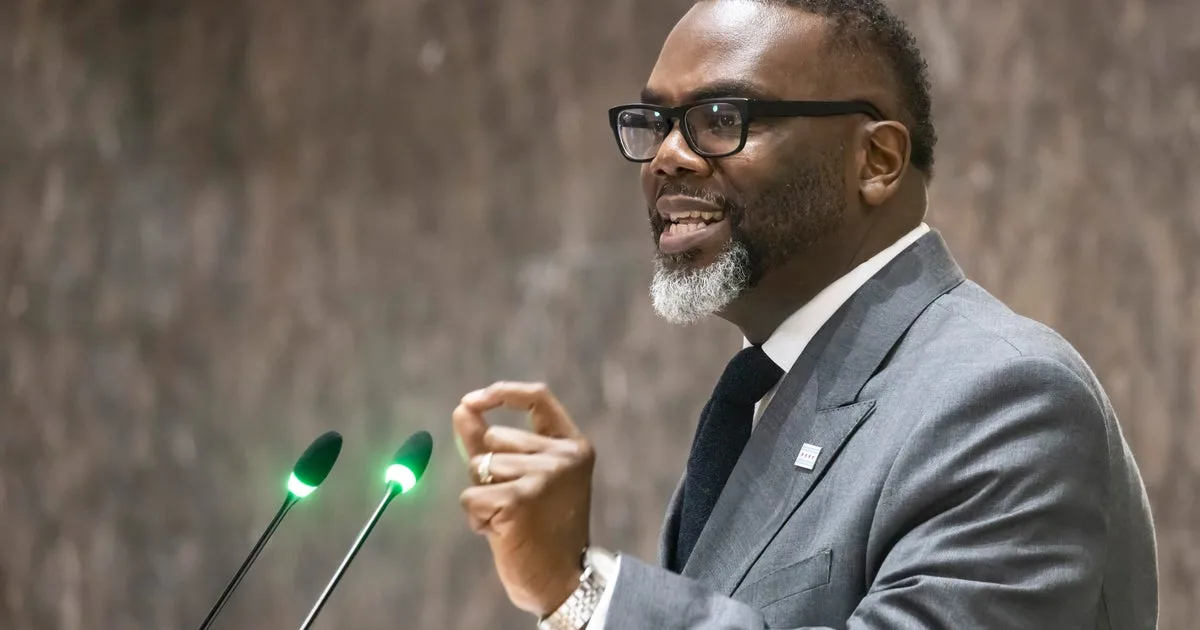
The Chicago City Council’s Budget Accountability Coalition, a group of 26 aldermen, has sent a letter to Mayor Brandon Johnson outlining their demands for the city's 2027 fiscal year budget. The group, which is the same one that torpedoed the mayor's 2026 budget, wrote that while the current budget gap forecast is lower than previously estimated, "it remains a fiscal challenge of the first order."
Chicago Council Group Outlines Fiscal Non-Negotiables
The coalition established three primary principles that function as demands for the mayor as he drafts the next fiscal year's budget, indicating they will not vote to approve a budget that includes them. First, the group called for no property tax increases, writing, "Chicago's homeowners, renters and businesses already shoulder a heavy property tax burden. Adding to it is not the way to close this gap, and we will not ask them to carry more."
Second, the group refused any head tax or "tax on job growth." Third, they demanded that the budget does not rely on "Springfield revenues that have not been approved." Instead, the coalition demands that the mayor reduce the recurring cost of city government before raising taxes or other revenues, noting that a 2025 commissioned report identified $1 billion in savings through city efficiencies.
The alders also called for clarity on whether the main deficit drivers—specifically amounts paid to settle police misconduct lawsuits—are permanent or one-time payments, and they demanded that "one-time money" not "paper over a permanent problem." While recognizing that spending cuts alone may not erase the entire deficit, the coalition stated they are prepared to weigh reasonable, locally controlled revenue options once cuts are on the table, specifically pointing out debts already owed to the city.
Historical Context and Administration Response
The same group of alders wrote and advanced the alternate fiscal year 2026 budget that Chicago is currently operating under. Notably, while Mayor Johnson's 2026 budget did not include property tax increases, it did reintroduce a corporate head tax on companies with at least 500 employees, which the mayor's office notes was blocked or not implemented as part of the adopted alternative. The coalition's alternative instead relied on hiking the plastic bag tax, liquor taxes, allowing ads on light poles and city vehicles, and legalizing video gambling terminals.
Responding to the letter, Mayor Johnson's office issued a statement welcoming good faith engagement from alderpeople. However, the administration encouraged Council partners to come to the table with concrete solutions for closing the projected deficit rather than just a list of what they will not support. The mayor's office stated that the administration has implemented more than $740 million in cost savings and efficiencies across three budgets without cutting critical services, and emphasized that the city faces a structural imbalance requiring structural solutions.
Broader Fiscal Pressures Across Local Governments
While Chicago navigates its budget process, other local governments across the country are facing their own financial hurdles and tax adjustments. In San Antonio, local taxing entities and utilities have been addressing rate hikes and budget constraints. According to reporting from tpr.org, the City of San Antonio approved a 3.9% property tax increase for 2027 to help close a deficit, alongside spending cuts and increased fees for services such as towing, ambulance rides, and solid waste collection. Bexar County avoided raising its tax rate by dipping into reserve funds and freezing capital projects, while the Alamo Colleges District approved an 8.76% tax rate increase, and the San Antonio River Authority approved a 5.46% increase.
These regional decisions highlight the shared challenges municipal leaders encounter as they balance rising operational costs, inflation, and public service demands against community resistance to tax increases.
Table: Chicago 2027 Budget Demands and Context
| Category | Details |
|---|---|
| Council Coalition Demands | No property tax increases, no head tax/tax on job growth, and no reliance on unapproved Springfield revenues. |
| Proposed Cost Savings | A 2025 commissioned report identified $1 billion in efficiencies, such as retiring vacant positions and cutting management overhead. |
| City Overdue Debt | More than $8.1 billion in overdue debt owed to the city, including $1.6 billion in unpaid emergency medical services. |
| Administration Savings | The Johnson administration reports implementing over $740 million in cost savings and efficiencies across its budgets. |
Frequently Asked Questions
What are the primary demands sent by the Chicago City Council group to Mayor Brandon Johnson?
The group of 26 members demanded no property tax increases, no corporate head tax or tax on job growth, and no reliance on unapproved Springfield revenues for the 2027 budget.
How did Mayor Johnson’s office respond to the budget demands?
The mayor’s office welcomed constructive engagement and encouraged Council partners to bring concrete, realizable solutions to the table for closing the projected deficit, while emphasizing that the administration inherited longstanding structural challenges.
As budget discussions continue, the path forward for Chicago's 2027 fiscal plan will depend on negotiations between the mayor's office and the City Council coalition regarding spending cuts, structural reforms, and acceptable revenue sources.
How significant is this wire dispatch?
Cast your anonymous vote to register reader consensus across journalism and intelligence sectors.
Dateline Wire is dedicated to independent, evidence-backed reporting. This briefing was synthesized from primary source reporting, corroborated across independent newsrooms, and verified against our Editorial Standards.