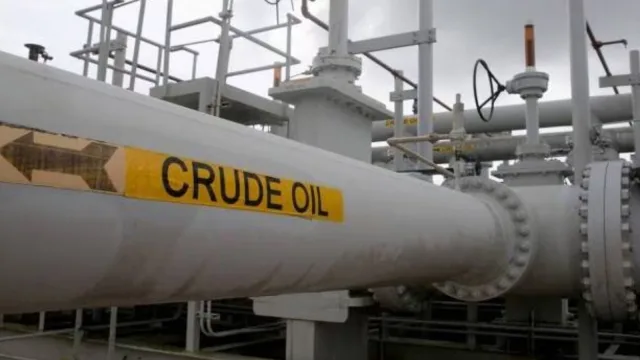
US destroys 5 Iranian oil tankers after missile attacks on Navy warship
The U.S. destroyed five Iranian oil tankers and imposed new sanctions on Iran's aviation sector following missile attacks on naval vessels.
The U.S. military on Tuesday destroyed five Iranian oil tankers in the Gulf of Oman and Strait of Hormuz, marking the latest escalation in a 6-month-old conflict that has increasingly threatened global energy markets. The strikes followed Iranian missile attacks on a U.S. Navy warship, with Iran retaliating by launching ballistic missiles toward U.S. military targets in Jordan and two Navy destroyers, according to Iranian state media. The U.S. action is part of a broader strategy to isolate Iran economically and militarily, as global oil prices remain volatile amid heightened tensions.
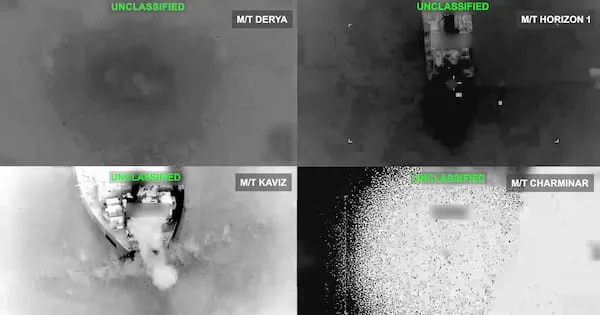
The U.S. Central Command (CENTCOM) confirmed the destruction of five Iranian oil tankers, identifying them as Kaviz, Charminar, Horizon 1, Riesco, and Derya. The vessels were targeted in the Gulf of Oman and near Kharg Island in the Strait of Hormuz. American forces ordered crews to abandon the tankers before the attacks, though no casualties were reported. This operation follows a similar strike on September 5, when three Iranian tankers were destroyed after Iran’s Revolutionary Guards attempted to attack U.S. Navy warships with ballistic missiles.
Iran responded by launching ballistic missiles toward U.S. military targets in Jordan and two Navy destroyers, according to Iranian state media. Jordan’s armed forces reported intercepting 18 of 20 incoming missiles, with the remaining two falling in unpopulated areas. No casualties were confirmed, and the U.S. military has not yet provided details on potential damage to its facilities. The attack targeted Muwaffaq Salti Air Base, a key U.S. military installation in Jordan, which has been a frequent focus of Iranian retaliation due to its strategic role in regional operations.
Secretary of State Marco Rubio warned that the U.S. would not allow Iran’s attacks to go unanswered, stating, “For every time they do that or try to do that, they’re going to lose tankers. And I think you’ll see that again today.” The U.S. strikes were in response to two Iranian efforts to hit the warship with ballistic missiles over the past two days, according to a CENTCOM statement. The U.S. also imposed sanctions on additional elements of Iran’s aviation industry, targeting more than two dozen commercial and private airlines as part of its strategy to isolate Tehran.
Iran’s Revolutionary Guard Navy warned crews of oil tankers near Kuwait and Bahrain to immediately leave their vessels, accusing the two nations of hosting U.S. forces and assisting in the attacks. Iranian state media reported strikes on tankers near Jask and Kharg Island, with crews evacuated by lifeboat. The IRGC also vowed retaliation, claiming it had launched a “heavy missile strike” against the Jordan base and fired on two U.S. Navy destroyers. The U.S. military has not confirmed details of the attacks on its destroyers.
The U.S. action is part of a dual economic and military approach under President Donald Trump, who has imposed sanctions on over two dozen Iranian airlines and cargo service providers. These measures aim to further isolate Iran’s economy, which has been crippled by a U.S. blockade on its oil exports. The conflict over the Strait of Hormuz, a critical global oil transit route, remains a central point of contention. Iran has threatened to establish a “exclusion zone” to dictate shipping routes, while the U.S. has facilitated alternative transit paths through Oman.
Oil prices have surged amid the conflict, with Brent crude briefly reaching $99.46 per barrel and West Texas Intermediate (WTI) trading near $95. Analysts warn that the cycle of strikes and retaliation risks further destabilization, with no clear resolution to the strategic dispute. Danny Citrinowicz, an Iran expert at Israel’s Institute for National Security Studies, stated on social media that “there is no kinetic solution to the Strait of Hormuz problem,” cautioning that each military action could push the U.S. and Iran closer to an uncontrollable escalation.
The U.S. military has alleged that the targeted tankers were part of a multibillion-dollar shadow network funding Iran’s Revolutionary Guard Corps (IRGC) and its regional proxies. CENTCOM emphasized that Iran had no means of defending the vessels, which were described as “limited and exposed.” Iranian state media reported strikes on tankers near Jask and Kharg Island, though details remain unverified. The IRGC also warned crews of oil tankers near Kuwaiti and Bahraini ports to evacuate, accusing the two nations of aiding U.S. operations.
The latest exchanges come amid broader regional tensions, including attacks by Iran-backed Houthi militants on energy facilities in Saudi Arabia. These developments have further complicated efforts to stabilize the Middle East, with both sides doubling down on military and economic pressure. As Iran prepares to announce its “exclusion zone” around the Strait of Hormuz, the next phase of the confrontation could determine whether the crisis spirals further or enters a period of fragile containment.
Iranian Missile Strikes on Jordan
Iran’s missile attacks on Jordan marked a significant escalation, targeting a U.S. military base in the kingdom and two Navy destroyers. Jordan’s air defense systems intercepted 18 of 20 ballistic missiles, with the remaining two falling in unpopulated areas. The U.S. has not yet confirmed damage to its assets at the base, but the attack underscores the growing risk of regional conflict. Jordan, a key U.S. ally, has repeatedly faced missile and drone threats linked to the broader confrontation, despite maintaining a neutral stance in the war.
Strategic Dispute Over Strait of Hormuz
The Strait of Hormuz remains a focal point of the conflict, with both the U.S. and Iran vying to control maritime transit. The U.S. has maintained a naval blockade on Iranian ports, limiting the country’s oil exports, while also facilitating limited ship transit through an alternate route off Oman. Iran, however, has threatened to enforce its preferred transit path, which it claims is its sovereign right. Analysts warn that the competing claims over maritime control, coupled with the global economic stakes, ensure the situation remains a volatile flashpoint.
Economic and Military Pressures
The U.S. has combined military operations with economic sanctions to restrict Iran’s ability to generate revenue. The recent strikes on oil tankers are part of this strategy, as the vessels are alleged to fund the IRGC and its regional allies. The Trump administration has also targeted Iran’s aviation sector, imposing sanctions on over two dozen airlines and cargo providers. These measures aim to isolate Tehran from its remaining trading partners, though Iran has continued to retaliate with missile attacks and diplomatic threats.
Dateline Wire is dedicated to independent, evidence-backed reporting. This briefing was synthesized from primary source reporting, corroborated across independent newsrooms, and verified against our Editorial Standards.