Ukraine confirms it used naval drones to strike two Russian ships off Libya
Ukrainian President Volodymyr Zelenskyy confirmed a surprise naval drone operation off the coast of Libya that sank a Russian corvette and struck a cargo ship.
An exemplary Ukrainian operation in response to Russia's war. I thank the warriors of the Security Service of Ukraine and all our Defense Forces of Ukraine who took part in carrying out these tasks,
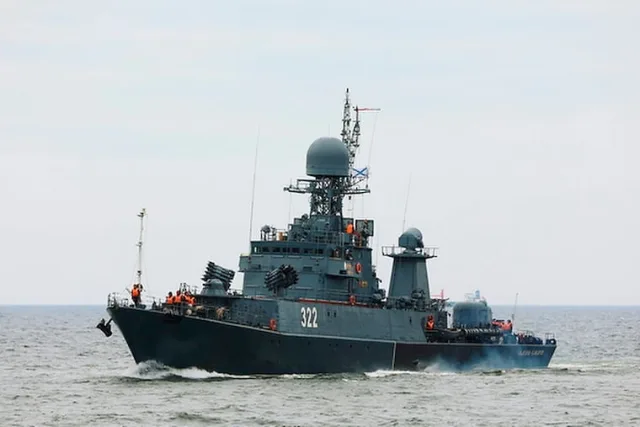
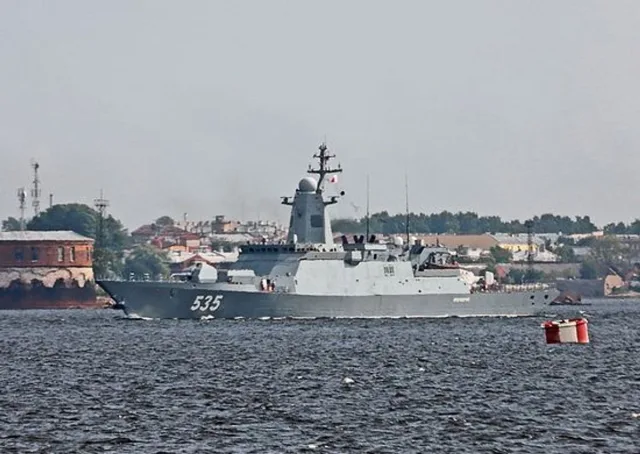
Ukrainian President Volodymyr Zelenskyy said Monday, confirming that Kyiv deployed seven domestically made naval drones in a surprise assault that sank the Russian corvette Merkury and struck the dry cargo ship MV Angara off the coast of Libya.
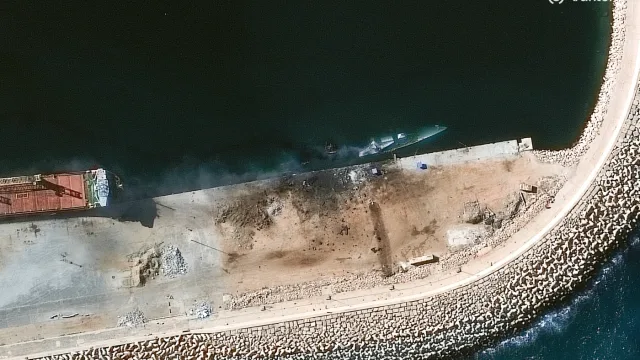
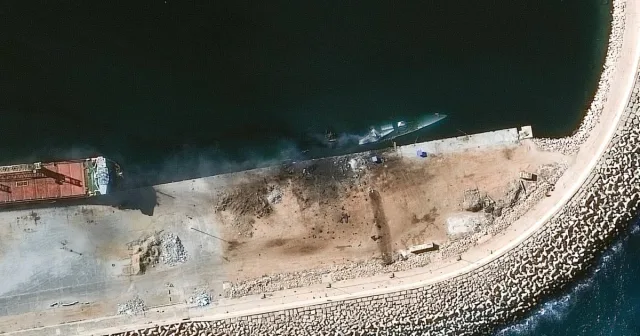
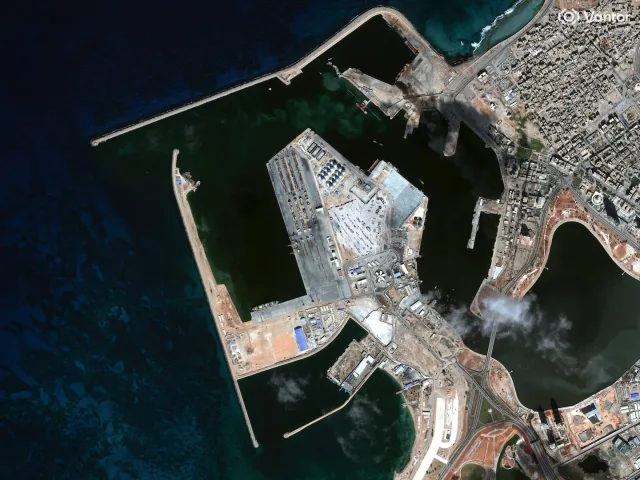
The operation, conducted some 1,500 miles (2,400 kilometers) from the front line in Ukraine, marks a striking expansion of Kyiv's asymmetric warfare into North Africa. The strike targeted Russian naval assets docked at the Benghazi Naval Base in eastern Libya on Sunday, where the vessels had stopped to refuel and take on supplies under a cooperation agreement between Moscow and the eastern-based government of Khalifa Haftar. The attack not only destroyed one of Russia's newest warships, commissioned in 2023, but also sank a Ka-27 multipurpose helicopter on board and struck the MV Angara, which Ukrainian officials say was used to transport weapons.
That long-range capability leaves Moscow with a severe security failure nearly four and a half years after launching its full-scale invasion. With naval drones launched from a mothership near the target, Ukraine has demonstrated that Russian military logistics have no safe routes, even far beyond the Black Sea. For the divided North African nation, however, the fallout threatens to drag civilian ports directly into an external conflict, drawing sharp international alarm.
Allied Ambitions and Fractured Territory in North Africa
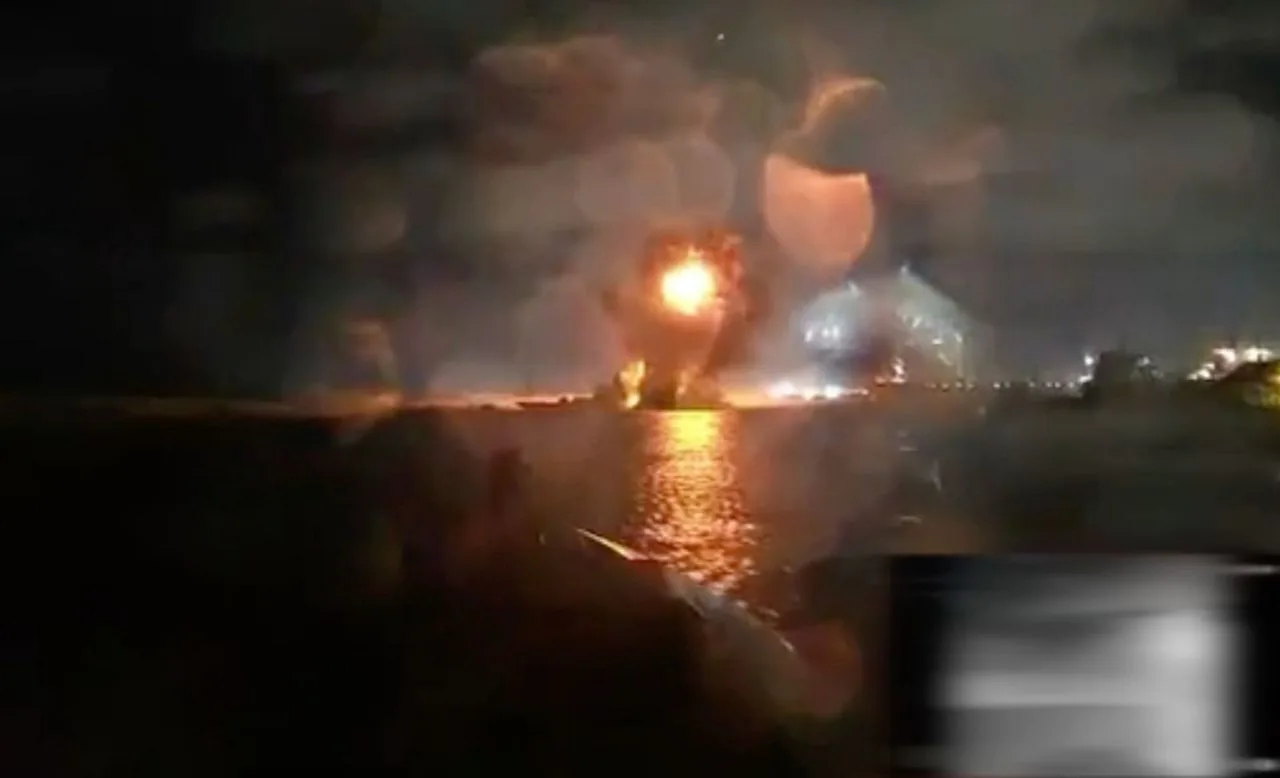
Libya has developed into a strategic staging ground for Moscow's military ambitions and a proxy battlefield for broader geopolitical rivalries. Russia has cultivated close relations with the eastern-based administration in Benghazi to strengthen its presence across North Africa and the Sahel. According to Libyan officials, the Merkury had docked at the Benghazi Naval Base as part of this bilateral cooperation. Yet residents in Benghazi heard loud explosions and saw flames at the facility early Sunday, prompting civil defense units to rush to the site and extinguish the fire.
The eastern administration said the vessel was en route back to Russia after a stop for refueling and resupply. Authorities in eastern Libya stated that at least four drones were intercepted while two hit the corvette, wounding at least 10 people, including Libyan and Russian nationals. Ambrey, a U.K.-based maritime security and risk intelligence firm, noted that some of the explosions were likely caused by the detonation of ammunition on board the Russian warship. Hours after the initial attack, another sea drone strike hit a Maltese-flagged commercial vessel sailing off Benghazi, according to the Libyan coast guard.
The eastern government sent a letter to U.N. Secretary-General António Guterres and the U.N. Security Council, calling for an international investigation into the potential use of western Libya to prepare and launch Sunday's attack. This tension reflects deep internal divisions in the country, which has remained fractured since the 2011 NATO-backed uprising that toppled Muammar Qaddafi. The rival, U.N.-recognized government in Tripoli issued a statement expressing alarm over the risks posed by involving civilian ports and facilities in external conflicts.
Furthermore, Libyan officials revealed earlier this year that Ukrainian forces, mostly drone experts, have operated under a covert deal endorsed by the West at military installations in Misrata, Tripoli, and Zawiya. These operatives previously used North African territory to strike a Russian tanker in the Mediterranean in March. In September, Libyan authorities denied CNN reports that Ukraine had been permitted to use a military base in the northwest to launch drones against vessels from Russia's shadow fleet.
The defence forces of Ukraine have once again demonstrated that the Russian military fleet and its logistics networks have no safe routes, even far beyond the Black Sea.
Security Service of Ukraine, via NY1
The strike on the Merkury strikes at the heart of Russian naval prestige. Vladimir Putin took a personal interest in the corvette, touring the St. Petersburg shipyard in 2019 where it was under construction and backing its name in a deliberate invocation of a tsarist-era brig that fought off two Turkish warships in the Black Sea in 1829. At the 2023 Navy Day parade, Putin singled out the Merkury among 30 newly commissioned vessels as evidence of Russia building up its fleet power, praising its St. George flag as a sign of inviolability. Russian state media agency Tass promoted it as the newest missile corvette, while TV Tsentr claimed its stealth technology made it invisible to radar. Its destruction by Ukrainian sea drones shatters that projection of technological superiority.
Escalation Across Multiple Theaters and Diplomatic Fallout
The fallout from Sunday's operation extends far beyond the Mediterranean, tying into a broader escalation of long-range strikes across Europe and the Baltic region. On Saturday, another Russia-linked cargo ship, the Sparta II, operated by Russian defense logistics firm Oboronlogistika, was struck by drones in international waters in the Gulf of Finland, causing a fire on board. While Kyiv has not confirmed or denied involvement in the Baltic attack, Finland's military stated it was likely a Ukrainian strike. Kremlin spokesman Dmitry Peskov condemned that incident as a very dangerous trend leading to an escalation of tensions, calling on Baltic states to use their influence to warn Ukraine against such practices.
Meanwhile, the Kremlin declined immediate comment on the Libyan operation, with Peskov stating that Russia's Ministry of Defense would provide more information if deemed appropriate. The United Nations Support Mission in Libya expressed serious concern over the attacks in Benghazi, demanding an immediate, independent and transparent investigation and reiterating that Libya must not become a battleground for foreign conflicts.
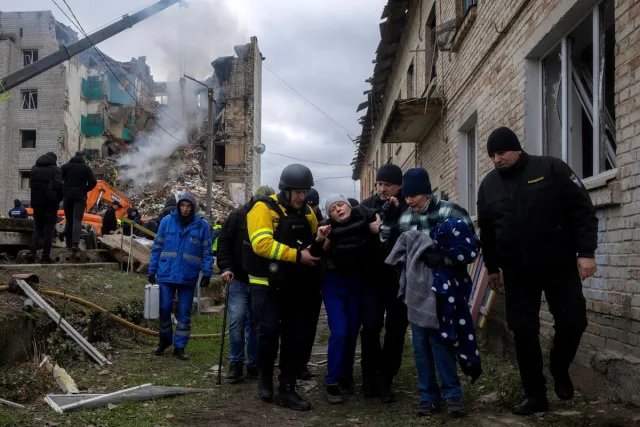
Domestic realities in Ukraine show the relentless brutality accompanying these remote operations. While Kyiv projects power thousands of miles away, Russian airstrikes continue to hammer Ukrainian cities. A Russian strike on a five-story apartment block in a village near Kyiv killed 11 people, where rescue workers pulled a 7-year-old child and a 79-year-old woman from the rubble. Three more people were killed in a strike on a hospital in Zaporizhzhia, and two other people were killed when Russian forces struck a marked evacuation vehicle taking residents out of the eastern city of Kramatorsk. In Russia, an oil refinery in the western Rostov region halted work Monday following what Gov. Yuri Slyusar said was a massive Ukrainian drone and missile attack lasting more than six hours.
- June last year: Ukraine launches Operation Spiderweb, when drones launched from trucks hit over 40 aircraft parked near air bases across Russia.
- December: Ukrainian operations extend into the Mediterranean with attacks targeting Moscow's shadow fleet tankers carrying Russian oil.
- March: A Russian liquefied natural gas carrier sinks off the Libyan coast following an attack that Vladimir Putin blames on Ukraine.
- September: Libyan authorities deny reports by CNN that it allowed Ukraine to use a military base in the northwest of the country to launch drones against vessels from Russia's shadow fleet in the Mediterranean.
- Sunday, November 23, 2026: Ukraine deploys seven naval drones from a mothership off Benghazi, sinking the corvette Merkury and striking the MV Angara.
- Monday, November 24, 2026: President Volodymyr Zelenskyy notes in a live video address to a meeting of the NATO Parliamentary Assembly in Berlin that Ukraine has hit Russian oil refineries as far away as western Siberia and Russian warships in the Mediterranean.
Kyiv's willingness to project asymmetric force into North Africa signals that distance offers no shelter for Russian logistics, but it also risks entangling fractured host nations in a wider war. As international investigators demand answers in Benghazi, Ukraine's proven capacity to breach defended naval perimeters thousands of miles from home ensures that Moscow's overseas supply chains remain permanently vulnerable.