Russian warship Merkury hit in suspected Ukrainian drone strike in Libya
A Russian warship sank in the Libyan port of Benghazi following a suspected Ukrainian drone strike, bringing the ongoing conflict to North Africa.
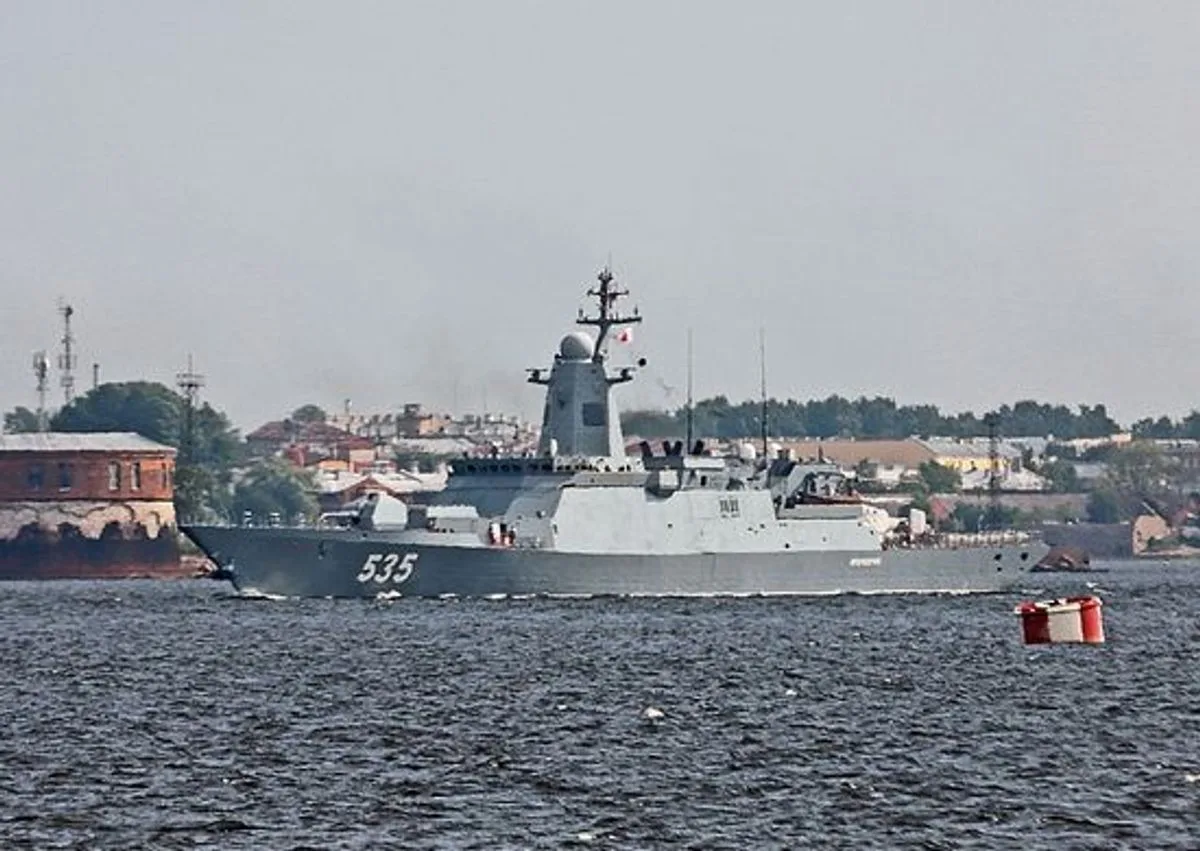
An exploding warship in the Mediterranean has brought the Russia-Ukraine war deep into North Africa, as satellite imagery and local officials confirmed that a Russian naval vessel sank in the Libyan port of Benghazi following a suspected Ukrainian drone strike on Sunday.
The targeted ship was identified as the Merkury, a 344-foot corvette belonging to Russia's Black Sea Fleet that is currently operating out of Northern Fleet bases. Docked at the Benghazi naval base to refuel and resupply on its way back to Russia, the warship was struck before dawn on Sunday, setting off a massive explosion, secondary blasts from its ammunition stores, and a fierce fire. Satellite imagery provider Vantor showed that the vessel subsequently capsized and sank, leaving only its bow visible above water with debris scattered along the pier.
What changed in Benghazi and who is affected?
The strike has abruptly transformed a Mediterranean refueling stop into a frontline theater of the Russia-Ukraine conflict, exposing deep fractures in Libya's sovereign territory. Local sources told Al Jazeera that an unknown number of Libyan and Russian nationals were killed in the dawn attack, which local residents said involved three drones. Two Libyan military officials told the Associated Press that Ukrainian forces launched multiple sea drones from a base in western Libya, with at least four intercepted and two striking the Merkury. In a separate incident on Sunday evening, another sea drone hit a Malta-flagged commercial vessel off the coast of Benghazi, prompting the eastern administration's Health Ministry to report that all injured crew members were rescued and treated. Al-Masar satellite television channel reported that naval and air forces destroyed at least 12 other sea drones off the city.
The operational ripple effects extend to several distinct groups:
- Russian naval and logistics personnel: Facing the total loss of the Merkury and an escalating campaign against shadow fleet and supply vessels across European and African waters.
- Libyan authorities in the east: Forced to launch a joint investigation with Russia while managing domestic fallout and civilian infrastructure risks at the Benghazi port.
- The UN-recognized government in Tripoli: Condemning the use of Libyan territory for proxy warfare and expressing alarm over foreign powers settling scores in local ports.
- Commercial mariners in the Mediterranean: Confronting collateral hazards after explosive-laden sea drones struck civilian merchant shipping off the Libyan coast.
How did the shadow war reach North Africa?
The sinking of the Merkury is part of a widening long-range campaign by Kyiv far beyond the Black Sea. Kyiv and Tripoli reportedly signed a covert deal in 2025 granting a Ukrainian military presence and drone launch sites in western Libya. This logistics network has enabled operations thousands of kilometers from the front lines in Ukraine.
The expansion into Mediterranean waters follows a series of maritime escalations over the past year. In December 2025, an SBU source told the Kyiv Independent that the shadow fleet tanker QENDIL was struck in neutral waters more than 2,000 kilometers from Ukraine, in an attack later reported by RFI to have launched from Misrata, Libya. In March 2026, a Russian-flagged liquefied natural gas tanker, the Arctic Metagaz, sank off the Libyan coast after an attack blamed by Vladimir Putin on Ukraine. Ukrainian forces have similarly targeted vessels closer to home, including the sanctioned Russian cargo ship Sparta 2, which caught fire in international waters in the Baltic Sea on November 21 while heading for Kaliningrad, an incident attributed to Ukraine by the Finnish border guard. Vladyslav Vlasiuk, sanctions policy adviser to Ukrainian President Volodymyr Zelensky, noted of the recent ship fires Yes, quite a coincidence, isn't it? It seems that vessels sanctioned by Ukraine for systematically supporting Russia's military-industrial complex have a rather unfortunate tendency to catch fire,
adding, And I suspect this may be neither the only nor the last such incident.
What do Libyan and Russian authorities say?
The eastern-based administration of General Khalifa Haftar issued a statement confirming that Initial investigations indicate that the explosion occurred onboard a Russian ship docked in the port.
The eastern government emphasized that the vessel's stop was authorized under maritime cooperation agreements for refuelling and resupply, and announced plans for a joint investigation with Russia to uncover the source and perpetrators of the attack. Local civil defence forces in Benghazi deployed response teams to contain the port blaze, urging residents to avoid the area before extinguishing the fire.
Meanwhile, the rival UN-recognized government in Tripoli issued a sharp condemnation of the incident, stating that it categorically rejects the transformation of Libya into an arena for international conflicts or a theater for foreign powers to settle scores.
The Tripoli administration further opposed the use of Libyan territory, ports, and territorial waters for any military or logistical activities that jeopardize state sovereignty or public safety.
Russian authorities have not yet commented on the reported blast, and no group has officially claimed responsibility for the strike.
What is still unverified as investigations begin?
Substantial gaps remain in the public record surrounding the Benghazi operation. While Libyan military officials and Western media reports point directly to Ukrainian sea drones launched from western Libya, neither the Ukrainian government nor its defense officials have claimed responsibility. Early local reports cited by Al Jazeera claimed the Merkury was carrying weapons, ammunition, and drones in its cargo, but official statements from eastern Libyan authorities mentioned only refueling and resupply operations. Furthermore, no official casualty figures have been released by Moscow or Kyiv, leaving local accounts of deaths among Russian and Libyan personnel unconfirmed. As rescue teams clear the harbor and the joint Russian-Libyan investigative committee begins its work, the central question remains whether direct attribution will be formally established, and how the international community will respond to the weaponization of North African ports in an escalating European war.