Keisha Lance Bottoms elected as Georgia governor, making US history
Former Atlanta mayor Keisha Lance Bottoms defeated Republican Rick Jackson to become Georgia's governor, making US history as the first Black woman elected to the office.
- Headline: Keisha Lance Bottoms elected as Georgia governor, making US history
- Dispatch Summary: Former Atlanta mayor Keisha Lance Bottoms defeated Republican Rick Jackson to become Georgia's governor, making US history as the first Black woman elected to the office.
- Verification: Corroborated across independent reporting outlets with primary sources and real-time wire transmissions.
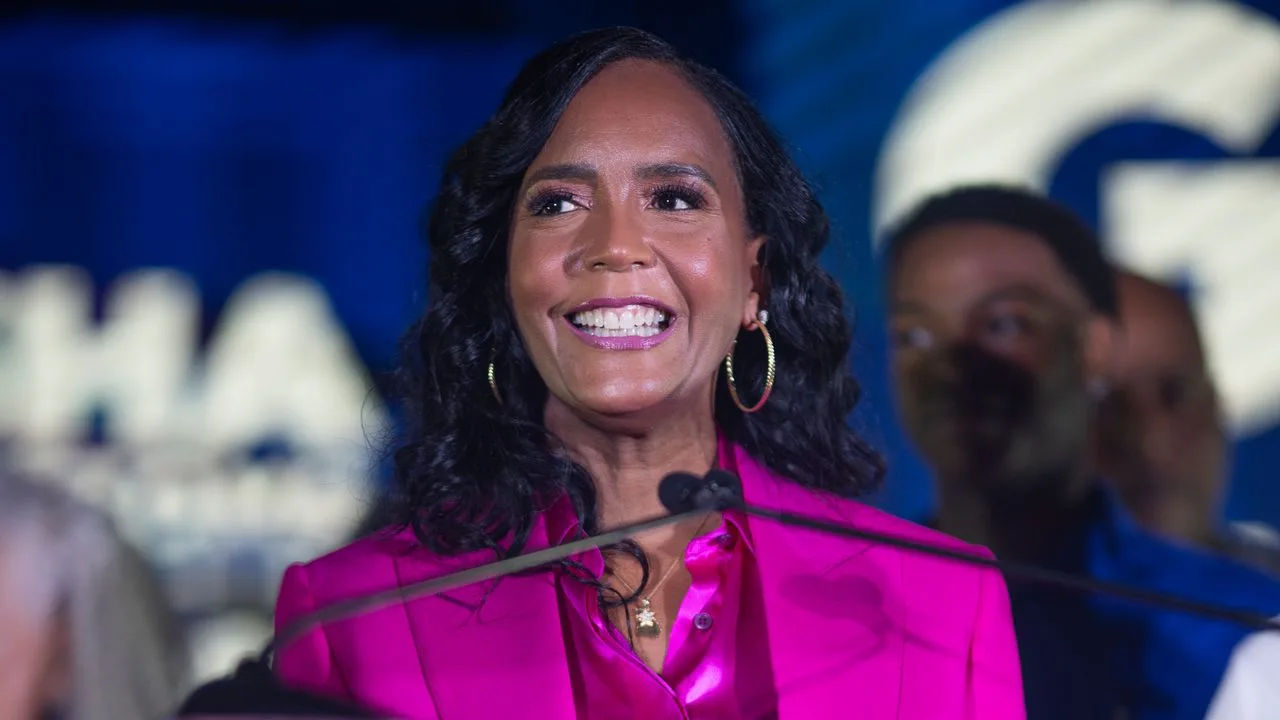
Voters across Georgia waking up to a transformed political landscape on Wednesday morning are seeing a state government led by Democrats for the first time in nearly three decades, anchored by a historic first. Former Atlanta mayor and Democrat Keisha Lance Bottoms defeated Republican businessman Rick Jackson in Tuesday's midterm elections to become governor, breaking a barrier that had stood since the founding of the United States. Bottoms' victory makes her the first Black woman ever elected governor of any US state and the first Democratic governor of Georgia in this millennium. Her win ended a drought that began after Roy Barnes left office in 2003, with the last Democratic gubernatorial victory having occurred in 1998.
The path to this moment ran through a campaign that emphasized grassroots organizing and everyday financial pressures over the historic nature of the candidacy. Bottoms adopted an issues-driven strategy, traveling across Georgia to hold town halls and community meetings focusing on the rising cost of living, affordable housing, healthcare access, public education, and support for working families, while also positioning herself as a critic of President Donald Trump's administration. She achieved this breakthrough despite being heavily outspent by Jackson, a billionaire who poured over $200 million of his personal wealth into his race. In her victory speech at the Marriott Marquis in downtown Atlanta — where she was introduced by her daughter, Lennox — Bottoms declared, This campaign was about every community and every corner of Georgia,
and added, No matter who you voted for tonight, I will be a governor for all of Georgia.
How did a grassroots strategy defeat a $200 million war chest?
Bottoms' victory on Tuesday capped a political transformation driven by the expansion of Atlanta's primary metropolitan area, defying a historical reluctance among voters to select state leaders from the city. The election marked the third consecutive cycle featuring a Black woman at the top of the state's Democratic ticket, following two runs by voting rights advocate Stacey Abrams, who chose not to compete this year. Bottoms was one of eight Black major-party gubernatorial candidates nationwide on the ballot, joined by Minnesota Republican Lisa Demuth as the only two Black women contesting governor races. Across US history, only three Black governors, all of them Democratic men, have ever been elected.
Although Bottoms is a fifth-generation Georgian whose family can be traced back to a plantation in Crawfordville, reflecting on how her grandfather had to walk through the back doors of downtown buildings that she later entered through the front as mayor, she seldom highlighted the historic implications of her run directly. To celebrate the occasion, Bottoms donned a fuchsia pantsuit with a matching silk shirt underneath designed by Dedrick Thomas of Hideoki Bespoke in Georgia, a bright choice that matched the exuberant energy of an evening where she was joined by her daughter wearing a matching pink ensemble.
What does a nationwide Democratic tsunami mean for Washington?
The gubernatorial flip in Georgia formed part of a broader nationwide Democratic surge in the midterms that dealt a major setback to President Donald Trump and his party, resulting in Republicans losing control of both the House and the Senate. Outgoing Florida Governor Ron DeSantis described the nationwide GOP losses as close to an extinction-level event
for the party in many parts of the country, as we have seen probably in the last 100 years.
Speaking on Wednesday, DeSantis noted that the outcome was not a positive view of Democrats, but rather a rejection of Republicans in Washington,
adding that Democrats just happened to be the beneficiary.
DeSantis warned that the conservative movement faces deep structural damage following losses that extended well beyond the swing states. Pointing to Texas, which he called the crown jewel of Republican politics over a generation, DeSantis noted that the GOP lost the governorship, attorney general's office, all other statewide posts, four Republican justices on the Texas Supreme Court, and potentially one or both houses of the state legislature. That is going to hurt, not just for the next two years. That's something that can reverberate for the next decade or more,
DeSantis said, warning that without Texas as an anchor, the Republican Party will not be viable nationally going forward. He predicted that Republicans would struggle to retake the Senate or the House in the 2028 election cycle under the current map.