Trump says 'massive' oil, gas and mineral exploration to begin in Greenland
US President Donald Trump announced that massive oil, gas, and mineral exploration is getting ready to begin in Greenland, following a trilateral security pact.
- Headline: Trump says 'massive' oil, gas and mineral exploration to begin in Greenland
- Dispatch Summary: US President Donald Trump announced that massive oil, gas, and mineral exploration is getting ready to begin in Greenland, following a trilateral security pact.
- Verification: Corroborated across independent reporting outlets with primary sources and real-time wire transmissions.
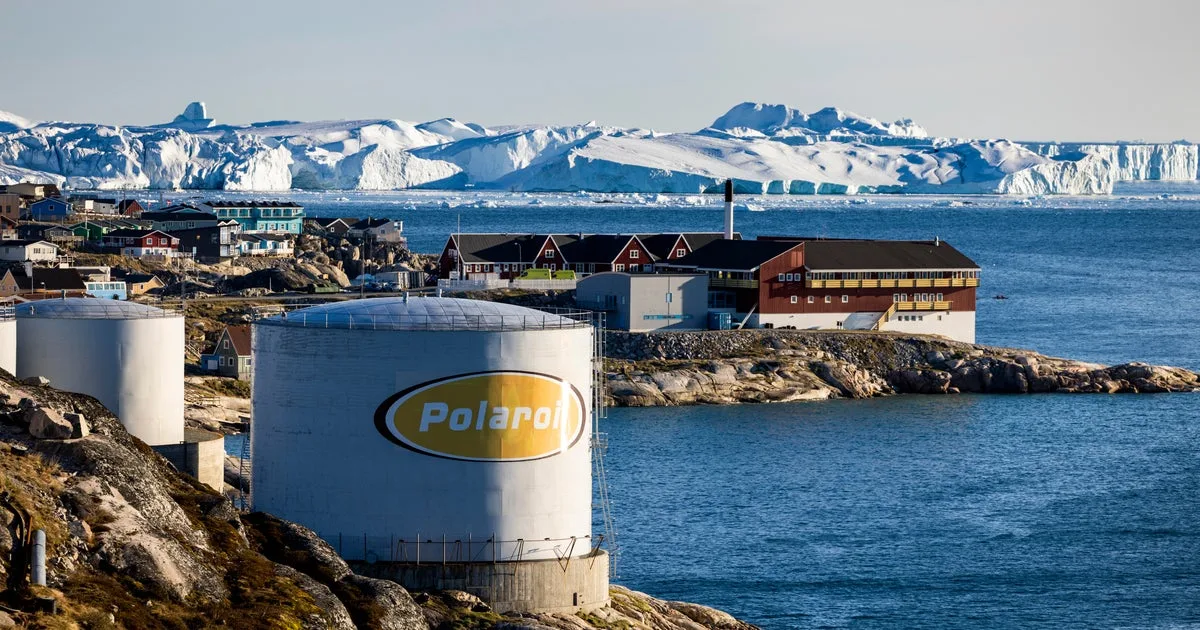
Trump says massive oil and gas exploration is set to begin in Greenland
US President Donald Trump announced on Wednesday that plans were underway for major oil, gas, and mineral exploration in Greenland. Writing on his Truth Social platform, Mr. Trump stated, Massive Oil, Gas, and Mineral Exploration is getting ready to begin in our new and beautiful Greenland!
while omitting specific details for how the extraction will proceed.
That declaration arrives as global energy prices remain elevated more than seven months into the war in Iran. Yet the announcement leaves a chasm between presidential rhetoric and industrial reality, as no energy firms or mining conglomerates have confirmed operational rollouts.
What do the experts actually say about Greenland oil reserves?
Mr. Trump defended the pivot toward the Arctic by suggesting that some experts consider Greenland to hold some of the world’s largest easily accessible oil reserves, stating on Truth Social that there are experts that are saying that the amount of easily available oil is far greater than that of almost any land, anywhere in the world.
Some industry experts note that while Greenland possesses mineral and petroleum potential, high operating costs have historically deterred private commercial extraction. Furthermore, Greenland stopped issuing new oil and gas exploration licenses in 2021 over environmental and climate concerns, although previously granted licenses remain valid.
The Pituffik Space Base, the northernmost U.S. military installation, functions as a critical early-warning radar site for incoming ballistic missiles.
How does the new security deal shape the island?
The announcement follows a September agreement signed by the United States, Denmark, and Greenland. That pact was crafted to defuse tensions following repeated threats from Mr. Trump to take control of the island. The accord expands the American military footprint across the territory, authorizing two new military bases alongside the existing Pituffik Space Base.
The agreement permits the United States to establish additional facilities at Narsarsuaq and Mestersvig, which sit roughly 950 miles apart. The pact blocks non-NATO countries from building military bases on the island without agreement from the parties. While the accord officially reaffirms Danish sovereignty and guarantees Greenlanders the right to self-determination, it also mentions resource extraction and minerals cooperation without outlining precise details.
Ahead of the signing on the sidelines of the United Nations General Assembly in New York, Mr. Trump expressed optimism about the partnership, stating, We're going to have a tremendous relationship, a secure relationship, and we look forward to it... This was long in the making.
The signing followed an announcement regarding an Infinite Life
Agreement with Denmark and Greenland, in which Mr. Trump claimed the arrangement addressed Washington's security concerns and would give the United States lasting control over security-related matters on the island at no cost to Washington.
In a September social media post, Mr. Trump said the agreement had completely
addressed US concerns over Greenland, adding, I am pleased to announce that the United States of America has entered into an Agreement with The Kingdom of Denmark, and Greenland, that gives the United States permanent control over security, and all other needs, in Greenland, completely addressing ALL of our many U.S. concerns.
He further stated that the arrangement would ensure Washington retained the ability to take whatever measures it considered necessary to protect Greenland and American security interests, noting, At my direction, we worked with representatives of Denmark and Greenland to guarantee that the United States will FOREVER have the complete ability to do what is necessary in Greenland in order to secure and defend the security of Greenland, and the United States of America.
Additionally, from now on, no US adversary can EVER have a base in Greenland, have a military presence in Greenland, or make sensitive investments in Greenland, without our express written approval,
Mr. Trump added, describing the agreement as having no expiry. Meanwhile, Denmark's description of the expected agreement has focused on enhanced security cooperation in the Arctic and North Atlantic, while explicitly recognising Greenland's position within the Kingdom of Denmark.
What military systems are moving into the territory?
Mr. Trump linked the push for resource exploration directly to American national defense architecture, emphasizing the island's geographic role in intercepting incoming threats. In his social media posts, he stated that Any future attack on the United States will have to come across Greenland, where our Defense will routinely knock down drones, missiles, or any other form of weapon not yet even conceived.
He added that Greenland offered the US time, location, and sightline, like nowhere else in the World,
describing the island as second to none for American and European security. The newly expanded military access paves the way for the deployment of Mr. Trump's proposed Golden Dome missile defense system.
What hurdles remain before drilling can begin?
While the international agreement has been signed by Washington, Copenhagen, and Nuuk, it still faces legislative hurdles before it takes full effect. The pact is currently subject to a second reading in Greenland's parliament before lawmakers proceed to a formal vote, with the legislation expected to pass. Whether private corporations will commit to these Arctic reserves under these new geopolitical arrangements remains the central question facing the region.
Updated 2 times since publication; last update 14 October 2026, 11:52.