US offers $20 million reward for information on Iran's nuclear program
The US State Department is offering up to $20 million for tips on Iran's nuclear infrastructure, contradicting official claims that Tehran's capabilities were obliterated.
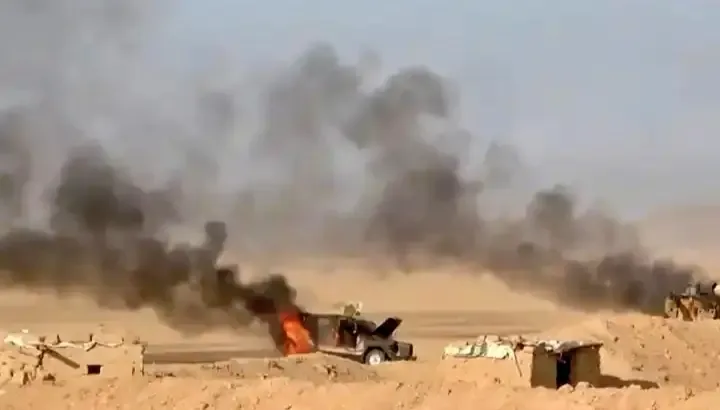
President Donald Trump ordered new strikes on Iran overnight, describing them as minor, just as the United States military announced the creation of a new unit to choke off Tehran's supply lines. Central Command launched Task Force Iron Gate to operate from Tampa, Florida, and work with other US government agencies. Reuters reported that explosions were heard on Iran’s Qeshm Island and in the southern Iranian port of Jask, citing Iranian media. Iran has not officially confirmed the source of the reported explosions, according to Reuters. Earlier on Saturday, Iran’s semi-official Tasnim news agency said two missiles had struck Qeshm Island, with no official information on potential damage. But later that evening Tasnim cited an Iranian source as saying that the explosions heard on the island were not related to missile strikes.
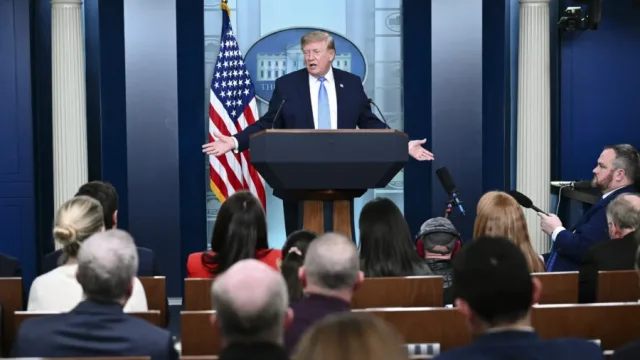
That military maneuver runs alongside a financial offensive. The State Department announced through its Rewards for Justice program that it is offering a reward of up to $20 million, along with possible relocation, for information about Iran’s nuclear program. Established in 1984 to offer money for tips that protect national security, the program is seeking details on facilities, equipment, associated personnel in the scientific community, and material movements. President Trump defended his overall strategy on Friday during a speech at the Kennedy Space Center in Florida, telling the audience, We're also ensuring that Iran will never have a nuclear weapon. They will never have it. Not even close. They're not close.
He added, If they did have it, if we didn't go in with those beautiful B2 bombers a little more than a year ago, if I allowed them to have it today, there would be no Israel.
The Contradiction Between Rewards and Retracted Threats
The multimillion-dollar payout sits awkwardly against repeated assertions from President Trump that Iranian nuclear capabilities have been completely eradicated. During the 12-day conflict last year, the White House declared that Tehran's key enrichment sites had been completely and totally obliterated. Yet the State Department justifies the reward by pointing to the exact opposite reality: a total lack of transparency. Citing International Atomic Energy Agency reporting, the State Department noted that Iran's lack of compliance with safeguards obligations has led to a loss of continuity of knowledge regarding production and inventory of key components like centrifuges. The IAEA reported that Iran was enriching uranium to 60 per cent purity, which is a short technical step from the roughly 90 per cent required for weapons-grade material. Iran is identified as the only non-nuclear-weapon state producing uranium at such a high enrichment level, possessing a stockpile that experts estimate could provide enough material for several nuclear weapons if enriched further.
Preventing Iran from developing a nuclear weapon remains a core objective of the war, but the White House continues to signal that unfinished business remains. President Trump repeated claims that the US might have to go after Iran's Pickaxe Mountain, the suspected underground site where Iran has stored part of its enriched uranium stockpile and advanced enrichment centrifuges. In an interview on the eve of the midterms, Trump said that striking Pickaxe Mountain was not a big deal
and could be done in one hour.
In response, Tehran warned that any US attack on Iranian nuclear facilities would be treated as an expansion of the regional war, while maintaining its right to develop peaceful nuclear energy.
Shipping Peril and the Naval Blockade
The shadow war on the water shows no sign of abating as Centcom steps up its interdiction efforts. Central Command estimates that its naval blockade of Iran's ports has prevented the country from exporting more than $25 billion in crude oil. That economic strangulation forms part of a broader maritime crisis that saw a seafarer killed in an explosion caused by a suspected missile attack on the Marshall Islands-flagged tanker MT Velos Sapphire, managed by Velos Tankers, as it sailed toward Bahrain. Velos Tankers reported that the crew extinguished the fire and brought the vessel to Khalifa Bin Salman Port in Bahrain for hull damage assessment. The United Kingdom Maritime Trade Operations center recorded an unprecedented 30 attacks on commercial vessels in the region during October alone, occurring despite US assurances that shipping lanes through the Strait of Hormuz remain open and safe under military escorts.
Energy markets are reacting immediately to the shifting political and military currents. GasBuddy analyst Patrick De Haan told CBS News that the national average for gasoline sat at $4.06 a gallon on Thursday and early Friday morning, with expectations to dip below the $4 threshold by next week and diesel dropping below $6 a gallon by Thanksgiving. Those falling prices reflect oil market optimism that political pressure following heavy Republican losses in the midterm elections will force a diplomatic resolution. At the same time, the Treasury Department coordinated with Canadian authorities to target several firms and individuals based in Vancouver and Toronto who allegedly exchanged Iranian rials and cryptocurrency to help Tehran evade sanctions and fund regional proxies. State Department spokesperson Tommy Pigott stated, Anyone, anywhere in the world, who helps Tehran evade sanctions risks being held accountable.
Political Fallout at Home and Regional Diplomacy
The political landscape has shifted dramatically beneath the feet of American policymakers following severe Republican losses in the midterm elections. Former Maryland GOP governor Larry Hogan told reporters that voters were completely fed up with D.C. leadership failing to focus on topics like the prices of gas and groceries, calling the defeat a complete and total rebuke
of Trump and his policies. Hogan criticized the White House for constantly shrinking its base and warned that the appointment of hard-right adviser Stephen Miller as chief of staff is a step in the wrong direction. Meanwhile, in a striking interview on Saturday, Senator Ron Johnson accused the Trump administration of corruption, pointing to former White House adviser Calley Means' claims that top aides and political strategists cater to special interests. Johnson said his party's supporters were expecting them to drain the swamp, but it seems like the swamp won.
President Trump continues to claim that incumbent Dan S. Sullivan is leading substantially in Alaska's Senate race despite figures showing an edge for Democrat Mary Peltola, with about three-quarters of votes counted and another batch expected Tuesday.
Secretary of State Marco Rubio prepares to travel to Paris on Monday and Tuesday to meet foreign ministers from Britain, Canada, France, Germany, Italy, and Japan at a Group of Seven meeting, where he is expected to face intense questioning regarding Washington's post-election strategy. Within the administration, divisions persist over how to handle Tehran: Vice President JD Vance reportedly favors negotiations, while Secretary of Defense Pete Hegseth pushes for renewed strikes. Mediators are continuing to try to broker an agreement between Iran and the US, but both sides appear unwilling to shift on key red lines, with Tehran seeing the ability to enrich uranium as a matter of national sovereignty. Iranian President Masoud Pezeshkian affirmed that his government continues pursuing dialogue to resolve the crisis, and a Qatar foreign ministry spokesman noted that both sides are reviewing proposals presented by Qatari mediators, remaining hopeful of an agreement to reopen the Strait of Hormuz within two days once the US meets seven conditions.
Updated 1 time since publication; last update 9 November 2026, 00:57.