Hong Kong activist Joshua Wong sentenced to 10 years in 2nd security case
Prominent pro-democracy campaigner Joshua Wong was sentenced to 10 years in prison following his conviction for foreign collusion under Hong Kong's national security law.
Joshua Wong Sentenced to 10 More Years in Second National Security Case
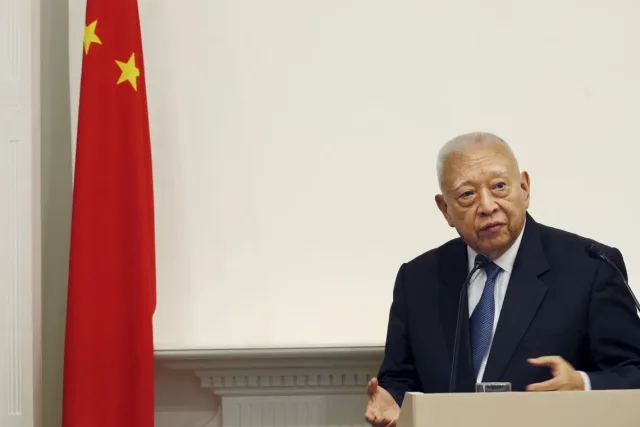
Prominent Hong Kong activist Joshua Wong was sentenced to 10 years in prison on Thursday under the city's Beijing-imposed national security law. The ruling pushes his expected release date from January 2027 to late 2036, ensuring that the 30-year-old activist will remain behind bars for a decade following his conviction for conspiracy to collude with foreign forces.
The sentence is Wong's second national security conviction, following a term of four years and eight months for his role in an unofficial primary election. While High Court Judge William Tam ordered that the new 10-year term run concurrently with the remainder of his existing term—leaving him with only about two months left to serve on his previous sentence—the stacking of charges effectively extends his time in confinement.
Judge William Tam and the "Grave in Nature" Ruling
In his decision, Judge William Tam characterized Wong’s actions as of a grave nature
and rejected claims that his role was limited, naming Wong and fellow student leader Nathan Law as two ring-leaders or masterminds
of a conspiracy to endanger national security. The court heard that Wong and Law began coordinating efforts to lobby foreign powers as early as 2016 to achieve democratic self-determination, promoting legislation such as the Hong Kong Human Rights and Democracy Act that allowed the U.S. president to impose sanctions.
Prosecutors highlighted Wong's meetings with U.S. politicians including Nancy Pelosi and Marco Rubio in 2016 and 2019, as well as his participation in a 2019 delegation to the United States. The judge noted that after the security law was enacted in June 2020, Law and others advanced their work abroad by meeting foreign politicians and launching petition drives, while Wong supported the effort from Hong Kong through foreign media outlets and social media to draw attention and bolster requests for sanctions, blockades, or other hostile measures against China and Hong Kong.
Judge Tam pointed to the U.S. revocation of the city's different treatment as a special administrative region and sanctions against Chinese and Hong Kong officials as the kind of measures Wong and Law had called for. Writing that the punishment must fit the gravity of the crime committed,
Tam stated he had considered a starting point of 13 years, ultimately reducing the term to 10 years to account for the defendant’s guilty plea entered earlier in the year.
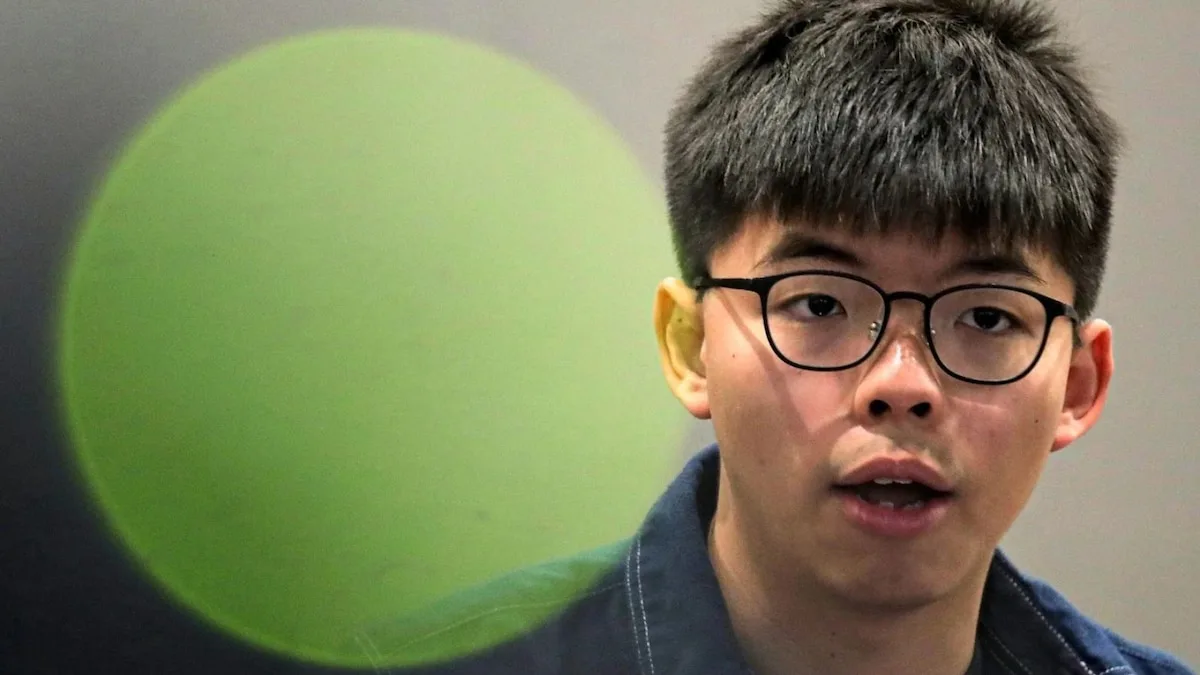
Wong, who turned 30 last month and appeared in court in a blue shirt and black glasses, remained calm throughout the proceedings, nodding and thanking his supporters before leaving. In a mitigation letter to the court, Wong wrote that he had hoped to leave prison in 2027, but the new charge made him feel like he was back at the beginning. He added that his future would not be defined by things that happened to him before 2020, and that the years spent behind bars have been the most profound lessons
of his life. His lawyer, Derek Chan, had earlier urged the court to impose a sentence giving his client hope, noting that Wong wishes to take care of his parents after his release.
Weaponeering National Security Charges and the Chill on Civic Activism
Legal observers and human rights organizations argue the case highlights a deliberate strategy to sideline political opposition. Eric Lai, a research fellow at the Georgetown Center for Asian Law, stated that national security law charges can be repeatedly weaponized to keep a specific political prisoner in jail if the government deems necessary. Steve Tsang, director of the China Institute at SOAS University of London, observed before the sentencing that Wong's fate shows Beijing is keeping a tight rein over Hong Kong and there's no scope for turning back to the more relaxed days before 2019.
Human Rights Watch described the ruling as cruel and unjust
and urged foreign governments to impose targeted sanctions on officials responsible for Hong Kong's growing repression. Asia director Elaine Pearson stated that the Hong Kong government appears to have adopted the tactic of stacking charges against influential pro-democracy leaders to keep society subdued and reduce the chance of an international outcry. Conversely, Steve Li, chief superintendent of the police's National Security Department, welcomed the ruling and said it evidently proved
Wong's efforts to rouse foreign sanctions were futile,
adding that he hoped Wong would reflect on his wrongdoings and cultivate a law-abiding spirit.
Beijing views Wong as an anti-China figure supporting Hong Kong independence, a stance that crosses its red line. Hong Kong authorities maintain that the security law is crucial for the city's stability following the 2019 protests and that law enforcement actions are evidence-based.
Comparative Legal Consequences
The severity of the 10-year term places Wong's case among the longest handed down under the national security legislation.
| Case/Subject | Outcome |
|---|---|
| Joshua Wong (Foreign Collusion) | 10 Years |
| Jimmy Lai (Foreign Collusion) | 20 Years |
Pro-democracy tycoon Jimmy Lai, founder of the now-defunct Apple Daily newspaper, received a 20-year sentence in February under the same legislation.
Supporters and the Broader Political Crackdown
Wong rose to prominence during Hong Kong's 2014 protests, known as the Umbrella Movement, and has been in and out of jail since 2017. Outside the court building, dozens of people queued to secure a seat in the public gallery. Resident ET Wong remarked that Joshua Wong possessed big-picture thinking even as a teenager, stating, At least in my heart, he should not have spent a single day in wrongful imprisonment.
Tiffany Chin, a former member of the now-disbanded Scholarism group once led by Wong, was in tears as supporters waved goodbye.
Friends noted that during his nearly six years in prison, Wong kept reading hundreds of books, enrolled in university courses, exercised, and taught himself guitar while maturing in his thinking. In a statement obtained by The Associated Press, Wong wrote that his political participation was never driven by hatred, that he bears no resentment toward the Chinese or Hong Kong governments, and that he never advocated Hong Kong independence, adding that he thought he was acting within the law before later realizing his judgment was wrong.
Despite his imprisonment, Wong's influence remains a concern for the pro-Beijing camp. In September, a pro-Beijing newspaper report criticized a 2017 Netflix documentary about Wong for beautifying his crimes. While the city's security bureau stated the government was taking follow-up action, the documentary subsequently shot to the top of Netflix's popular chart in Hong Kong. Meanwhile, civil society continues to contract, with dozens of groups dissolved and critical news outlets shut down since 2020.
Frances Hui, a U.S.-based activist and friend of Wong, expressed that the sentencing is part of a broader political crackdown seeking to rewrite a chapter of Hong Kong's history and erase the contributions of an entire generation who believed they could shape their city's future. Following Thursday's hearing, Wong's friend and former Scholarism member Louis Lee told reporters they need time to digest the matter while thanking everyone for their concern and support.
Residents and supporters navigating the tightened political landscape can observe official court transcripts for legal interpretations of foreign collusion, track the status of dissolved civil society groups, and monitor ongoing legislative changes to public choice in elections.
Thursday, November 5, 2026
Updated 1 time since publication; last update 9 November 2026, 14:37.