Stock Markets Snap 8 Year Diwali Win Streak in Muhurat Trading
Indian stock markets ended marginally lower in the special Muhurat trading session on Sunday, November 8, 2026, amid profit-taking.
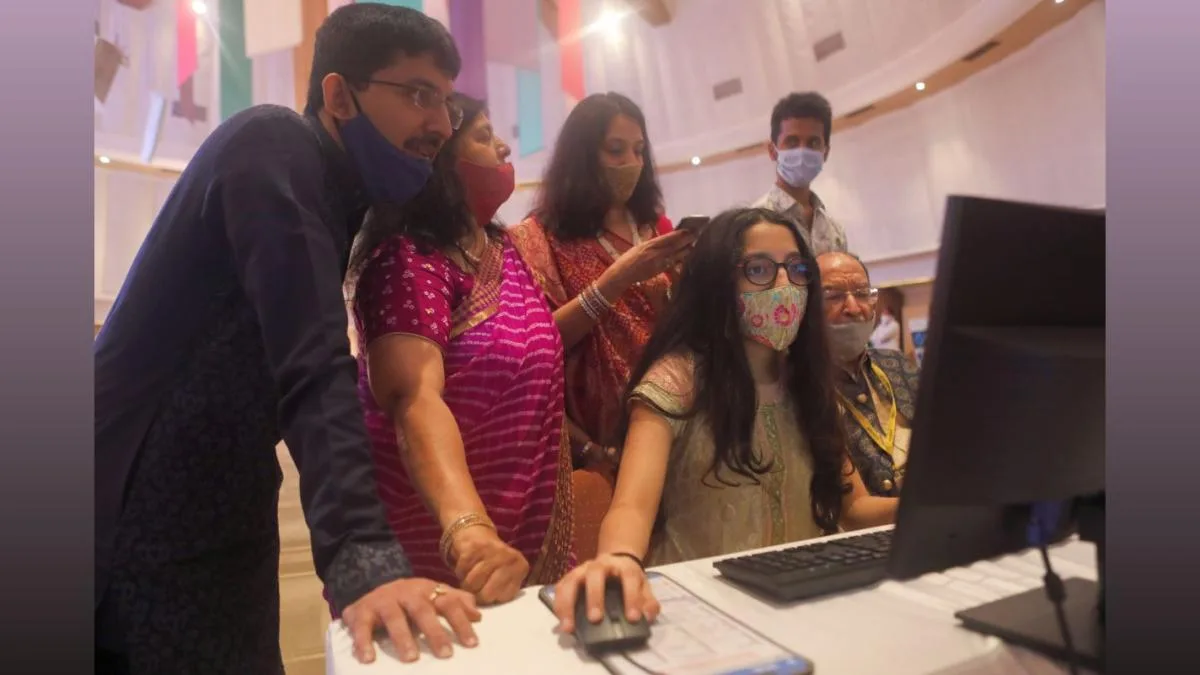
Indian stock markets ended marginally lower in the special Muhurat trading session on Sunday, November 8, 2026, breaking an eight-year Diwali winning streak amid profit-taking. Investors' wealth surged by Rs 2.60 lakh crore to Rs 5,05,67,743.40 crore (USD 5.37 trillion) during the symbolic session marking the beginning of the new Hindu calendar year, Samvat 2083.
The 30-share BSE Sensex dipped 28.62 points, or 0.04 per cent, to settle at 80,999.40, while the 50-share NSE Nifty declined 43.95 points, or 0.18 per cent, to end at 24,986.40. Both benchmark indices had entered Sunday's session after a powerful seven-session rally that powered the strongest weekly rally since February 2021. During the preceding week, the Sensex had surged 6,568.49 points, or 8.82 per cent, while the Nifty gained 1,977.25 points, or 8.58 per cent. On Friday, the final trading session of Samvat 2082, the Sensex jumped 1,718.01 points, or 2.17 per cent, to settle at 81,028.02, and the Nifty rallied 493.75 points, or 2.01 per cent, to end at 25,030.35, reclaiming the 25,000 mark for the first time since February. Foreign Institutional Investors bought equities worth Rs 13,749.82 crore on Friday, according to exchange data. The special one-hour session on Sunday ran from 2:20 pm to 3:30 pm, preceded by block deals from 1:50 pm to 2:05 pm and a pre-open session from 2:05 pm to 2:20 pm, following the annual tradition of Lakshmi Pujan.
Who Acted and Who Was Hit as Bulls Took a Diwali Break?
Market participants experienced divergent fortunes during the shortened trading window on Dalal Street. Among the 30 Sensex firms, Mahindra & Mahindra, InterGlobe Aviation, Trent, Infosys, Bharti Airtel, and Axis Bank emerged as laggards, with Mahindra & Mahindra declining 0.92 per cent to Rs 3,264.60. Conversely, Sun Pharma, Tata Steel, Maruti, and Power Grid advanced, with Sun Pharmaceutical Industries rising 3.33 per cent to Rs 1,922 and Tata Steel gaining 2.37 per cent to Rs 190.40. Sectoral performance showed media and pharmaceutical stocks outperforming, as the Nifty Media index advanced 1.84 per cent and Nifty Pharma gained 1.70 per cent. Meanwhile, banking and financial stocks dragged the market downward, with the Nifty Bank index declining 0.40 per cent to close at 58,850.65. Broader markets fared better than benchmark indices, with the Nifty Smallcap 250 index advancing 1.22 per cent and the Nifty Microcap 250 gaining 1.40 per cent. Of the 3,550 stocks traded so far, 2,716 advanced, 736 declined, and 98 remained unchanged.
That rotation from large-cap benchmarks to broader small-caps highlights a market pausing to catch its breath rather than retreating in panic.
What Do Analysts Say About Samvat 2083?
Market experts viewed the modest consolidation as a natural and healthy pause following an extraordinary week of gains. The Indian market closed marginally lower on Sunday's special Muhurat Trading session, snapping its seven session winning streak that had powered the strongest weekly rally since February 2021.
The Nifty 50 declined 0.18 per cent to close at 24,986.40, slipping just below the psychological 25,000 mark after opening higher at 25,070 and touching an intraday high of 25,132.
The Sensex similarly eased 28.62 points (0.04 per cent) to settle at 80,999,
said Ponmudi R, CEO of Enrich Money, an online trading and wealth tech firm, who described the dip as natural profit-booking after an exceptional week. Raamdeo Agrawal, Chairman and Co-Founder of Motilal Oswal Financial Services, struck an optimistic chord for the year ahead: After two years of stagnation, market has the potential to give investors bumper returns by next Diwali, because of confluence of low valuation and high earnings growth. Potential crash in oil prices, stable currency, return of foreign investors, moderation of AI hype and broad based earnings growth will support higher valuation multiples.
Gaurav Garg, Head Research, Lemonn, added that market direction moving forward will depend on corporate earnings, domestic growth, foreign fund flows, global developments, and crude oil movements. Meanwhile, ICICI Securities maintained a constructive outlook, noting that India's earnings momentum remains encouraging with listed companies delivering over 20 per cent growth in revenue and profit after tax in Q2FY27, while the Nifty 50's two-year forward P/E of 16.6x sits below its 10-year average of 18.2x.
Brokerages recommended approximately 39 stocks for the new Samvat year, featuring large caps such as Reliance Industries, Bharat Electronics, Bajaj Finance, ICICI Bank, Eternal, Tech Mahindra, Kotak Mahindra Bank, and Larsen & Toubro, with projected potential gains reaching up to 70 per cent.
How Do Cultural Traditions Meet Modern Markets?
The annual event bridges centuries-old custom with contemporary electronic trading platforms. Muhurat Trading traces its origins to 1957 at the Bombay Stock Exchange, and was later adopted by the NSE in 1992. The practice is rooted in the traditional opening of fresh account books on Diwali to invite prosperity and financial growth for the Hindu business community entering Samvat 2083. Despite the cultural weight and historical data showing average gains of around 0.5 per cent in positive years, the session operates under standard regulatory frameworks. Closing auction timings ran from 3:20 pm to 3:35 pm, followed by a post-closing session from 3:50 PM to 4:00 pm.
The eight-year winning streak since 2018 may be broken, but the underlying expansion of market capitalisation signals robust structural participation.
What Lies Ahead After the Festive Bell?
The return to regular trading hours brings investors back to the harsh realities of macroeconomic cross-currents and corporate earnings reports. While Geojit advises that the recent market correction offers a favorable risk-reward ratio for medium- and long-term participants, external pressures from global volatility remain acute. The divergence between flat benchmark indices and advancing small-cap portfolios points to selective accumulation by domestic participants who continue to shrug off foreign outflows.
That resilience suggests Dalal Street is pricing in domestic earnings strength over global turbulence as Samvat 2083 gets underway.