Kenyan cult leader Paul Mackenzie found guilty of murdering 191 people
A Kenyan court has convicted doomsday preacher Paul Mackenzie and 29 associates of murder over the deaths of 191 people in the Shakahola forest mass starvation.
- Headline: Kenyan cult leader Paul Mackenzie found guilty of murdering 191 people
- Dispatch Summary: A Kenyan court has convicted doomsday preacher Paul Mackenzie and 29 associates of murder over the deaths of 191 people in the Shakahola forest mass starvation.
- Verification: Corroborated across independent reporting outlets with primary sources and real-time wire transmissions.
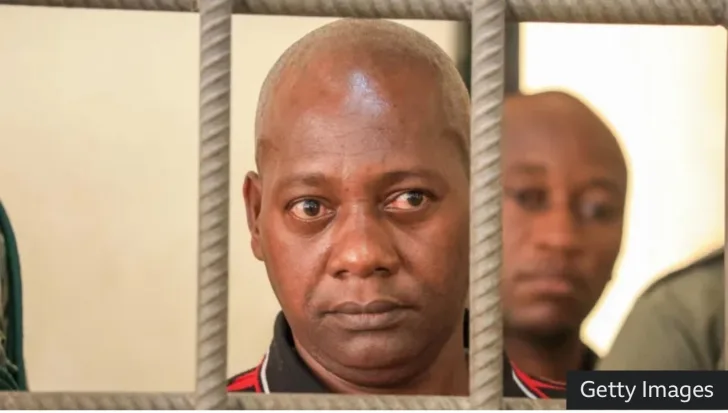
Families who lost children and relatives in one of the deadliest cult disasters in modern history finally saw accountability on Monday when a Kenyan court convicted doomsday preacher Paul Mackenzie and 29 of his associates of murder. Justice Diana Kavedza Mochache delivered an eight-hour judgment at the Mombasa High Court, ruling that Mackenzie and his co-accused operated an organized system that enforced fatal fasting among followers of the Good News International Church. The verdict covered the deaths of 190 children and one adult whose remains were among more than 400 bodies recovered from shallow graves in the Shakahola forest near Kenya's coast. Mackenzie, a former taxi driver who founded his ministry in 2003, sat in court wearing a striped polo shirt and red trousers beside his wife, who is among the co-accused. Prosecutors established that the cult leader ordered followers to starve themselves and their children to death so they could meet Jesus before the end of the world, rejecting the defense's argument that victims starved voluntarily.
The tragedy first came to light in mid-March 2023 when a local man reported to police that his brother and wife had starved their children to death in the forest. Authorities subsequently discovered a vast expanse of makeshift polythene and thatch homes divided into areas bearing biblical names such as Jerusalem and Judea. According to state investigators and testimonies from survivors and gravediggers, Mackenzie structured the mass starvation in phases, targeting children first, followed by women and young men, and finally remaining men. Postmortem examinations revealed that victims died not only from extreme starvation but also from blunt trauma, stranguration, suffocation, and neck compression. Seventeen men hired from nearby towns as gravediggers discovered bodies arranged in lines inside massive graves, including infants just a few weeks old with their hands and legs tied and bodies wrapped in bedsheets.
How did the cult enforce the fatal fasts?
The court found that Mackenzie established a rigid hierarchy that used religious teachings to control and isolate followers completely. Witnesses and prosecutors detailed how children were separated from food while their parents watched, and anyone resisting the directive to fast was forced through kicks and blows. Mackenzie taught that modern medicine was evil and education was forbidden, instructing women to shave their heads or keep them unkempt while banning make-up. Salim Karisa, a gravedigger, described transporting people into the forest on motorbikes while noting that the operation was so secretive that outsiders remained unaware of the horrors unfolding within. Stephen Mwiti, who lost all six of his children to the sect and buried his son Samuel, recounted confronting Mackenzie at his house and finding him surrounded by bald women and tens of children. Prosecutors relied on 121 witnesses, postmortem findings, and survivor testimony to prove that armed guards patrolled the forest perimeter to prevent anyone from escaping.
That rigid control pushed desperate families to their breaking point while the preacher evaded scrutiny for years. Francis Wanje, 62, who lost eight family members including his daughter and two grandchildren, expressed relief outside the courthouse after years of psychological trauma. He stated that he hoped the ruling would serve as a permanent lesson to the public to prevent similar atrocities. Yet, even as survivors like 23-year-old Peter Shukrani described how his mother threw away his medication because their doctrine banned healthcare, some followers remained steadfast in their devotion. Shukrani, who was rescued in March 2023 from a bedridden state of severe illness, insisted that Mackenzie was a good person who cared for him and that followers made their own choices.
Why were authorities able to act only after hundreds died?
The judicial reckoning arrived alongside intense scrutiny of state security forces and administrative officials who failed to intervene despite years of warning signs. Mackenzie had been on the radar of Kenyan authorities since 2017, when police searched his premises and subsequently charged him with radicalisation, a case that ended in an acquittal in October 2021. Authorities shut down his main church in Malindi in 2019, prompting his relocation to the isolated Shakahola forest 70km (43 miles) away. The Commission on Administrative Justice and the Kenya National Commission on Human Rights concluded that government officials exhibited a gross dereliction of duty by ignoring warnings between 2021 and 2023, missing multiple chances to act, and providing weak support to survivors. President William Ruto acknowledged in 2023 that government agencies should have been capable of preventing the mass deaths and stated that he took personal responsibility as president. Mackenzie was arrested briefly in March 2023 and released on bail, a decision relatives say emboldened him to accelerate his doomsday timeline before police arrested him again in April 2023 and began systematic exhumations.
That failure of oversight has triggered widespread national debate regarding the regulation of religious organizations in a country where faith occupies a central role in public life. Lawmakers and rights advocates are pushing for stricter legal frameworks to monitor unregistered ministries operating remote compounds. Meanwhile, Dan Paul Mackenzie, the cult leader's son who worked as a cameraperson broadcasting sermons on Times TV, broke from his father's defense and maintained that the preacher bore full responsibility for the mass killings. While the current verdict addresses 191 deaths, prosecutors have indicated that investigations into the remaining bodies recovered from the forest are ongoing. The legal battle is far from finished for the self-proclaimed pastor.
What other charges and legal battles remain?
Mackenzie and his co-accused face an extensive array of additional criminal proceedings that extend well beyond Monday's murder convictions. In January, prosecutors charged Mackenzie over the deaths of another 52 people allegedly directed at Kwa Binzaro village, a settlement located about 18 miles (30km) from Shakahola, while he was in detention. He has pleaded not guilty to those charges. In separate ongoing court cases, Mackenzie and his associates face additional counts of terrorism, radicalisation, manslaughter, child cruelty, torture, and denying children access to education. Prosecutors say they want Mackenzie and a few others to hang, although Kenya has carried out no executions since 1987. The defense maintains that the broader allegations rely heavily on circumstantial evidence, hearsay accounts, and inconclusive forensic findings. As courts prepare to schedule sentencing and mitigation hearings for the convicted individuals, the fundamental question remains whether the ongoing trials and pending investigations can fully establish accountability for the more than 400 lives lost in the Shakahola forest.