Israeli strike on Gaza hospital kills 6 people, health authorities say
An Israeli airstrike hit the surgical wing of Nasser Hospital in Khan Younis early Thursday, killing six people, including a surgeon, and wounding up to 28.
Israeli strike on Gaza hospital kills 6 people, health authorities say
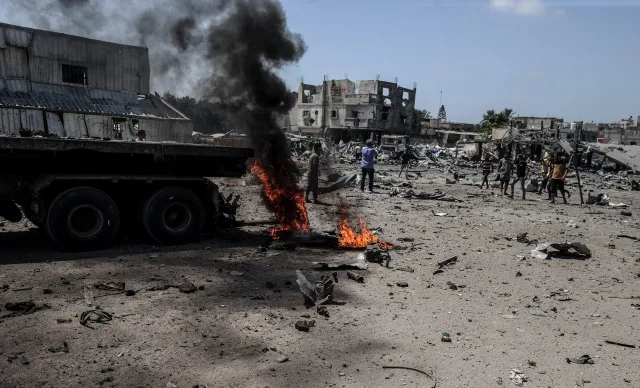
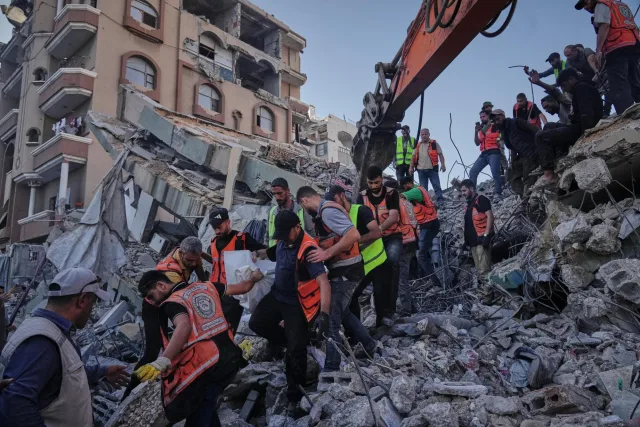
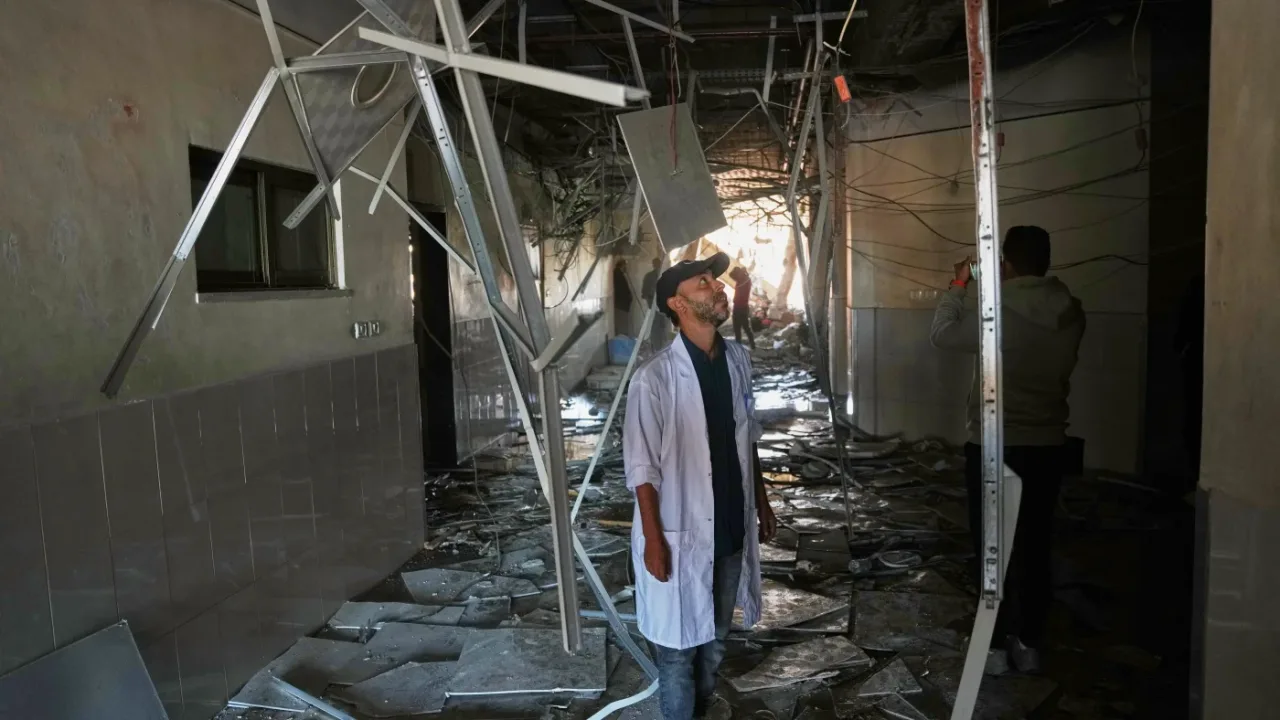
An Israeli airstrike hit the surgical wing of Nasser Hospital in southern Gaza early Thursday, killing at least six people, including 52-year-old surgeon Dr. Rizk Abu Shaira and a 13-year-old boy who was supposed to have surgery. The early morning blast tore through the five-storey structure in Khan Younis, reducing parts of the building to rubble and scattering medical equipment across hospital beds.
Footage from inside the hospital showed two bombs, one of which failed to explode. A label on the unexploded munition identified it as a US-manufactured GBU-39/B, a 250-pound bomb supplied to Israel. The attack knocked the surgery department, which serves half of Gaza's 2 million people, out of service. A total of 40 people were injured in the strike, including two doctors who are in critical condition and Ayman Abu Obeid, a doctor who was on an overnight shift when the explosion ripped through the room where he and others were sleeping.
All of a sudden the world turned upside down. It went dark all at once,
Ayman Abu Obeid said from a hospital bed.
For ordinary readers tracking the conflict, the attack highlights the accelerating vulnerability of the few remaining medical facilities in the enclave. The strike occurred despite a U.S.-backed ceasefire that took effect in October 2025, a truce during which Israeli strikes and gunfire have killed 1,622 people according to health authorities. The United Nations puts the figure at more than 1,400 people killed by Israeli forces since the ceasefire began, alongside five Israeli soldiers killed during the same period.
How the strike unfolded at Nasser Hospital
Two missiles crashed through the roof of the building just after midnight, striking the wards that housed surgery units and intensive care units. Ezz Eddine Abu Sabha, a Gaza Civil Defense spokesman, said the attack tore through part of the hospital in the dark of night, leaving charred debris scattered across the destroyed unit. Mahmoud Basal, another Gaza civil defense spokesperson, confirmed the details of the strike to Reuters.
British surgeon Goher Rahbour, who was volunteering on the fourth floor of the surgical department when the bomb hit, said the blast shook the entire building and left the area filled with thick smoke. Parts of the second and fourth floors were severely damaged or destroyed, with rebar dangling from the ceiling where the munition had penetrated. It was extremely smoky,
Rahbour said.
Dr. Rizk Abu Shaira was killed in the attack alongside at least two patients, including the 13-year-old boy. Dr. Abu Shaira was featured in a 2026 documentary, American Doctor, working alongside three visiting US doctors who help provide medical care for Palestinians in Gaza. Hours before the strike, Dr. Rahbour had been operating alongside him, describing his colleague as Lovely guy, happy and smiling,
Rahbour said.
Ahmed al-Farra, a doctor and the general director of the hospital, said no warning came before the attack. He said surgeries had been suspended, as had work in the radiology department and the laboratory, because of damage to the building where medical personnel were already struggling to provide care due to supply shortages and miserable conditions. He said other nearby medical facilities were not equipped to do the type of specialized surgeries that Nasser Hospital had been providing, leaving patients in need of them to face an unknown fate.
He said an attack on a hospital should be met with a forceful response from the international community. Imagine if this event happened in another country in the world. Would the world fall silent about it? No, by God, no,
al-Farra said, adding, No one’s safe here.
Atiya Abu Basir, an elderly patient at the hospital, said, I was asleep when suddenly I was covered with dust and glass. I couldn’t walk because I just had surgery.
Two more Palestinians were killed later on Thursday in separate incidents. One person was killed and several were wounded in an Israeli airstrike on a car in Gaza City, and another person was killed by Israeli gunfire in central Gaza's Bureij refugee camp, according to medics.
What the military and health authorities say about the target
The Israeli military stated that it targeted the commander of Hamas' Khan Younis Brigade, Muhammad Abu Ismail, as well as additional terrorists who were hiding inside the Nasser Hospital in Khan Younis.
The military said Abu Ismail planned and advanced attacks on Israeli forces and civilians, accusing Hamas of turning the hospital compound into a headquarters and operating from there, storing weapons in the facility and maintaining command rooms and observation posts. Reuters reported it could not independently verify the claims, and CNN reached out to the IDF to ask if Abu Ismail had been killed in the strike and what measures were taken to reduce the risk to civilians. The commander identified by the military was not among the dead.
The Hamas-run health ministry condemned the attack as a flagrant violation of international laws and conventions. A Hamas spokesperson condemned the attack as a full scale war crime.
Under international humanitarian law, hospitals and their staff are protected unless used for military purposes, though Israel has repeatedly accused Hamas of using medical facilities as cover. While medical facilities can lose their protected status under certain conditions, rights groups say Israel has not shown sufficient evidence in many cases to justify its attacks on them during the war.
Maryam Abu Hatab, whose brother was killed in the strike, said, They say there is a ceasefire. Where is there a ceasefire? Since the ceasefire, there are more massacres. There are massacres every day in markets, in universities, in the streets. The donkey carts stood by us more than the world’s countries.
The history of attacks on Nasser Hospital
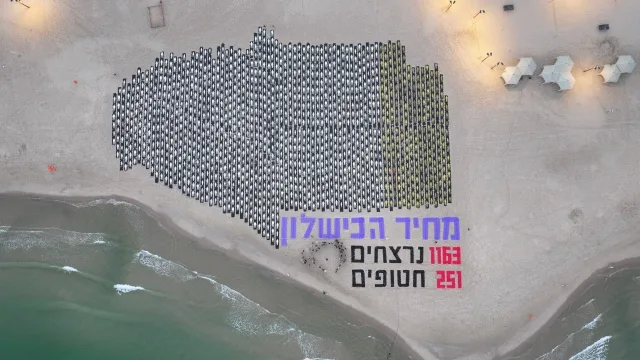
The facility in Khan Younis has faced repeated military operations during the war, which began on October 7, 2023, when Hamas-led militants attacked southern Israel, killing around 1,200 people and taking 251 others hostage. Since then, Israel's retaliatory offensive has killed more than 74,600 people according to the Gaza Health Ministry, whose figures are seen as generally reliable by U.N. agencies and independent experts. A report from the United Nations, World Bank and European Union said in April that more than 1,800 medical facilities in Gaza have been partially or completely destroyed since the conflict began. Hospital officials say the Nasser Hospital complex has been struck by the Israeli military at least seven times since the start of the war.
Previous strikes and raids on Nasser Hospital include:
- October 7, 2023: The Gaza war began with Hamas attacks on southern Israel.
- August 2025: The hospital was hit by a double-tap Israeli attack that killed at least 20 people, including journalists and health workers such as Mariam Dagga, who worked for The Associated Press.
- October 2025: A U.S.-backed ceasefire went into effect, though strikes continued.
- Thursday: An airstrike hit the hospital's surgical wing, killing six people, including Dr. Rizk Abu Shaira and a 13-year-old boy.
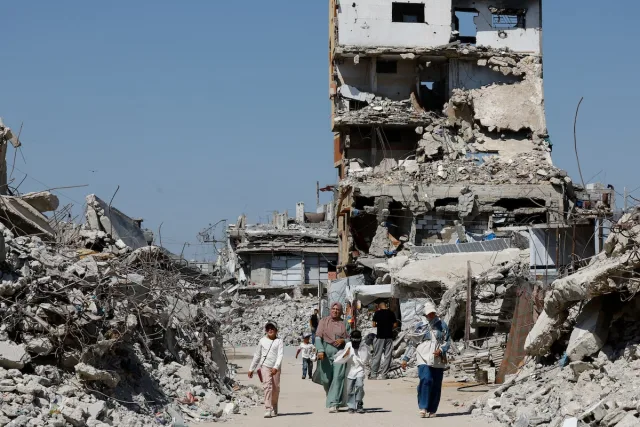
Nasser Hospital remains one of the few functioning medical facilities left in Gaza, where healthcare infrastructure has been decimated by years of conflict and there is no fully functioning hospital left in the devastated enclave.
What affected readers and observers should watch for next
Earlier in the week, the U.S.-led Board of Peace, which is tasked with overseeing the ceasefire in Gaza, chided Israel over the humanitarian crisis as seasonal rains swamped tens of thousands of tents across the coastal enclave, where nearly two million Palestinians are displaced. The board called for the urgent entry and distribution of essential shelter, sanitation, drainage, and other winterization supplies. Israel stated that more than 91,000 tents had entered Gaza ahead of winter, but refused to allow in the heavy equipment needed for large-scale cleanup and rubble removal efforts, with Israel's Coordinator for Government Activities in the Territories stating that the reconstruction of Gaza can only begin after Hamas fully disarms.
Readers following developments in Gaza should monitor updates from international humanitarian monitors regarding access to emergency medical care in southern Gaza, as well as assessments from the United Nations on the stability of the October 2025 ceasefire. Those seeking to track the humanitarian situation can watch for formal statements from the World Health Organization and local civil defense units regarding the operational status of the remaining wards at the Khan Younis complex.
Updated 3 times since publication; last update 12 November 2026, 15:18.