Israel rejects Trump's 15-point plan for Gaza, says PM Benjamin Netanyahu
Prime Minister Benjamin Netanyahu has rejected Donald Trump's 15-point peace plan for Gaza, insisting Israeli forces will not withdraw until Hamas fully disarms.
- Headline: Israel rejects Trump's 15-point plan for Gaza, says PM Benjamin Netanyahu
- Dispatch Summary: Prime Minister Benjamin Netanyahu has rejected Donald Trump's 15-point peace plan for Gaza, insisting Israeli forces will not withdraw until Hamas fully disarms.
- Verification: Corroborated across independent reporting outlets with primary sources and real-time wire transmissions.
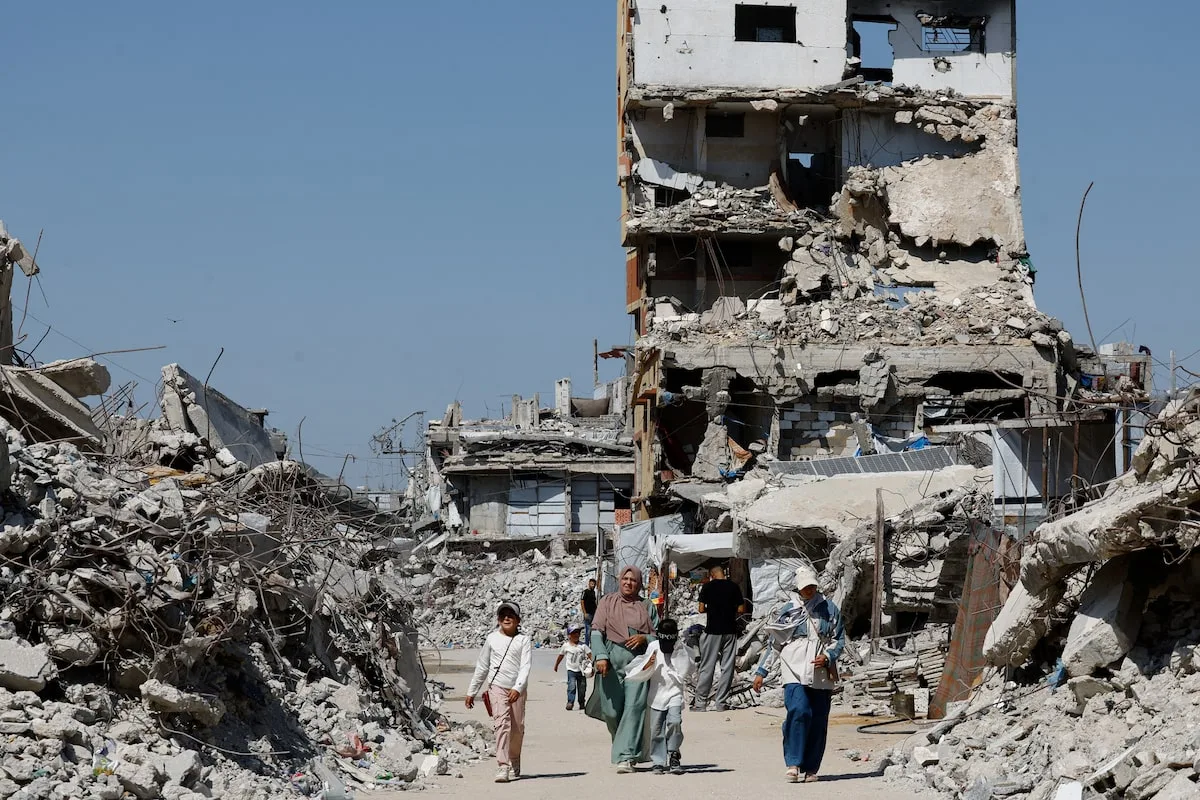
Israeli Prime Minister Benjamin Netanyahu on Sunday restated his rejection of Donald Trump’s 15-point plan for Gaza, even as Israel’s military has effectively halted attacks in the territory under pressure from the U.S. President. The move comes amid a pivotal moment in the conflict, with Netanyahu emphasizing that Israeli forces will not withdraw until Hamas is “genuinely disarmed.” The prime minister’s remarks, delivered during a cabinet meeting, underscored his insistence on security guarantees, a stance that has drawn both domestic and international scrutiny.
Netanyahu’s rejection of the plan, which includes provisions for a transitional governance committee, aligns with Israel’s broader demand for dismantling Hamas’s military infrastructure. “Israel rejects the 15-point document,” Netanyahu declared, adding that the Israeli Defense Forces (IDF) “will not carry out any withdrawal until Hamas is genuinely disarmed.” This condition, he reiterated, applies to “heavy weaponry, lighter weaponry, all weaponry,” a position that has remained unchanged despite ongoing negotiations with the U.S.
The Trump-endorsed plan, overseen by the U.S.-led Board of Peace, has faced significant hurdles. Hamas has insisted that its disarmament would only occur after Israel fully withdraws from Gaza and halts attacks, a demand that remains unmet. A senior Hamas official, Basem Naim, criticized Israel for obstructing the process “for internal political and electoral reasons,” while the group reiterated its commitment to a roadmap agreed with mediators in Cairo. However, the plan’s details, as revealed by Middle East Eye, show that Hamas would retain control of weapons through a “National Committee,” a structure that Israel has rejected as insufficient for ensuring security.
Recent developments suggest a shift in Israeli military strategy. According to CBC News, Israel has effectively halted attacks in Gaza since a meeting between Netanyahu and Nikolay Mladenov, the board’s envoy, on Monday. A source familiar with Israel’s position confirmed that the military would now act only against “immediate threats” and has ceased targeted assassinations, a near-daily practice under previous operations. This tactical adjustment has been framed as a response to U.S. pressure, though Netanyahu’s office has not explicitly linked the change to the peace plan.
Meanwhile, Netanyahu has signaled his intent to maintain a hardline stance ahead of upcoming elections. The prime minister, who faces re-election on October 27, has faced pressure from both far-right allies and U.S. officials. Far-right Finance Minister Bezalel Smotrich praised Netanyahu’s position, stating, “The Gaza Strip cannot begin any process of reconstruction before the complete dismantling and demobilization of Hamas.” This reflects the internal political dynamics shaping Israel’s approach, as Netanyahu balances domestic support with international mediation efforts.
The plan’s provisions for Gaza’s reconstruction have also drawn attention. A Yahoo News report revealed that Israel approved new development projects east of Rafah, within the “Yellow Line,” aiming to build living spaces for Palestinians outside of Hamas’s control. Security sources indicated that workers involved in the construction would be Gazan Palestinians undergoing background checks by the Shin Bet. This initiative, if implemented, could represent a shift in Israel’s policy, though its scope and timeline remain unclear.
Hamas’s position on the plan remains conditional. The group has not explicitly rejected the agreement but has tied its compliance to Israel’s fulfillment of obligations, including a phased withdrawal and increased humanitarian aid. A Hamas official, Ghazi Hamad, stated that the group would retain weapons “until Israel halts its attacks, allows more aid, and withdraws its forces in accordance with the ceasefire.” This mutual dependency has left the ceasefire in a fragile state, with both sides accusing each other of failing to meet commitments.
The Board of Peace, chaired by Trump and including figures like Tony Blair, has faced skepticism from international observers. Critics argue that the plan’s reliance on a “transitional governance committee” and an International Stabilization Force lacks concrete mechanisms for enforcing disarmament. Netanyahu’s rejection has further cast doubt on the board’s effectiveness, as the prime minister has consistently emphasized that Israel’s security concerns must be addressed before any progress is made.
As the conflict enters its third year, the lack of consensus on key issues—disarmament, governance, and humanitarian aid—continues to stymie efforts to end the war. The recent scaling back of Israeli attacks and the introduction of new reconstruction plans suggest a complex interplay of military, political, and diplomatic factors. However, with both sides maintaining rigid positions, the path to a lasting resolution remains unclear, leaving Gaza’s residents in a state of uncertainty.
How significant is this wire dispatch?
Cast your anonymous vote to register reader consensus across journalism and intelligence sectors.
Dateline Wire is dedicated to independent, evidence-backed reporting. This briefing was synthesized from primary source reporting, corroborated across independent newsrooms, and verified against our Editorial Standards.