Houthis strike Aden presidential palace leaving five dead and 16 wounded
Iran-aligned Houthi rebels launched a missile attack on the Al-Maashiq presidential palace in Aden, while cabinet ministers escaped unharmed.
- Headline: Houthis strike Aden presidential palace leaving five dead and 16 wounded
- Dispatch Summary: Iran-aligned Houthi rebels launched a missile attack on the Al-Maashiq presidential palace in Aden, while cabinet ministers escaped unharmed.
- Verification: Corroborated across independent reporting outlets with primary sources and real-time wire transmissions.
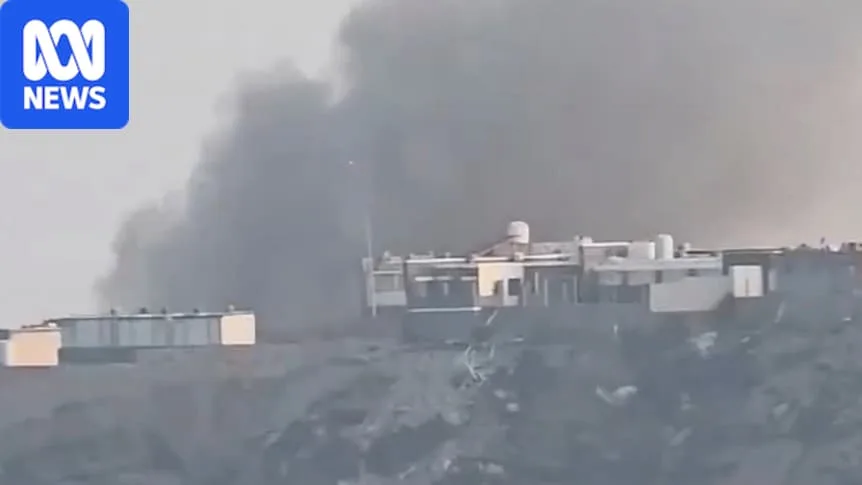
Iran-aligned Houthi rebels launched a missile attack on Thursday targeting the Al-Maashiq presidential palace complex in the southern Yemeni port city of Aden, the seat of the country's internationally recognized government. While differing casualty counts circulated—with Yemen's health minister reporting five dead and 16 wounded, and other officials citing two deaths among the prime minister's security detail—prime minister Shaya al-Zindani and cabinet ministers emerged unharmed.
The strike marks the first time Al-Maashiq palace has been hit in the present conflict between the Iran-aligned Houthis and Saudi Arabia, ending a truce that had held until this year. Witnesses reported hearing at least six explosions near the complex, sending thick smoke billowing into the air and causing residents to flee in panic. The Houthi-run news agency SABA and military spokesperson Yahya Saree claimed the group bombed a Saudi military operations headquarters and weapons depots inside the complex as part of their declared policy of targeting Saudi reinforcements. Yemeni officials stated the site was run by Saudi officers, though Reuters could not independently verify those claims. An anonymous Yemeni government minister told Agence-France Press that the attackers struck the government forces' command post with three missiles and hit the Saudi-led coalition's command post with two others.
A Widening Regional Conflict and a Besieged City
The assault on Aden forms one front in a rapidly escalating conflict that has drawn in regional powers and rattled global markets. Alongside the palace strike, the Houthis targeted the central city of Marib with ballistic missiles, according to the Yemeni Information Ministry. Meanwhile, pro-government forces pushed deeper into Taiz, Yemen's third-largest city, where fierce fighting raged around Mount Han after Houthi fighters attempted to seize strategic positions. Yemeni officials and army commanders stated the Houthis have suffered heavy losses in Taiz, capturing recently recruited civilians and administrative personnel as the group finds itself drawn into a war of attrition.
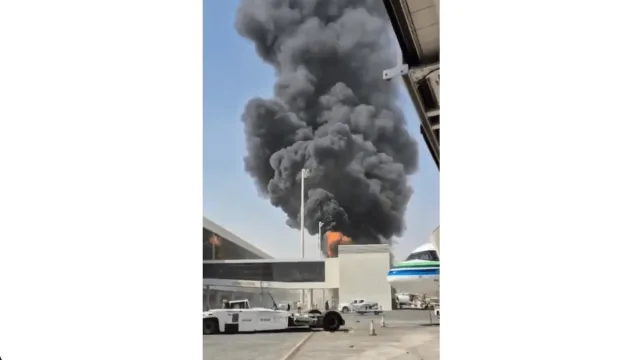
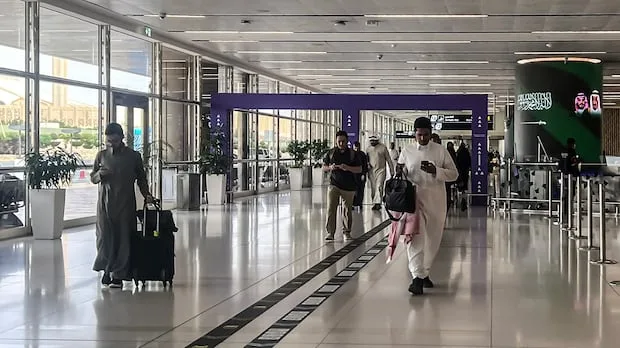
Humanitarian conditions in Taiz continue to deteriorate as the Houthis maintain a complete siege, blocking essential goods and life-saving medicines from reaching hundreds of thousands of residents. The European Union's mission to Yemen and EU ambassador Patrick Simonnet condemned the blockade, calling on Houthi forces to lift the siege and allow aid delivery. Beyond Yemen's borders, the conflict has intensified pressures on Saudi Arabia through persistent drone and missile barrages. Coalition spokesperson Turki al-Maliki reported that Houthi attacks on King Khalid International Airport in Riyadh this month killed 17 people and wounded 333, while strikes on Abha airport killed three and wounded 28. Additional Houthi operations struck oil giant Saudi Aramco facilities and prompted the Saudi-led coalition to intercept missiles and drones over Medina, Khamis Mushait, and other areas.
Weighing the Stakes and Next Steps
This attack is a cowardly act in continuation of a criminal pattern of targeting civilian facilities and civilians.
Shaya al-Zindani, Prime Minister of Yemen, via X
Coalition officials maintain that the Houthis are acquiring advanced military technology, including ballistic missiles, drones, and explosive-laden fast boats, with the assistance of regional actors, including Iran, which officially denies arming them in violation of a UN arms embargo. In response to the widening aerial campaign, the Saudi-led coalition said it has destroyed 127 weapons storage facilities and launch platforms in Yemen's mountainous areas. Houthi military spokesperson Yahya Saree countered by warning that Saudi airspace and airports were unsafe, renewing a warning to airlines while excluding airspace over the holy cities of Mecca and Medina.
That leaves the internationally recognized government and its Saudi-backed coalition partners attempting to balance a nationwide military offensive against a resilient insurgency while safeguarding civilian infrastructure. The failure of the Aden palace strike to eliminate the cabinet provides a momentary political shield for the interim government, but the simultaneous humanitarian crisis in Taiz and relentless cross-border missile fire ensure that the economic and military costs for all belligerents will continue to mount.