EPA Reports No Drinking Water Contamination After Army Lead Detonation in Iowa
Federal regulators report no initial lead contamination in Iowa drinking water following the Army's controlled detonation of 6,900 pounds of lead azide.
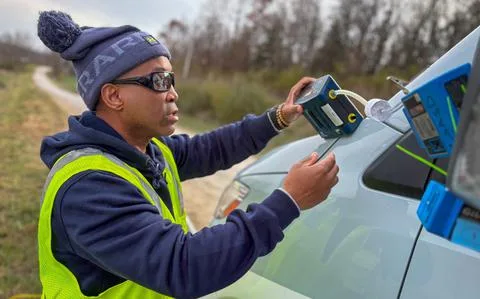
Residents in southeastern Iowa worried about toxic fallout received their first official reassurance on Saturday when federal environmental regulators reported that initial laboratory results showed no increase in lead levels in local drinking water supplies following a major military explosion earlier in the week. The U.S. Environmental Protection Agency released the findings after analyzing water samples collected from bodies of water used for drinking in the region surrounding the Iowa Army Ammunition Plant.
That initial green light provides immediate relief for homeowners and families across the area, yet it leaves open the harder question of whether lingering dust on properties and playgrounds poses longer-term risks that standard water tests cannot capture.
What actually happened during the detonation in Middletown?
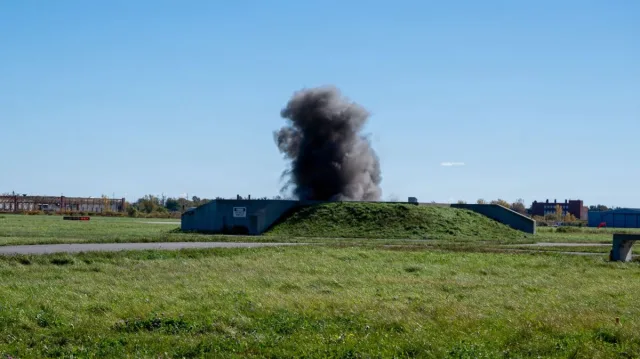
On Wednesday, the U.S. Army carried out a controlled detonation of 6,900 pounds of lead azide stored in 68 degrading plastic drums at the ammunition plant located in the tiny farming town of Middletown, Iowa, about 150 miles southwest of Des Moines. Two plumes of smoke and dust were seen rising from the explosion, which Maj. Gen. Eric Shirley, commanding general of the U.S. Army Sustainment Command, characterized during a press briefing as “exceeding expectations.”
That chemical is a primary explosive used in detonators and is especially dangerous to children and pregnant women. Once it settles in the environment, it does not break down, making the cleanup and monitoring process exceptionally delicate for surrounding communities.
The operation was managed alongside the Centers for Disease Control and the Federal Emergency Management Agency, while roughly 300 EPA personnel spent Thursday deployed in the field to assess schools, playgrounds, churches, and homes.
How extensive was the environmental testing conducted by federal agencies?
Federal regulators launched a massive sampling effort before and after the blast, tracking fallout across multiple environmental pathways. The EPA collected a total of 1,639 air, water, soil, and dust samples before the controlled demolition, followed by 1,618 samples afterward, bringing the overall tally past 3,200 specimens.
The agency also assessed 187 structures post-detonation, including schools, playgrounds, churches, daycare centers, and private residences. For drinking water specifically, the EPA drew 38 samples from bodies of water utilized for local consumption. Simultaneously, air monitoring operations ran for 30 consecutive hours following the Wednesday morning blast using Xact air monitoring systems, recording zero detect or non-detect readings of 0.0 µg/m^3 of airborne lead before concluding on Thursday afternoon at 1500 CT.
EPA personnel and contractors utilized 172 pieces of equipment and worked around the clock to ship samples to laboratories, verify results, and publish updates. By Saturday, the agency had completed 88% of post-detonation sampling at homes that had also been tested prior to the explosion, with remaining residential checks slated for completion as staff secure permission from property owners before entering private land.
Why did the Army detonate the stockpile instead of moving it?
Military commanders defended the drastic measure by pointing to the severe physical degradation of the explosive material. The Army stated that the safest option was to detonate the stockpile right away because the aging plastic drums were degrading and might explode uncontrollably at any time as the weather got colder, posing a catastrophic risk if moved along public transit corridors.
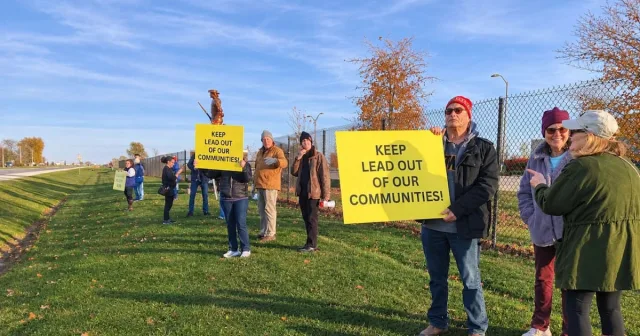
That justification, however, collided with severe local friction over communication and transparency. Residents in Middletown where the stockpile was held knew of the plans, but few others did, and warnings largely failed to register with elected officials and the broader public until days before the planned detonation. Residents and some elected officials criticized the Army for not being transparent enough and failing to provide adequate notice when the instability was first discovered.
Independent experts welcomed Wednesday’s initial air quality readings but said atmospheric sampling was of limited value and that the real measure of lead fallout would come from sampling of water, soil, and structural surfaces, the analysis of which would take longer.
What results are still pending and where can residents view them?
While air monitors registered clean air for 30 hours and initial drinking water tests showed no contamination, the full picture remains incomplete until comprehensive soil and dust lab results return. The EPA announced it would begin publishing the first waves of this broader sampling data online at https://t.co/zi6DsTFlG4, with updates rolling out as analyses are validated.
The agency cautioned that the exact location of each sample may take time to populate on the webpage map due to a rigorous verification process designed to ensure accurate reporting of collection sites. Officials pledged to continue providing updates as new lab results for the more than 3,200 air, soil, dust, and water samples return and get validated in the coming days.
The Army has been working alongside the EPA, Centers for Disease Control and the Federal Emergency Management Agency to monitor the effects from the detonation.