Afghanistan school blast kills 10 and injures over 100 people
An explosion at a residential dynamite depot adjacent to a middle school in eastern Afghanistan killed at least 10 people and injured over 100 others.
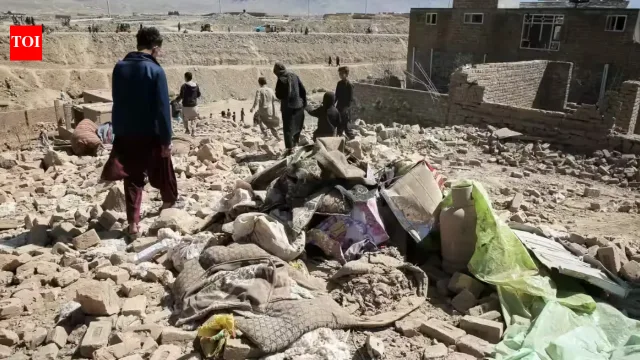
An explosion tore through a residential house directly adjacent to a middle school in eastern Afghanistan on Saturday, leaving families mourning at least 10 dead and over 100 injured. The blast struck at approximately 10 a.m. local time in the Andarsir area of Asadabad, the capital of Kunar province, while children were inside the educational facility. Varying early tolls from regional and national officials captured the chaotic aftermath: Interior Ministry spokesperson Abdul Mateen Qani reported at least 10 dead and nearly 110 injured, while Kunar Provincial Hospital director Mawla Dad initially tallied six students killed and 97 injured. Other local reports documented seven children dead alongside 99 wounded.
Social media footage captured the immediate panic as wounded children were pulled from cars and rushed into the Asadabad hospital emergency department while crowds gathered outside. Inside the medical wards, young victims lay side by side on hospital beds with bandages strapped tightly around their heads. Sami ul Haq Bayan, Kunar's information and culture director, stated that up to 15 of the wounded remained hospitalized while the rest were discharged following treatment. Part of the school building itself appeared to have collapsed from the force of the detonation.
How did a mining depot end up beside a classroom?
Initial investigations by the Taliban government point squarely to industrial negligence rather than a deliberate targeted attack. Abdul Mateen Qani stated that preliminary inquiries attribute the disaster to negligence and carelessness
at an explosives depot operated by nearby mining companies. Local officials, including Sami ul Haq Bayan and Mawla Dad, confirmed that the residential building directly adjoining the middle school had been used by mining operators to store dynamite and other extraction explosives. Kunar Provincial Police Headquarters spokesperson Farid Dehqan noted the blast occurred precisely at 10 a.m., prompting the deployment of an investigative delegation to the site.
The tragedy highlights the persistent dangers of unregulated industrial storage inside densely populated civilian zones. Mining operators frequently utilize residential structures in towns and villages to warehouse high-explosive materials, bypassing standard safety protocols. That leaves local authorities scrambling to investigate how hazardous commercial materials were permitted to sit adjacent to a bustling school.
Where does this stand against earlier school violence?
Saturday's explosion follows a series of violent incidents impacting Afghan schoolchildren in recent months. In August, a hand grenade attack at a school complex in the capital city of Kabul wounded more than 40 children aged between nine and 14. According to the United Nations Assistance Mission in Afghanistan, a single Kabul hospital admitted at least 35 injured students during that attack.
While the August assault in Kabul was a deliberate act of violence against an education center, the Asadabad disaster stems from industrial recklessness. Yet the end result for Afghan families is the same: children injured or killed inside spaces meant for learning. The juxtaposition of classrooms sitting mere feet from commercial dynamite stores reveals an infrastructure where safety regulations are routinely ignored.
Who is holding the mining companies accountable?
An investigative delegation has been dispatched to Asadabad to determine the full circumstances of the blast, according to Abdul Mateen Qani. Qani noted that further investigations are required to establish legal accountability for the mining firms utilizing the residential depot. However, officials have not yet announced specific arrests or suspensions of the companies involved.
Families affected by the disaster face immediate medical and emotional burdens, with dozens of children recovering from severe trauma and head injuries. Local medical facilities, already stretched thin, absorbed more than 100 casualties within hours of the morning blast. The response from the Interior Ministry has thus far relied on preliminary findings, leaving open the question of whether mining operations near residential areas will face government bans or tighter oversight.
Readers monitoring this developing situation should watch for official updates from the Kunar Provincial Hospital regarding the condition of the remaining hospitalized children, as well as findings from the Interior Ministry's investigative delegation regarding the identity of the mining companies operating the depot.