Christa Pike discharged from hospital ten days after botched execution i…
Death row inmate Christa Pike has been discharged from the hospital and returned to a Tennessee prison following a botched execution attempt.
- Headline: Christa Pike discharged from hospital ten days after botched execution i…
- Dispatch Summary: Death row inmate Christa Pike has been discharged from the hospital and returned to a Tennessee prison following a botched execution attempt.
- Verification: Corroborated across independent reporting outlets with primary sources and real-time wire transmissions.

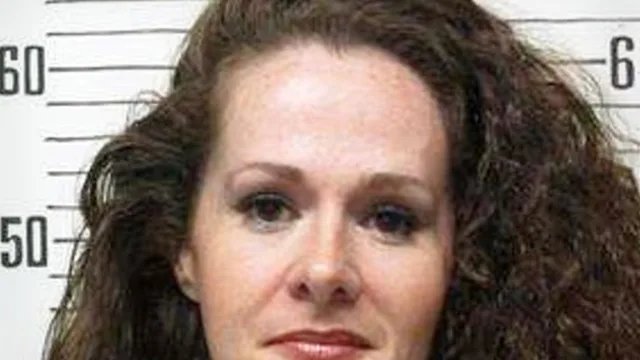
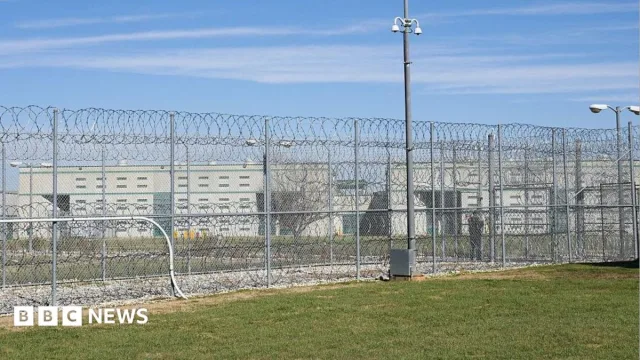
US death row inmate Christa Pike has been discharged from a local hospital and returned to the Deborah K. Johnson Rehabilitation Center in Tennessee, where she has been housed for more than 30 years, her lawyers confirmed on Saturday. The 50-year-old inmate spent ten days hospitalized following a botched execution attempt on September 30, during which authorities administered two doses of pentobarbital that failed to end her life. She is grateful to the first responders and her medical team for their care in these extraordinary circumstances,
her legal team, including Stephen Ferrell and Luke Ihnen from Federal Defender Services of Eastern Tennessee, and Randy Spivey and Kelly Gleason from the TN Office of the Post Conviction Defender, said in a statement. Her attorneys added, She is continuing to receive medical care at the prison, and we will continue to track her recovery.
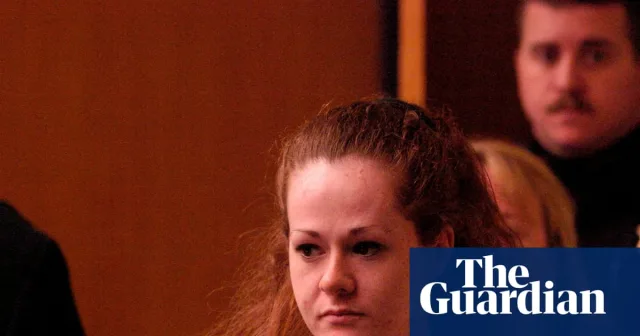
Pike's survival places her in uncharted legal and medical territory, as she is believed to be the only person to survive an execution attempt by lethal injection. Sentenced to death in 1996 for the 1995 beating and stabbing of 19-year-old Colleen Slemmer near the University of Tennessee in Knoxville when Pike was 18, her case has now triggered intense fallout. Tennessee Republican Governor Bill Lee has suspended all remaining executions in the state until at least the end of the year, called what happened deeply disturbing,
and ordered an independent investigation. Furthermore, Davidson County Chancery Court Chancellor I'Ashea Myles ordered the state to preserve all evidence related to the failed attempt—including intravenous lines, syringes, and documents detailing Pike's condition—and put Pike's initial legal challenge back on the active court schedule, reactivating a lawsuit originally launched in January.
Medical Recovery And Unanswered Legal Questions
The trajectory of Pike's physical condition over the ten days shifted dramatically. Following the September 30 procedure, where she was administered two doses of pentobarbital prescribed under the state protocol, she was rushed to a local hospital unconscious. For days, her defense team believed she was brain dead and expected her to be taken off life support. Instead, she woke up on Tuesday morning, October 6, with her lawyer Randy Spivey stating her first words were Where am I?
and Who are you?
By Wednesday afternoon, she was taking steps with assistance. By Thursday, October 8, she was walking with assistance, her lungs were clear, her arms which sustained significant injuries during the execution attempt were healing and regaining movement and strength, and she had started eating a regular diet.
Dr. Joel Zivot, a professor of anaesthesiology and surgery at the Emory University School of Medicine in Atlanta who has been retained by Pike's legal team, noted that while she is talking and now knows where she is, she has no memory of the execution itself. It’s unclear to me whether she possesses a full cognitive recovery. It’s too soon to really say. It could take weeks before that’s more clear,
Dr. Zivot said. At a press conference on Wednesday, her lawyers described her as shackled to the bed, suffering from pneumonia, significant swelling on her arms, and being unable to swallow, while feeling angry and confused about her ordeal. While her defense team has urged Governor Lee to reduce her sentence to life imprisonment without the possibility of parole, the state's intentions remain unclear. At a court hearing on Wednesday, Tennessee Assistant Attorney General Will Ayers told the judge that he does not know whether the state intends to reschedule Pike's execution.
A Timeline Of The Failed Execution And Aftermath
- January 1995: Christa Pike and her then-boyfriend, Tadaryl Shipp, commit the murder of Colleen Slemmer in Knoxville.
- 1996: Pike is formally sentenced to death.
- September 30, 2026: Tennessee attempts to execute Pike via lethal injection, administering two doses of pentobarbital that fail, leaving her unconscious and hospitalized.
- October 6, 2026: Pike regains consciousness on Tuesday morning, speaking her first words and stunning medical staff and legal counsel.
- October 7, 2026: Pike begins taking limited steps with assistance on Wednesday afternoon, while a Tennessee court orders authorities to preserve all execution-related evidence.
- October 8, 2026: Pike walks with assistance, eats a regular diet, and shows signs of physical healing in her arms and lungs.
- October 10, 2026: Pike's legal team announces her discharge from the hospital and her return to the Deborah K. Johnson Rehabilitation Center.
The broader debate over capital punishment has intensified alongside Pike's case, intersecting with a separate national controversy over the military's plan to livestream the execution of Nidal Malik Hasan in Texas on December 3. Defense Secretary Pete Hegseth's announcement of the livestream drew sharp rebukes from Vice President JD Vance, Senator Thom Tillis, and Archbishop Paul S. Coakley, who called it a barbaric promotion of a culture of death.
Meanwhile, in Tennessee, despite the pause ordered by Governor Lee, state lawmakers have not reconsidered capital punishment, with some discussing alternative methods such as the electric chair and firing squads. Polling from the Pew Research Center in July indicates that while about two-thirds of US adults consider the death penalty morally justified for murder, roughly six in ten say it does not deter crime, and about seven in ten point to a risk of executing an innocent person. With Pike now back inside the prison and continuing to receive medical oversight, observers and legal analysts are watching for how the preserved evidence and upcoming court motions will shape the question of whether the state will attempt to execute Pike again.