California Gov. Gavin Newsom Commutes Hundreds of Death Row Sentences
Governor Gavin Newsom has announced the commutation of all 548 death row sentences in California to life imprisonment without the possibility of parole. The decision, which aims to end state-sanctioned executions, now heads to the state Supreme Court for necessary reviews.
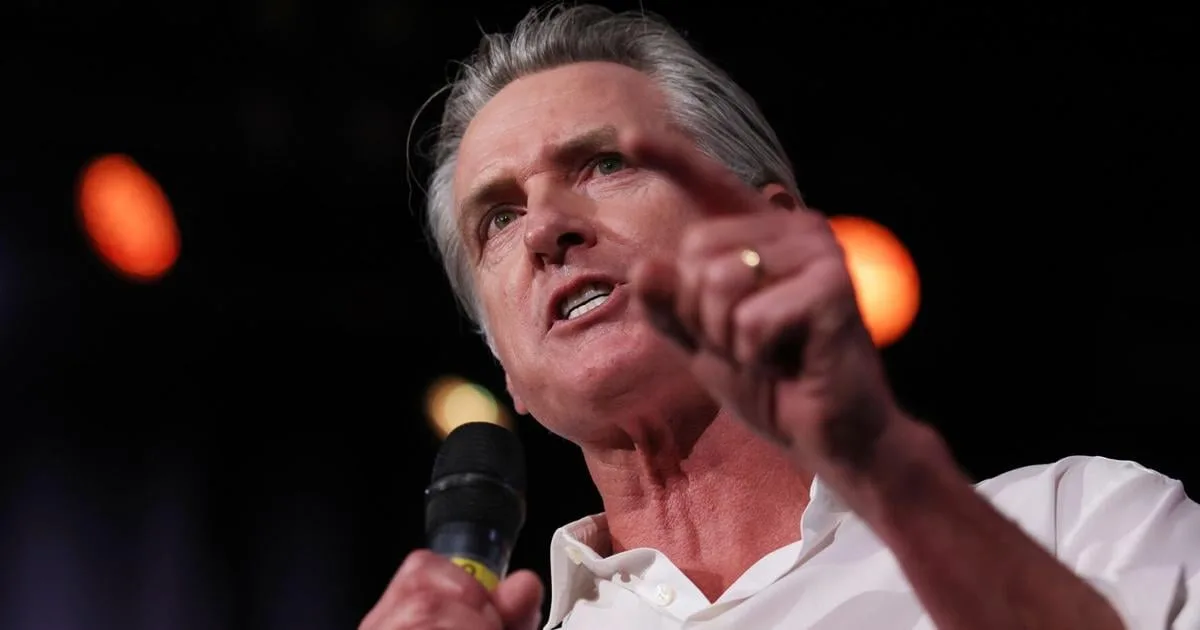
California Governor Gavin Newsom Commutes All 548 Death Row Sentences to Life Without Parole
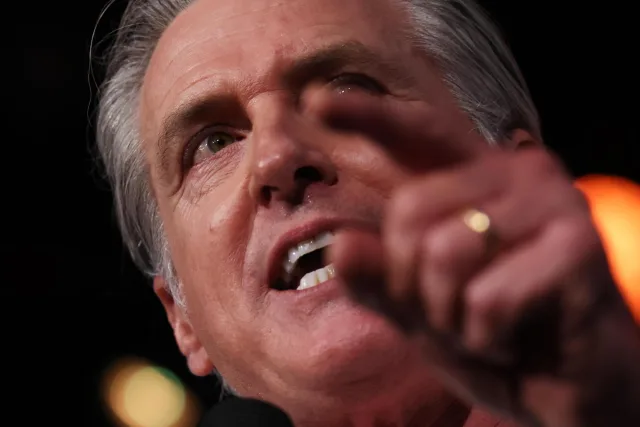
California Governor Gavin Newsom announced on Thursday that he will change all 548 death sentences in the state to life in prison without the possibility of parole. Standing as the largest act of mass clemency in U.S. history according to the Death Penalty Information Center, the sweeping decision clears the California death row for the first time since the state conducted hangings in the late 19th century. Newsom, a Democrat preparing to leave office after eight years who is considering a run for president, instituted a moratorium on executions in 2019 but now aims to clear death row entirely before his term ends.
The decision carries immediate practical and symbolic weight in a state that has not executed a prisoner since Arnold Schwarzenegger was governor, when Tookie Williams in 2005 and Clarence Ray Allen, 76, were put to death by lethal injection in 2006 at San Quentin State Prison. Experts note the action could save millions of dollars in court costs each year. Yet it arrives amid a renewed national debate over capital punishment fueled by a botched execution attempt in Tennessee and three other U.S. states — Alabama, Florida, and Indiana — carrying out executions on the exact same day as Newsom's announcement.
The timing underscores a stark divergence between California and other parts of the country where capital punishment remains active. While federal officials recently discussed televising the execution of a mass shooter before President Donald Trump cancelled the broadcast plan, Newsom moved in the opposite direction to dismantle California's death row entirely.
Defending the Sweeping Clemency
Newsom defended the action in an open letter addressed to all Californians,
stating,
He added in his letter,Gavin Newsom, Governor of California, via Yahoo News
Today I am acting on my long and deeply held conviction that individually and collectively we are stronger as a society when we reject state-sanctioned killing.
I take this action because I firmly believe that state-sanctioned killing is incompatible with California’s values, undermines the foundations of our legal system, and diminishes each of us.He also noted,
After nearly 30 years in public office, I have come to understand the limits of what government can justly accomplish.
Of the 548 individuals granted clemency, 529 are men and 19 are women. Under California constitutional law, the governor requires the state Supreme Court’s approval to grant clemency to anyone convicted of a felony more than once. Consequently, the court must review and approve 382 of the commutations, or roughly 70 percent. Four of the seven judges on the California Supreme Court will need to sign off on those cases.
Addressing why he chose a blanket approach rather than reviewing cases individually, Newsom explained that attempting to evaluate each case on its merits would be a moral trap. I have concluded that attempting to distinguish among crimes and offenders for clemency would inadvertently create two classes of murder victims -- those whose perpetrators deserve the death penalty and then the rest,
he wrote.
Newsom noted that those with commuted sentences will not be eligible for new Board of Parole Hearings commutation and resentencing regulations, writing, These offenders will die in prison but not by our hand.
He also stated, We can now let these offenders die in obscurity while we forever remember and honour the victims.
Where the Condemned Inmates Came From
California Department of Corrections and Rehabilitation data show that the condemned inmates are heavily concentrated in larger jurisdictions that historically pursued capital punishment more frequently than Northern California and rural counties. Los Angeles had the largest condemned inmate population, with 119 inmates. Nearly two-thirds of all condemned inmates came from five Southern California counties:
- Los Angeles
- Riverside
- Orange
- San Bernardino
- San Diego
Meanwhile, 15 counties had three or fewer condemned inmates. Riverside County hands down a disproportionate share of the state's death sentences, according to a University of Miami study of California death sentences between 1987 and 2019 authored by Nick Petersen, which pointed to regional racialized death sentencing hotspots where Black or Latino defendants who killed a white person faced the highest likelihood of a death sentence.
The commutations affect prisoners convicted in some of the state's most notorious killings:
- Richard Allen Davis, 72: Sentenced to death after being convicted in 1996 for the kidnapping and murder of 12-year-old Polly Klaas, a case that received nationwide media attention and led to increased penalties for repeat offenders under the Three Strikes Law.
- Randy Kraft, 81: Known as the "Scorecard Killer," convicted of 16 murders and sentenced to death in 1989, though investigators believe he is responsible for more than 60 murders.
The state has dismantled what was once a distinct death row in recent years. In 2024, the Condemned Inmate Transfer Program moved condemned inmates out of San Quentin to 24 prisons across the state, while 18 women formerly housed at the Central California Women's Facility in Chowchilla were also integrated into the general prison population. Nine men remain at San Quentin inside its psychiatric facility. Transferred inmates were placed in institutions with at least a Level II security level, equipped with lethal electrified fences and designated as close custody for a minimum of five years.
Legal Challenges and Deep Divisions
The announcement ignited opposition from victims' advocates and prosecutors. Anne Marie Schubert, chief executive of the Criminal Justice Legal Foundation and a former prosecutor, told The New York Times that she plans to sue the governor, arguing that victims' families were not notified and that each case should be considered separately. Schubert stated, These are people that have suffered unimaginable losses and were given some sense of finality through the justice system. That is all being reopened and rehashed.
She added, I find it atrocious and disrespectful and the most grotesque violation of victims’ rights I’ve ever seen. There’s 548 people on death row. That’s no less than 548 families that have been destroyed by what these people have done to their loved ones.
San Luis Obispo County District Attorney Dan Dow described the move as a “sickening abuse of power.” Orange County District Attorney Todd Spitzer also condemned it. Patricia Wenskunas, founder of the California advocacy nonprofit Crime Survivors, called the decision “offensive” and “outrageous.” Steve Herr, whose son Sam was murdered in 2010, said he was “absolutely disgusted,” calling Newsom “an outright coward” and stating, When somebody commits such a heinous crime, they do not deserve to live. Topo Padilla, president of Crime Victims United, stated last week, I don’t think he or any person should undo the sentence rendered by a jury and signed off by a judge because of his personal beliefs or feelings.
Conversely, civil rights organizations praised the move. Anthony Romero, executive director of the American Civil Liberties Union, said in a statement reported by News8000.com, These commutations reflect what justice demands: an end to a racist, error-prone, and inhumane punishment that has burdened California for far too long. The ACLU is challenging the state's death penalty statute, alleging racial discrimination and unconstitutionality.
Jess Nichol, sister of 12-year-old Polly Klaas, offered a personal perspective. Nichol stated, The system tells survivors that execution matters to our healing. It doesn’t. It’s a distraction from what we actually need.
She added that over time she realized that whether her sister's killer is executed has absolutely nothing to do with her recovery or with real public safety. In contrast, Polly's father, Marc Klaas, said in an interview before the decision that the prospect of the commutations "upsets me terribly," noting it regurgitates all his personal feelings. Newsom acknowledged the emotional toll in his letter, writing that the decision was among the most difficult of his career because it would surface painful memories for families, but noted that attempting to distinguish among crimes and offenders would inadvertently create two classes of murder victims.
California voters previously rejected Proposition 34, an initiative to replace the death penalty with life without parole, by a vote of 53 percent to 47 percent in November 2012, and subsequently upheld capital punishment in ballot measures in 2012 and 2016, including Proposition 66 to speed up executions. Only 13 inmates have been executed since voters reintroduced capital punishment in 1978. Xavier Becerra, a Democrat who will take over from Newsom in January, has stated he will extend the state's execution moratorium.
Navigating the Transition and Next Steps
Governor-elect Xavier Becerra will inherit a prison system where condemned inmates are already living among the general population under close custody. For crime victims and their families seeking guidance or tracking the status of specific court filings, legal aid organizations and the California Department of Corrections and Rehabilitation provide ongoing updates regarding offender locations and legal proceedings.
Affected families and members of the public seeking case status updates or legal filings can monitor records through the California Supreme Court docket and the California Department of Corrections and Rehabilitation.
Updated 2 times since publication; last update 8 November 2026, 05:06.