Anthropic shares slump on second day of trading as stock markets reel fr…
Anthropic shares fell by more than 9% on their second day of trading, dropping toward their $83 IPO price as a broader market sell-off hit global tech stocks.

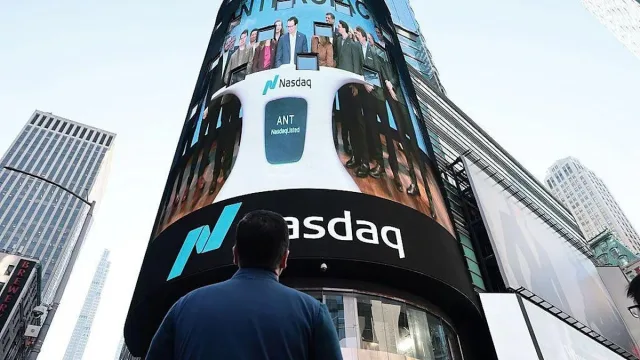
Anthropic’s shares have slumped at the start of a second day of trading, as its record-breaking IPO failed to stem a sell-off in AI-linked companies. Shares in the frontier AI company, which floated on Thursday, fell by more than 9% at the start of trading on Friday. They dropped to $88.17, towards the $83 level at which Anthropic priced its stock market debut.
Anthropic’s first two days as a listed company have been volatile. Its shares jumped by 17% on Thursday, after briefly surging by almost 40% when trading in the firm began. The company floated 980 million shares in the largest IPO on record, totaling $93.5 billion after underwriters took up an option to purchase more shares, exceeding the $85.7 billion raised by SpaceX. Yet that record capitalization failed to comfort investors who watched the Claude developer's shares give up most of their opening pop. Shares of the Claude developer opened at $111.50 on Thursday, 34% above the $83 IPO price, topping out just below $115, sliding to about $97 within its first half-hour of trading, and falling as low as $92.72 in the early afternoon before finishing the day at about $97.
Global Market Fallout and Liquidity Squeeze
US technology stocks followed Anthropic down on Friday, knocking 2% off the value of the Nasdaq share index, with memory chipmaker SanDisk falling 14% and rival Micron down 10%. The broader S&P 500 share index fell 1%. Reuters reported that U.S. stocks opened lower as Anthropic shares retreated after their Nasdaq debut, with the Nasdaq Composite dropping 286.5 points, or 1.20%, to 23,592.669 at the opening bell. The S&P 500 opened down 25.4 points, or 0.35%, at 7,150.39, while the Dow Jones Industrial Average slipped 25.2 points, or 0.05%, to 49,071.82.
Global markets slumped on Friday too; Asian stock markets recorded their worst week since 2020, as shares in big chip companies fell. In Taiwan, stocks dropped 6.7% to hit their lowest point since mid-April, with the chip maker TSMC down about 6%. The scale of the decline in Taiwan prompted the chair of its stock exchange to pledge to ensure the stable operation of capital markets, and reassure investors they should remain confident in the fundamentals of Taiwanese companies. In Japan, the Nikkei index fell 5%, while South Korea’s tech-heavy Kospi index lost 5.5%. Shares in the tech investor SoftBank had their worst day in more than two years, down 14.5% in Tokyo, amid worries around its aggressive bets on AI. European stock markets were heading for their worst week since March, with the pan-European Stoxx 600 dropping 1.7%. London’s blue-chip stock index hit a five-month low. The sell-off followed losses on Wall Street on Thursday, where the main indices all fell by more than 2% on a day dominated by Anthropic’s IPO. Among large technology companies, Nvidia and Meta Platforms each dropped more than 3%; Amazon fell 2%, and Microsoft slipped 1%. Semiconductor shares were also hit: AMD and Sandisk each shed more than 6%, while Intel retreated more than 3%.
Chris Beauchamp, the chief market analyst at the investing and trading platform IG, said Anthropic could be “draining market liquidity”, as investors sell shares in other companies to raise funds to pay for stock in the newly floated AI firm.
The slide from yesterday’s highs sends a message that there might be more at work here than investors realise, and while brokers are scrambling to buy more, that liquidity has to come from somewhere, and the other tech names may be the first ones to feel the pressure
Chris Beauchamp, the chief market analyst at the investing and trading platform IG
Valuation Realities Versus Underlying Revenue Growth
Anthropic’s flotation has failed to ease worries around the AI trade, as investors increasingly question whether companies can deliver the returns necessary to justify the billions of dollars being poured into the AI build out.
Daniela Hathorn, a senior market analyst at Capital.com, said:
The IPO demonstrated that demand for AI exposure remains strong, but it has not been enough to overcome concerns about elevated valuations, profitability and the sustainability of investment spending.
The broader market mood has shifted from buying the dip towards questioning whether the correction has further to run. The weakness in equal-weighted indices suggests that selling pressure is no longer confined to a handful of technology giants, while Europe’s recent outperformance has also faded.
Daniela Hathorn, a senior market analyst at Capital.com
Third-quarter revenue rose 1,127% year over year to $17.0 billion, an annual pace of about $68 billion. At around $88, Anthropic stock carries a fully diluted value of roughly $1.6 trillion, or about 23 times that revenue pace. Anthropic's run rate revenue reached about $81 billion by the end of October, which brings the multiple down to roughly 20 times. More than 11,900 customers paid Anthropic at least $100,000 over the past year, up from about 950 a year earlier. Compute and infrastructure costs fell to 57% of revenue in the first nine months of 2026, down from 172% a year earlier. Anthropic also posted a $567 million operating loss in the third quarter and has committed to about $895 billion of computing infrastructure. David Miller, chief investment officer at Catalyst Funds, said:
Kaush Amin, head of private market investing at US Bank Asset Management, said the valuationInvestors still believe in AI but are becoming more selective about what they will pay for that growth
David Miller, chief investment officer at Catalyst Funds
assumes years of rapid growth.
- November 19, 2026: Anthropic makes its Nasdaq debut, pricing shares at $83, surging by as much as 40%, and closing up 17% at about $97 with $772 million in retail trades.
- November 20, 2026: Global stock markets slump, Asian markets record their worst week since 2020, US indices open lower, and Anthropic shares trade down to around $88.24.
- Late November 2026: Options trading in Anthropic shares is expected to begin and could add to volatility.
- End of 2026: Intropic estimates that purchases by index-tracking funds could reach as much as 30% of Anthropic’s shares.
Retail Enthusiasm Meets Institutional Caution
Nvidia shares fell by 3%, after California served the chip company with a subpoena as part of an investigation into whether its advanced semiconductors ended up in China. Britain’s FTSE 100 share index has dropped by 4.8% this week, and is heading for its biggest weekly fall since the start of the Iran war. Fears that US central bankers may raise interest rates to fight inflation have lifted the dollar to a 19-month high, and pushed down the gold price – with gold on track for its worst week since March.
Retail investors traded approximately $772 million worth of Anthropic shares on November 19, the largest retail total for an IPO debut since Vanda Research started tracking the data in 2012. Intropic, a London-based firm that analyzes index rebalancing, estimated that purchases by index-tracking funds could reach as much as 30% of Anthropic’s shares by the end of the year. Options trading was expected to begin later in November 2026 and could add to volatility. Investor attention could also turn to a potential OpenAI listing, which OpenAI has indicated may occur in 2027.