Trump orders Pentagon to substantially reduce South Korean military drills
U.S. President Donald Trump directed the Pentagon to substantially reduce joint military exercises with South Korea, citing the cost and his relationship with Kim Jong Un.
- Headline: Trump orders Pentagon to substantially reduce South Korean military drills
- Dispatch Summary: U.S. President Donald Trump directed the Pentagon to substantially reduce joint military exercises with South Korea, citing the cost and his relationship with Kim Jong Un.
- Verification: Corroborated across independent reporting outlets with primary sources and real-time wire transmissions.
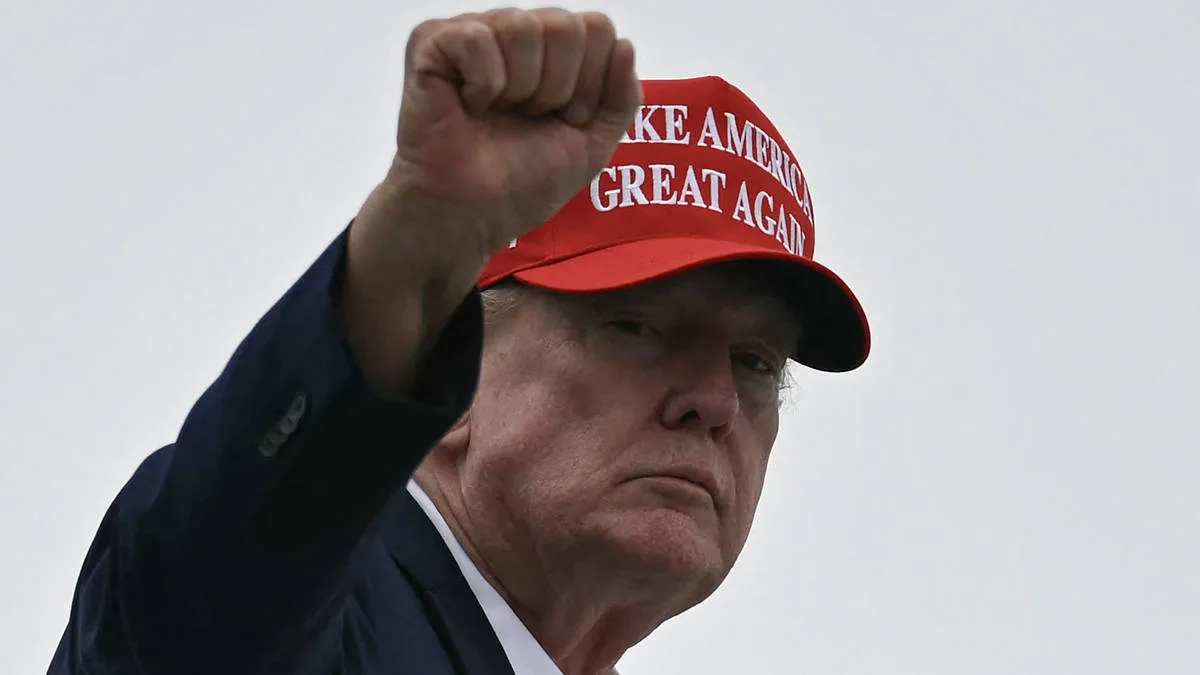
U.S. President Donald Trump directed the Pentagon to “substantially reduce” joint military exercises with South Korea hours before the annual Ulchi Freedom Shield drills were set to begin, citing the cost of the maneuvers and his “very good relationship” with North Korean leader Kim Jong Un. The move, announced via social media on Sunday, marked a significant shift in U.S.-South Korea military coordination and sparked immediate debate over its implications for regional security and diplomacy.
The drills, which involve approximately 18,000 South Korean troops and U.S. forces, are designed to counter evolving threats, including North Korean advancements in drone technology, cyber warfare, and missile systems. Trump’s directive came as Pyongyang conducted recent ballistic missile tests, which it framed as a protest against the exercises. Trump wrote on Truth Social: “These exercises are not only costly... but send a signal that is totally inappropriate and hostile, to a Country that, as long as Donald J. Trump has been President, has been unthreatening and respectful.” The post included a photo of his 2019 meeting with Kim, reigniting speculation about Trump’s potential for renewed diplomacy with Pyongyang.
South Korea’s defense ministry confirmed the drills would proceed as scheduled, though it declined to comment on Trump’s remarks. A Pentagon spokesperson deferred questions to the White House, which did not immediately provide further details. The decision has raised concerns among military experts about the potential impact on deterrence against North Korea, which has steadily expanded its nuclear and missile capabilities while deepening ties with Russia and China.
Trump’s move aligns with his broader pattern of leveraging military postures to advance diplomatic goals. During his first term, he suspended or scaled back similar exercises, often framing them as provocative and costly. This time, however, the timing—just hours before the drills began—highlighted the abruptness of the decision. Analysts noted that the reduction could reflect Trump’s frustration with South Korea’s refusal to join U.S. efforts to denuclearize Iran, a point he emphasized in his post: “While somewhat unrelated (?), I recently asked the President of South Korea if they would like to join us in the Denuclearization of the Islamic Republic of Iran, and they said, ‘No thanks!’”
North Korea’s response to the reduced drills remains uncertain. The regime has consistently denounced the exercises as preparations for invasion, and analysts doubt the scaling back will significantly alter its stance. “The North will only view it as meaningful if the joint exercises are cancelled in their entirety rather than scaled back,” said Lim Eul-chul, a North Korea expert at Kyungnam University. “It has little reason to see this as meaningful.”
The decision also raises questions about the future of the U.S.-South Korea alliance. While Trump framed his actions as a gesture of goodwill, critics argued that unilateral moves risk undermining the partnership. Sen. Andy Kim (D-NJ), a Korean American lawmaker, warned that the announcement “suggests a disregard for the Seoul-Washington relationship,” emphasizing the alliance’s role in regional security. Meanwhile, South Korea’s presidential office stated it was reviewing Trump’s comments but reiterated its commitment to the drills as a defensive measure.
Experts remain divided on the strategic implications. Some, like Jenny Town of the Stimson Center, suggested the move could be part of a broader effort to create diplomatic openings with Pyongyang. “The haphazard nature of this move is unlikely to make much of an impression in Pyongyang,” she said, noting the challenges of engaging a regime that has shown little interest in negotiations. Others, such as Victor Cha of the Center for Strategic and International Studies, speculated that Trump might be seeking to leverage North Korea’s growing reliance on Russia to counter Moscow’s influence in the region.
The drills’ evolution over the years reflects shifting military priorities. Recent iterations have moved away from live-fire exercises to simulations of cyberattacks and drone defense, mirroring North Korea’s own technological advancements. U.S. military officials have linked these changes to the experience gained by North Korean troops in Ukraine, where they have provided artillery and missile support to Russia. This dynamic has intensified concerns about the spread of advanced warfare tactics and the need for adaptive defense strategies.
As the exercises continue, the focus will remain on how North Korea responds and whether Trump’s gesture translates into meaningful diplomatic progress. For now, the decision underscores the delicate balance between military readiness, geopolitical strategy, and the unpredictable nature of U.S.-North Korea relations under Trump’s leadership.
How significant is this wire dispatch?
Cast your anonymous vote to register reader consensus across journalism and intelligence sectors.
Dateline Wire is dedicated to independent, evidence-backed reporting. This briefing was synthesized from primary source reporting, corroborated across independent newsrooms, and verified against our Editorial Standards.