Trump Pledges $5,000 Payout to Americans if Republicans Win Midterms
President Trump has proposed a $5,000 cash dividend for every American adult if Republicans win the November 2026 midterms, sparking intense debate over its feasibility.
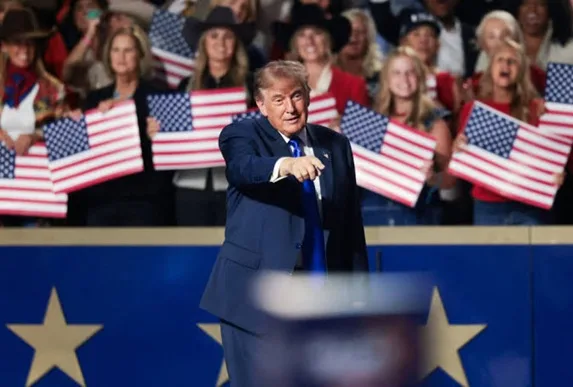
President Donald Trump’s pledge to distribute $5,000 to every American adult, contingent on Republican victories in the November 2026 midterm elections, has ignited intense debate over its feasibility, legality, and political implications. The promise, announced during a rally in Dallas on September 9, 2026, was framed as a direct incentive to mobilize voters but has drawn sharp criticism from Democrats and legal experts.
Trump’s Pledge and Immediate Reactions
At the first-ever Republican midterm convention, Trump declared that a $5,000 payout to every adult American would be issued “if the Republicans win the House of Representatives and the United States Senate.” The speech, delivered to a crowd with sparse seating, emphasized the plan’s conditional nature, with Trump stating, “We don’t want you going to Canada to spend the money. You got to spend the money in the United States of America.”Video: Trump pledges $5,000 to every US adult if Republicans win midterms | DW News — DW News (YouTube)
The proposal, which would require approximately $1.3 trillion to fund — based on the 270 million adult Americans, has been met with skepticism. Democrats labeled it an “empty promise,” while legal analysts raised concerns about its constitutionality. The U.S. Constitution prohibits using federal funds to influence voting, a principle that could invalidate the plan if enacted.
Detail
Information
Estimated Cost
$1.3 trillion (based on 270 million adult Americans)
Legal Concerns
Prohibition on using federal funds to influence voting
Context of Pledge
Linked to rhetoric about national security and economic messaging
Context of the Iran War and Economic Pressures
Trump’s speech occurred against a backdrop of escalating tensions with Iran, which has disrupted global oil markets by blocking the Strait of Hormuz. The conflict, which began with U.S. and Israeli actions in February 2026, has driven oil prices upward, exacerbating inflation in the U.S. and prompting criticism of Trump’s handling of the war. The president defended his stance, arguing that short-term economic pain was necessary to prevent Iran from developing nuclear weapons.
“If the Republicans win, you win with us,” Trump said, framing the dividend as a reward for supporting his policies. However, the plan’s lack of specificity, such as how the funds would be distributed or monitored, has fueled doubts. Trump previously proposed similar measures, including $2,000 cheques funded by tariff revenues, but those initiatives never materialized.
Political Implications for JD Vance and the GOP
The pledge also underscores the high stakes for Vice President JD Vance, who delivered the keynote address at the convention. As a potential 2028 presidential candidate, Vance faces pressure to align with Trump’s messaging while distancing himself from the president’s controversial tactics. Recent polls show Vance trailing behind Senator Marco Rubio in Republican support, though 58% of party members said his endorsement would motivate them to vote in the midterms.
Republican strategists have positioned the midterms as a referendum on Trump, with the president urging supporters to “pretend I’m on the ballot.” The convention, which drew 20,000 attendees, included speeches from lawmakers and candidates seeking to capitalize on the party’s base. However, internal divisions persist, with figures like Senator Ted Cruz and Governor Ron DeSantis vying for influence in the post-Trump era.
Unresolved Questions and Next Steps
As the midterms approach, the $5,000 pledge remains a polarizing issue. Critics argue it distracts from substantive policy discussions, while Trump’s allies view it as a bold attempt to energize voters. The plan’s legal viability, funding mechanisms, and impact on voter behavior remain untested. With the November 3 election date set, the focus will shift to whether the promise translates into tangible political gains for the GOP.
Frequently Asked Questions
How much would the $5,000 payout cost the U.S. government?
The plan would cost approximately $1.3 trillion, based on the 270 million adult Americans. This figure has not been independently verified but aligns with calculations from the source material.
Is Trump’s pledge legal?
The proposal raises legal concerns, as the U.S. Constitution prohibits using federal funds to influence voting. While Trump’s team has not addressed this directly, legal experts have questioned its constitutionality.
What role does the Iran war play in this context?
Trump linked the pledge to his broader rhetoric about national security, arguing that economic sacrifices were necessary to prevent Iran from developing nuclear weapons. The war has also contributed to global oil price fluctuations, complicating the economic landscape.
The coming weeks will test whether Trump’s promise resonates with voters or deepens divisions within the Republican Party. With the midterm election date set for November 3, the focus will remain on how the GOP balances populist appeals with the practical challenges of governing in a polarized era.
Dateline Wire is dedicated to independent, evidence-backed reporting. This briefing was synthesized from primary source reporting, corroborated across independent newsrooms, and verified against our Editorial Standards.