Panama declares major disaster after powerful 7.7 magnitude earthquake
President José Raúl Mulino declared a major disaster after a powerful 7.7-magnitude earthquake struck Panama, triggering widespread infrastructure damage and emergency responses.
- Headline: Panama declares major disaster after powerful 7.7 magnitude earthquake
- Dispatch Summary: President José Raúl Mulino declared a major disaster after a powerful 7.7-magnitude earthquake struck Panama, triggering widespread infrastructure damage and emergency responses.
- Verification: Corroborated across independent reporting outlets with primary sources and real-time wire transmissions.
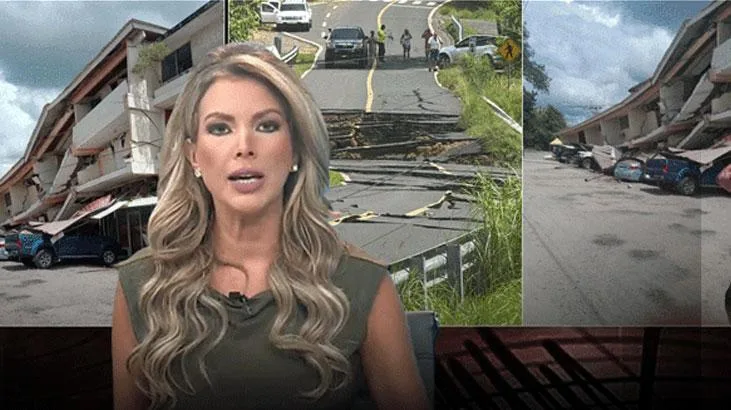
Why did a 7.7-magnitude earthquake strike Panama, and what is the immediate fallout?
A powerful 7.7-magnitude earthquake struck Panama on Friday, shaking buildings, triggering panic in the capital, and prompting President José Raúl Mulino to declare that his country is facing a major disaster. The quake struck just before 15:00 local time, with an epicenter about 6.2 miles from the town of Pitaloza Arriba in south-central Panama, at a shallow depth of approximately 10 to 12.6 kilometers. About 4.6 million people felt moderate to severe tremors, and the U.S. Geological Survey estimated that about 43,000 Panamanians lived in areas with at least severe exposure to the quake.
The timing of the disaster is striking, as it arrived just three days before Panama was scheduled to hold a national evacuation drill to test its emergency response. It also follows devastating earthquakes in Colombia and Venezuela earlier this year. In response to the crisis, President Mulino ordered the closure of all government agencies, and the Ministry of Education suspended classes nationwide. The U.S. State Department activated a support team from the Los Angeles County Fire Department — specifically its international Urban Search and Rescue team known as USA-2, consisting of six firefighters, three structural engineers, and one physician — to help with rescue efforts. U.S. Secretary of State Marco Rubio wrote on social media that he was closely monitoring reports and that the U.S. was ready to help.
That leaves the government scrambling to manage widespread infrastructure damage while relying on international specialists whose deployment is planned for a minimum of two weeks. The sheer shallowness of the tremor ensured maximum surface disruption, turning a routine Friday into an emergency response test that arrived three days too early.
What areas suffered the worst damage and how are officials responding?
The most severe destruction was concentrated in Panama's central provinces, particularly Coclé, Los Santos, and Herrera. In the city of Penonomé in Coclé Province, structural damage hit the historic San Juan Bautista Cathedral, where one side and a spire collapsed, along with the governor's office and a local hotel that almost completely collapsed. Interior Minister Dinoska Montalvo reported that 15 students sustained minor injuries at the Alberto Zuniga School in Penonomé. Health Minister Fernando Boyd noted that all land access to the town of Tonosí in Los Santos province was completely cut off, forcing officials to evaluate air routes. Montalvo confirmed that homes, public buildings, churches, hospitals, and roads had sustained damage, and water treatment plants were also affected. Electricity provider Naturgy reported power outages in six provinces.
President Mulino visited Penonomé and stated, The disaster we are facing is massive. We have roads that have completely collapsed. For now, we are here; we’ll see—hopefully, weather conditions will allow us to travel to Tonosi, the epicenter of the earthquake,
he said. Everything needed in this situation—water, supplies for children and the elderly, and tents to shelter people—is being distributed,
he added. Officials also urged residents of Isla Canas, the southern coast of Los Santos, and the Veraguas coastal strip to move away from the coast and head to higher ground following tsunami warnings that were later lifted.
The immediate logistical nightmare centers on isolated towns like Tonosí, where air transport remains the only viable lifeline. While the government has mobilized full solidarity and supplies, the physical isolation of the epicenter region tests the limits of domestic emergency response.
How did residents in Panama City experience the quake?
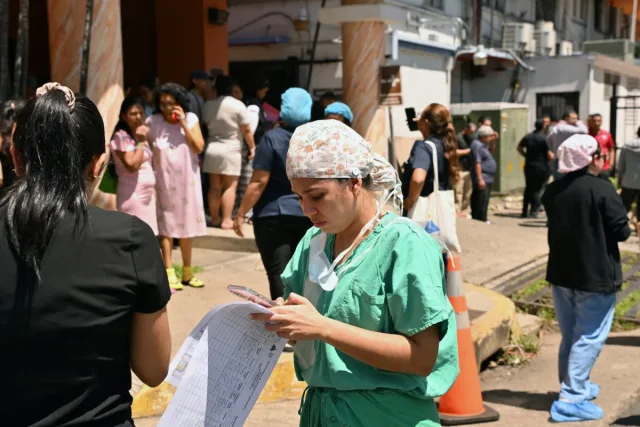
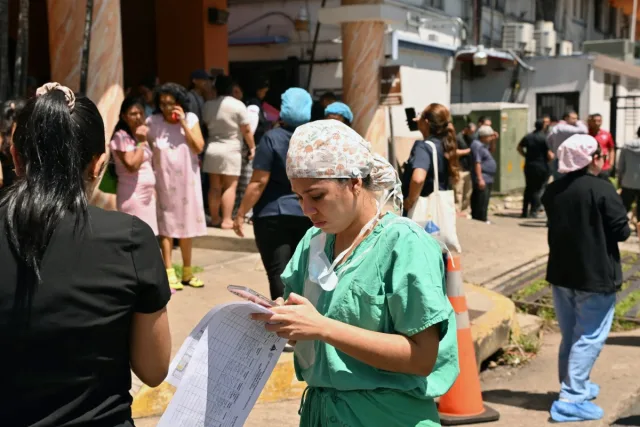
In the capital, Panama City, located about 200 kilometers from the epicenter, the earthquake lasted about a minute and sent thousands of residents rushing out of emblematic skyscrapers and into streets and parks. A maternity ward was among the buildings evacuated, and office workers in downtown's business hub found themselves stranded in heavy traffic snarls. Salomon Andion, 46, told Agence France-Presse, I was scared because the shaking was very strong and prolonged. Heavy objects like dressers, the bed, and all the kitchen items were shaking.
Juan Sanchez, a 37-year-old economy ministry employee waiting for an uncertain bus, said, They evacuated all of these buildings. Everyone is outside. Now the problem is, how do we get home?
Damage in the capital appeared limited to debris falling from roofs.
Further compounding the terror for residents, more than 95 aftershocks, including a later 6.6-magnitude earthquake centered 8 kilometers northwest of Rio Grande, rattled the country. In the southern Herrera province, 74-year-old Ricardo Brown told Reuters, We're scared. It's just the two of us old folks here. The house has cracked and we're afraid it could fall on us.
In central Coclé province, Juana Alveo, a 38-year-old cashier, described the event as horrible, like nothing we ever experienced. My daughter was trapped in school.
Residents navigating the aftermath face a fractured transport network and lingering aftershocks that make returning to multi-story buildings a psychological hurdle. The disparity between capital-city traffic jams and crushed rural homes highlights the unequal toll of a shallow fault rupture.
Did critical national infrastructure survive the shock?
Despite the massive scale of the disaster, vital economic engines largely escaped catastrophic impairment. The Panama Canal announced that marine traffic and operations were continuing normally, with a video showing a bridge over the canal shaking violently but remaining upright as vehicles crossed. Tocumen International Airport suspended operations for safety reasons but reopened to air traffic after a suspension of approximately two hours following infrastructure and control tower safety inspections. However, the U.S. Geological Survey estimated that economic losses could amount to between 1% and 10% of Panama’s gross domestic product.
Captain Aaron Katon of the Los Angeles County Fire Department noted regarding their incoming rescue deployment, We are always ready for whatever the situation throws to us. That being said, our personnel are currently the world's experts in rescuing in collapsed buildings.
Katon added that they are planning on a minimum two-week deployment. Meanwhile, the Pacific Tsunami Warning Center announced that the widespread tsunami threat had ended after initial warnings for 11 countries and Hawaii were issued and subsequently cleared.
The swift resumption of canal and airport operations prevented a national financial collapse, buffering the macroeconomic blow. Yet the estimated GDP loss points to severe reconstruction bills ahead for provincial infrastructure, schools, and hospitals.
What happens next as rescue teams arrive and aftershocks continue?
With search and rescue efforts continuing uninterrupted and no fatalities reported so far, the immediate focus shifts to reaching cut-off communities and housing displaced families in tents. Interior Minister Montalvo confirmed no missing persons had been reported nationwide, but local officials cautioned that the casualty figures could change as teams penetrate deeper into Coclé, Los Santos, and Veraguas. The arrival of the Los Angeles County search and rescue team late Friday night brings specialized structural engineering expertise to aid Panamanian authorities in untangling collapsed masonry and assessing compromised multi-story frames.
The relentless sequence of aftershocks complicates every phase of recovery, threatening already weakened structures in towns like Penonomé and Las Minas. As schools remain closed and government agencies stay shut under presidential order, the government must balance immediate humanitarian relief with long-term structural audits across the isthmus. The resilience of Panama's institutional response over the coming fortnight will test whether an unprepared nation can pivot effectively from sudden panic to sustained reconstruction.