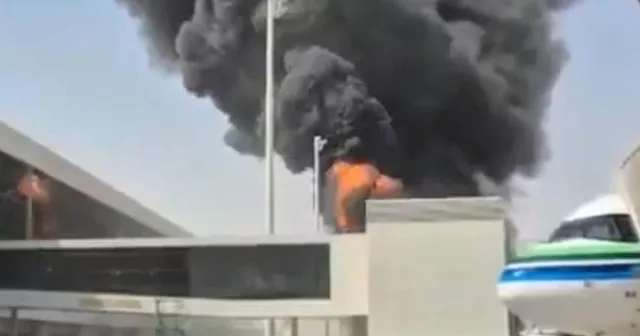
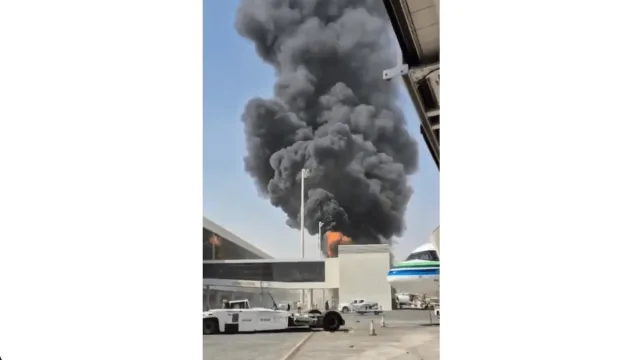
Five killed in Houthi strike on presidential palace in Aden
Five people were killed in a Houthi missile strike targeting the Al-Maashiq presidential palace complex in Yemen's interim capital of Aden, marking a severe escalation in the renewed conflict.
- Headline: Five killed in Houthi strike on presidential palace in Aden
- Dispatch Summary: Five people were killed in a Houthi missile strike targeting the Al-Maashiq presidential palace complex in Yemen's interim capital of Aden, marking a severe escalation in the renewed conflict.
- Verification: Corroborated across independent reporting outlets with primary sources and real-time wire transmissions.
Why Missiles Struck the Interim Capital Now
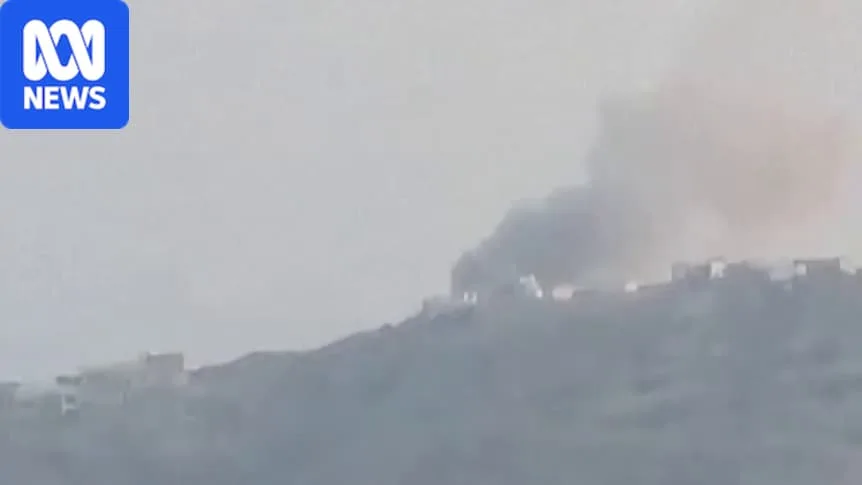
The missile strike on the Al-Maashiq presidential palace complex in Aden marks a sharp escalation in a conflict that has broken a years-long stalemate. The attack occurred as pro-government forces push to recapture territory from the Iran-aligned Houthi movement, following a nationwide military campaign announced by the Yemeni government on Oct. 5. Last week, government forces recovered ground near the Bab el-Mandeb Strait, a vital global shipping artery, and launched operations to dislodge militia fighters in the southern city of Aden, which serves as the seat of Yemen's Saudi-backed and internationally recognised government.
Yemeni Information Minister Moammar al-Eryani stated that the Houthis fired five missiles at the complex. An anonymous Yemeni government minister told Agence France-Presse that the strike hit the Yemeni government forces' command post with three missiles and separately struck the Saudi-led coalition's command post inside the compound with two. Houthi military spokesperson Yahya Saree claimed responsibility for the raid, stating that the group targeted what he described as a Saudi military operations headquarters and weapons depots as part of a declared policy of targeting Saudi reinforcements wherever they were located
. The Houthi-run news agency SABA reported that the headquarters were run by Saudi officers, though Reuters could not independently verify those claims.
| Casualty Authority | Reported Deaths | Reported Injuries |
|---|---|---|
| Yemen Ministry of Health (Qassem Buhaibeh) | 5 | 16 |
| Yemeni Government Officials (via Reuters) | 2 | Not reported |
Who Was Targeted and Who Survived the Blasts?
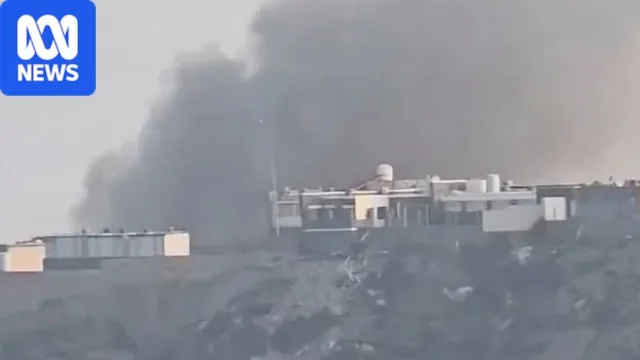
Residents in Aden reported hearing at least six explosions echoing across the hilltops and access roads surrounding the palace grounds. A local security official told the Associated Press that at least two explosions were heard from the top of a hill near the Al-Shimakh presidential palace, and two other blasts were heard below the security gate on the access road leading up to the palace. Thick plumes of black smoke billowed over the compound as security personnel and civilian staff scrambled to evacuate the area.
Despite the precision and intensity of the bombardment, the cabinet leadership escaped physical harm. Prime Minister Shaya Al Zandani, also referred to as Saeed al-Jindani in alternate official reports, was on site during the attack. Information Minister al-Eryani confirmed that both the prime minister and attending cabinet members were safe. However, the human toll among security details and staff remains disputed by official counters. Yemen's Minister of Health, Qassem Buhaibeh, stated that five people were killed and 16 were wounded, including on-site security personnel and civilian staff. By contrast, other government officials speaking to Reuters reported that two members of the prime minister's security detail lost their lives.
Denouncing the raid on X, Prime Minister Jindani wrote, This attack is a cowardly act in continuation of a criminal pattern of targeting civilian facilities and civilians.
SABA, the Houthi media outlet, cited Yemeni government officials claiming that numerous Saudi officials were also killed or injured in the strikes.
What Is Happening on the Ground in Taiz and Marib?
The violence in Aden is closely linked to an intensification of ground battles across Yemen's central provinces. Government forces and Houthi fighters are locked in fierce combat around Mount Han, west of Taiz, Yemen's third-largest city. A government source told Arab News that fighting raged from Wednesday evening into Thursday morning as government forces repelled a Houthi push for strategic positions. Military commanders asserted that the militia suffered heavy losses, with recent prisoners including untrained street recruits and administrative personnel pressed into combat roles.
At the same time, the Houthis have imposed a complete siege on Taiz, blocking food, clean water, and life-saving medicines from reaching hundreds of thousands of residents. The blockade has drawn sharp rebukes from diplomats and international bodies. The European Union's mission to Yemen released a statement on X condemning the blockade: The EU is following with alarm the situation in Taiz. The EU calls on Houthi forces to lift their siege of the city and allow the entry of food, water, medicines and fuel. Civilians and civilian infrastructure must be protected and partners allowed to deliver essential aid.
EU Ambassador to Yemen Patrick Simonnet discussed the humanitarian crisis by phone with Yemeni Foreign Minister Afrah Al Zouba and the governor of Taiz. Simultaneously, the Yemeni Information Ministry reported that Houthi forces targeted residential neighborhoods in the central city of Marib with ballistic missiles.
How Are Regional Strikes Fueling Wider Escalation?
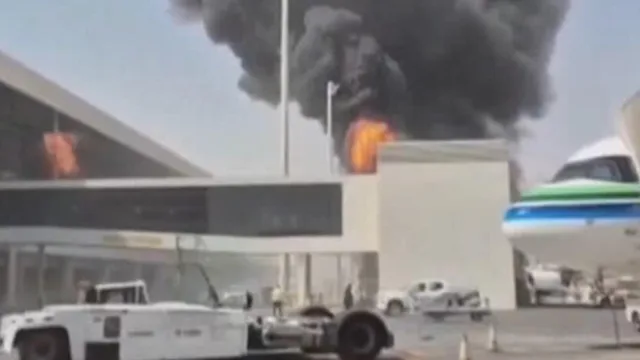
The confrontation has expanded well beyond Yemen's borders, drawing in Saudi civilian infrastructure and international aviation regulators. Coalition spokesperson Turki al-Maliki briefed reporters on a wave of recent cross-border attacks, noting that the Houthis have launched 20 attacks this month on King Khalid International Airport in Riyadh. According to the coalition, those airport strikes killed 17 people and wounded 333 others. Houthi drone and missile assaults on Abha airport near the Yemeni border have killed another three people and wounded 28.
Mr. Maliki stated that the Houthis acquired advanced military technology, including ballistic missiles, drones, and explosive-laden fast boats, with the assistance of regional actors. While Tehran has officially denied arming the movement in violation of a United Nations arms embargo, Western and regional officials maintain that Iran provides weapons, money, and training to the group. In response to the cross-border strikes, the Saudi-led coalition destroyed 127 weapons storage facilities and launch platforms in Yemen's mountainous terrain. Houthi military spokesperson Yahya Saree responded by declaring Saudi airspace and airports unsafe for commercial carriers, carving out an exception solely for the airspace above the holy cities of Mecca and Medina.
What Lies Ahead for the Renewed Conflict?
The collapse of the 2022 truce has thrust Yemen back into a relentless war of attrition that threatens maritime trade, regional aviation, and millions of civilians dependent on humanitarian corridors. With Aden Airport already forced to divert incoming flights following an earlier Houthi strike on Wednesday, commercial and diplomatic access to the interim capital remains precarious.
As government forces press their offensive in Taiz and the Bab el-Mandeb corridor, the ability of the Saudi-backed administration to hold Aden against ongoing missile campaigns will determine the survival of the state's interim institutions. The immediate trajectory depends on whether international pressure can force a halt to the sieges and airport bombardments before regional supply lines are permanently severed.