Colombia earthquake kills 111 and injures 87 after magnitude 7.4 quake
A powerful 7.4-magnitude earthquake centered in Colombia's Chocó province has killed at least 111 people and triggered a nationwide state of emergency.
- Headline: Colombia earthquake kills 111 and injures 87 after magnitude 7.4 quake
- Dispatch Summary: A powerful 7.4-magnitude earthquake centered in Colombia's Chocó province has killed at least 111 people and triggered a nationwide state of emergency.
- Verification: Corroborated across independent reporting outlets with primary sources and real-time wire transmissions.
The 7.4-magnitude earthquake that struck western Colombia on Monday has left at least 111 people dead and 87 injured, according to multiple reports, as the nation grapples with widespread destruction and a new administration’s first major crisis. The quake, which hit near San José del Palmar in Chocó province, rattled cities across the country, including Cali, Pereira, and Manizales, and was felt as far as Ecuador and Panama, though damage in those regions remained minimal.
The disaster struck just days after President Abelardo de la Espriella took office, thrusting the newly sworn-in leader into an urgent response effort. In a national address, de la Espriella declared a state of emergency, vowing to mobilize resources to rescue trapped survivors and deliver aid. “The first priority is rescuing the people trapped under the rubble,” he said, emphasizing the government’s commitment to protecting lives. His administration faces the challenge of coordinating relief efforts amid reports of collapsed buildings, disrupted infrastructure, and lingering fears of aftershocks.
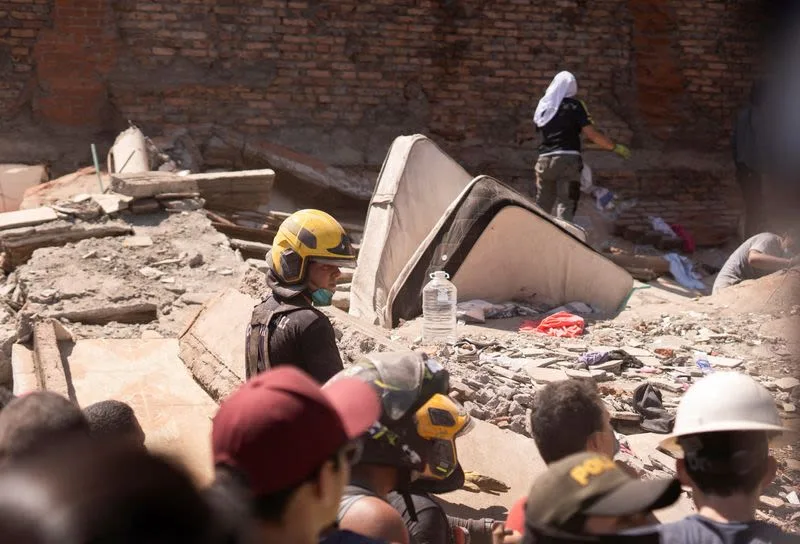
Rescue teams and volunteers scoured the ruins of collapsed structures, with officials confirming at least 61 buildings destroyed and 1,575 homes damaged. In Cali, the third-largest city, at least 19 buildings collapsed, while Pereira’s airport faced significant damage, forcing evacuations and suspending flights. The quake also disrupted air travel in five other cities, including Manizales and Quibdó. In Manizales, a neo-Gothic cathedral partially collapsed, and two residents were confirmed dead. Meanwhile, in Chocó, the epicenter of the quake, authorities reported injured individuals and structural damage, though details remained limited.
International leaders and organizations have pledged support for Colombia’s recovery. Ecuador’s president offered a search-and-rescue team, while Chile and Guatemala expressed readiness to provide medical and logistical assistance. The World Central Kitchen, led by chef José Andrés, activated its disaster relief network to distribute emergency food aid. Meanwhile, the U.S. State Department stated it was “closely monitoring” the situation, with Secretary Marco Rubio emphasizing Washington’s willingness to assist.
Colombian pop star Shakira, who was born in the port city of Barranquilla, shared an emotional message on social media, urging unity among Colombians. “My heart is with everyone who felt this earthquake today and with the families who are going through moments of anguish,” she wrote. “In times like these, we Colombians know how to come together and support one another.” Her post echoed the broader sentiment of resilience, as communities mobilized to aid survivors and rebuild.
The earthquake’s impact was compounded by recent seismic activity in the region. Just weeks earlier, devastating quakes in Venezuela had left over 5,000 dead, and the tremors in Colombia have reignited fears of tectonic instability. The Colombian Geological Service described the quake as the strongest recorded in the country in the last decade, noting that the region lies along a subduction zone where tectonic plates collide. Historical precedents include a 1979 earthquake of similar magnitude, which killed dozens and left hundreds injured.
Despite the scale of the disaster, the death toll remains contested. While Reuters, Yahoo, and portnews.com.au reported 111 fatalities, other outlets, including ABC News and The Irish Times, cited lower figures of 77. The discrepancy may reflect evolving reports as authorities assess damage and confirm casualties. CNN, which tallied 80 deaths based on official sources, later updated its count to 111, highlighting the challenges of real-time crisis reporting.
As rescue operations continue, the focus remains on saving lives and addressing immediate needs. In Bogotá, the capital, emergency services activated their response systems, with sirens and ambulances rushing to affected areas. The city’s mayor pledged to deploy 100 rescuers to the hardest-hit regions, while the Colombian Army sent five platoons of specialized search-and-rescue units. However, concerns persist about the vulnerability of informal housing in cities like Cali, where many structures lack robust construction standards.
The quake has also disrupted daily life, with power outages, damaged roads, and overwhelmed hospitals. In Pereira, local officials reported at least 18 deaths, while Manizales confirmed two. The toll is expected to rise as teams reach remote areas, particularly in Chocó, where communication infrastructure may delay aid delivery. For now, Colombians are united in their resolve, as the nation confronts its most significant seismic event in recent memory.
How significant is this wire dispatch?
Cast your anonymous vote to register reader consensus across journalism and intelligence sectors.
Dateline Wire is dedicated to independent, evidence-backed reporting. This briefing was synthesized from primary source reporting, corroborated across independent newsrooms, and verified against our Editorial Standards.