Kenyan cult leader sentenced to 200 years in prison
Kenyan doomsday cult leader Paul Mackenzie was sentenced to 200 years in prison for the murders of 190 children and one adult.
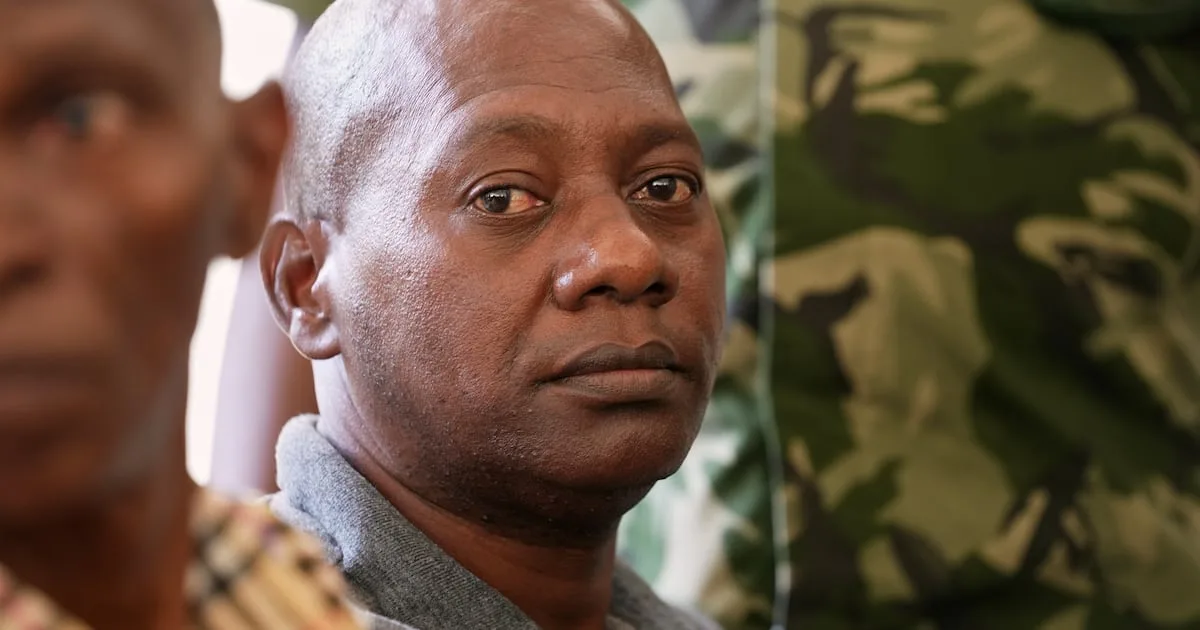
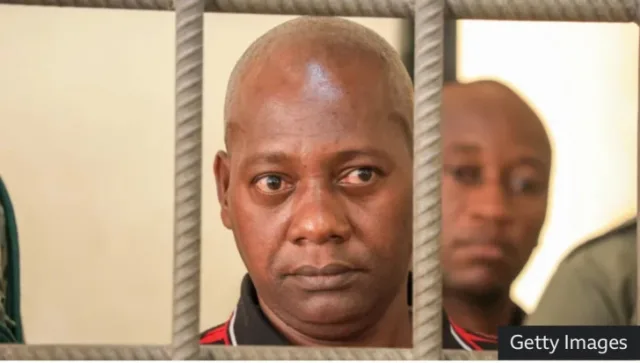
Pastor Paul Mackenzie was sentenced on Friday to 200 years in prison by the High Court in Kenya's coastal city of Mombasa, bringing a stark legal milestone to a doomsday cult tragedy that left more than 400 people dead. The sentence comprises 100 years for murder by starvation and 100 years for direct homicide, punishing the leader of the Good News International Church for the murders of 191 people, including 190 children and one adult. While Justice Diana Kavedza confronted horrifying testimony about children watching siblings die and victims being buried alive, Mackenzie reportedly smiled and chatted with his assistant pastor, Smart Mwakalama, during the proceedings.
What the 200-Year Sentence Changes for Survivors
That sentence amounts to a life term behind bars, yet for the families who lost everything, the legal outcome offers a complicated and painful mixture of closure and lingering fear. Survivors and relatives are left grappling not just with unrecovered loved ones, but with the terrifying prospect that a charismatic extremist could continue exercising influence from a prison cell. Those fears are sharpened by the actions of followers who continued promoting his ideas even after his initial arrest, leading authorities to discover dozens more bodies in a nearby village last year. Stephen Mwiti, a 48-year-old who lost six of his children in the Shakahola Forest tragedy, expressed that anxiety while visiting his son Samuel's grave in the coastal city of Malindi, stating, I lost children and I will not be able to get them back no matter what happens to Mackenzie and his accomplices,
via The Independent.
Justice Diana Kavedza stated that Mackenzie bore the primary criminal culpability for relocating his followers to a remote location and ordering them to fast to death to meet Jesus. Prosecutors had argued for the death penalty, while defense lawyer Lawrence Obonyo stated he had already launched an appeal against a term he described as circling around the constitution to give a sentence that is unattainable,
via The Associated Press. Those sentenced to death in Kenyan courts serve a life sentence, and Kenya's last execution was in 1987.
Inside the Shakahola Forest and Chakama Ranch
The tragedy began unfolding in April 2023 when police uncovered shallow graves in the 800-acre (320-hectare) Chakama Ranch in coastal Kilifi County, also referred to in reports as the Shakahola Forest near the coastal town of Malindi. Followers of Mackenzie's church had relocated to the remote, wooded location to live in mud huts, isolated from local communities and authorities. More than 400 bodies were eventually exhumed from the property, with reports noting 448 bodies found in mass graves. More than 60 bodies were positively identified and reburied by their relatives, while many others remain unidentified and unclaimed.
The scale of the killing draws grim comparisons to historic mass casualties: the 2000 doomsday cult in Uganda that claimed more than 700 lives, and the 1978 Jonestown massacre in Guyana where an American cult leader ordered more than 900 people to drink poison. Kavedza detailed how the self-proclaimed pastor won the trust of vulnerable followers through a charismatic media presence before ordering them to fast to death to meet Jesus or reach heaven before the end of the world. Of the 191 victims covered in this trial, the judge noted that 183 died of starvation, defined as a complete lack of food, while the remaining eight deaths were classified as direct homicide.
Evidence presented to the court revealed brutal enforcement methods used by church guards and accomplices:
- Victims who tried to break their fast were beaten, tied up, and locked in houses turned into fasting bays to die.
- Emaciated bodies were scattered in shallow graves and dumped in latrines.
- Some victims were buried alive by gravediggers who helped conceal the mass graves.
Sentencing the Accomplices of the Good News International Church
Alongside the cult leader, 28 accomplices received prison terms following their conviction on October 19. Assistant pastor Smart Mwakalama was sentenced to 160 years in prison. All 29 accused had denied the charges, save for one individual who confessed and pleaded for leniency.
Children observed as their siblings dropped dead after enduring hunger for days. Those who stole food or water were beaten, their hands tied and locked up in houses, turned into fasting bays to die.
Justice Diana Kavedza
The court rejected defenses claiming that some of the accused had lost their own children during the fast, with Kavedza noting the perpetrators showed no remorse and declared readiness to fast to death themselves. Kavedza described the killings as cold and calculated. Mackenzie is also facing terrorism, child abuse, and torture charges in two other courts, alongside manslaughter charges for more than 200 other victims.
Families torn apart by the cult voiced deep anguish over the limitations of the legal reckoning. Suleiman Ziro, a father of seven who traveled 120 kilometers (75 miles) to attend the sentencing after losing six children and his wife to the cult in 2023, stated that the prison term was not enough, particularly because he has yet to recover the bodies of his loved ones, calling for the death penalty instead. Dan Mackenzie, the cult leader's son, said that he felt sorry for his father over the conviction, but it was justice served to the victims.
He said that he escaped by rebelling against his father's teachings and was often punished for it, but was glad he survived. Two of his younger brothers and three sisters were rescued and are currently at a children's home.
Institutional Failures and Pending Appeals
The revelations triggered profound national shock and scrutiny regarding why authorities failed to intervene sooner. Court proceedings and official reviews highlighted that Mackenzie had been on law enforcement radar since 2017, when police searched his premises. Authorities shut down his Malindi church in 2019 before he relocated deeper into the coastal ranch. Mackenzie was arrested in April 2023, after a rights group tipped off authorities and some followers were rescued. President William Ruto appointed a task force in May 2023 to review the regulatory framework for religious organizations, and separate government-backed and Senate proposals were published in 2024, though it remains uncertain when these proposed legal and regulatory frameworks for tighter oversight will be passed into law.
All convicted individuals have been granted 14 days to file appeals against their sentences, leaving prosecutors and families facing a prolonged appellate fight led by defense lawyer Lawrence Obonyo, even as separate criminal dockets on terrorism, child abuse, torture, and manslaughter remain pending.
Updated 3 times since publication; last update 7 November 2026, 13:39.