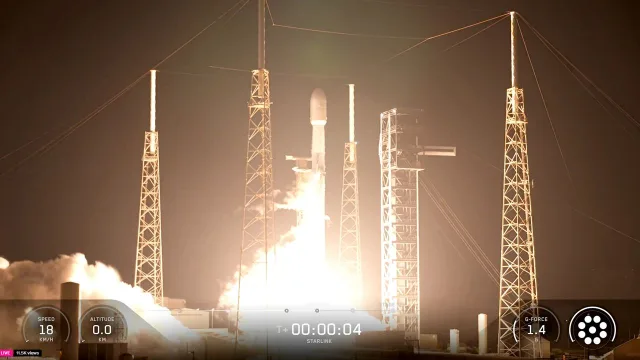
SpaceX launches classified NRO payload from Florida on NROL-95 mission
SpaceX launched a classified National Reconnaissance Office payload on the NROL-95 mission from Cape Canaveral, marking the Space Coast's 49th launch of 2026.
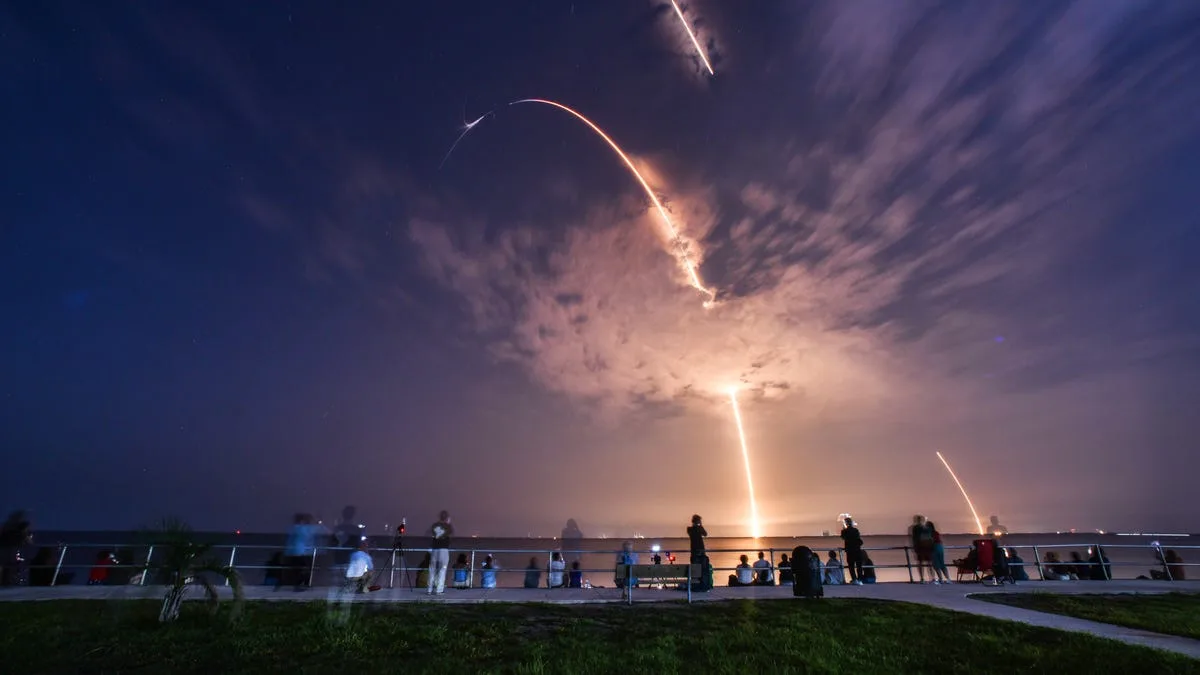
A SpaceX Falcon 9 rocket launched a classified payload for the National Reconnaissance Office (NRO) from Cape Canaveral Space Force Station in Florida early Thursday, July 30, 2026, at 3:10 a.m. The mission, designated NROL-95, marked the 49th rocket launch from Florida’s Space Coast in 2026 and was accompanied by a sonic boom that resonated across Brevard County and surrounding areas. The first-stage booster of the Falcon 9 returned to Landing Zone 2 approximately eight minutes after liftoff, triggering the acoustic event as it executed a controlled descent.
The launch, which took place from Launch Complex 40, carried a classified mission for the NRO, a U.S. government agency responsible for designing, building, and operating reconnaissance satellites. Details about the payload remained undisclosed, as is typical for such classified operations. The mission’s secrecy was underscored by SpaceX’s prior warnings that residents in multiple Central Florida counties might hear one or more sonic booms during the booster’s landing, though the exact experience varied depending on weather and local conditions.
The NROL-95 launch followed a pattern of frequent SpaceX activity from Florida, where the company has dominated orbital missions this year. As of July 30, 2026, SpaceX had completed 49 launches from the Space Coast, with only seven of those missions conducted by other providers. United Launch Alliance (ULA) had flown five times, including Vulcan and Atlas V rockets, while Blue Origin and NASA had each launched once. SpaceX’s continued reliance on Launch Complex 40 for Falcon 9 missions, including crewed flights, highlighted its central role in U.S. space operations.
Looking ahead, SpaceX scheduled its next launch for no earlier than 3:42 a.m. on Wednesday, August 5, from the same launch complex. The mission, titled Bluebird 11-13, would deploy three AST SpaceMobile broadband satellites. If that window closed, a backup opportunity was set for 3:21 a.m. on August 6. Additional upcoming missions included a Falcon Heavy launch on August 30 to deliver NASA’s Nancy Grace Roman Space Telescope from Kennedy Space Center Launch Pad 39-A. SpaceX had temporarily shifted Falcon 9 launches to Launch Complex 40 to prioritize work on its Starship and Super Heavy launch tower at Kennedy Space Center, which remains under construction.
The NROL-95 mission underscored SpaceX’s ongoing expansion of its launch capabilities, even as other industry players faced delays. ULA’s Vulcan rocket was undergoing fixes related to solid rocket boosters, while Blue Origin’s launch pad was undergoing repairs following an explosion during a test in early 2026. NASA’s Space Launch System (SLS) was not scheduled for another flight until mid-2027, with the Artemis III mission targeting a lunar launch. For now, SpaceX remained the primary provider of orbital launches from Florida, with its Falcon 9 and Falcon Heavy rockets driving the pace of U.S. spaceflight activity.
The launch also set the stage for future crewed missions. SpaceX’s Crew-13 mission, featuring NASA astronaut Luke Delaney, was targeted for a September 12 launch from Cape Canaveral. The crew would include Delaney as pilot, alongside NASA astronaut Jessica Watkins, Canadian Space Agency astronaut Joshua Kutryk, and Roscosmos cosmonaut Sergey Teteryatnikov.
Dateline Wire is dedicated to independent, evidence-backed reporting. This briefing was synthesized from primary source reporting, corroborated across independent newsrooms, and verified against our Editorial Standards.