North Korea Fires Ballistic Missile after Seoul’s Apology Demand
North Korea fired a ballistic missile toward the Sea of Japan following demands from South Korea for an apology over a mine blast in the DMZ.
- Headline: North Korea Fires Ballistic Missile after Seoul’s Apology Demand
- Dispatch Summary: North Korea fired a ballistic missile toward the Sea of Japan following demands from South Korea for an apology over a mine blast in the DMZ.
- Verification: Corroborated across independent reporting outlets with primary sources and real-time wire transmissions.
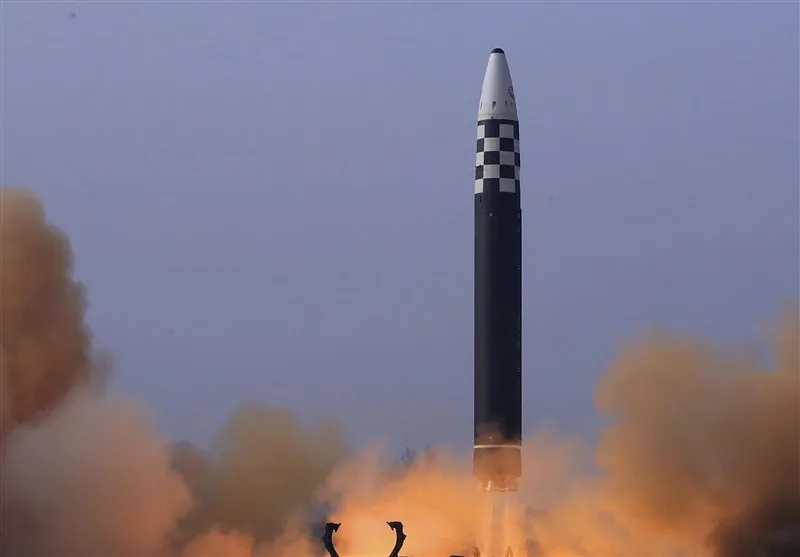
North Korea fired a ballistic missile toward the Sea of Japan on October 3, 2026, in a stark escalation of tensions with South Korea, which had demanded an apology for a recent mine blast that injured soldiers in the Demilitarized Zone (DMZ). The launch, detected by South Korea’s military, occurred days after Pyongyang rejected Seoul’s accusations that its mines caused the explosion, which left three South Korean soldiers wounded. The missile, launched from the Wonsan area, traveled more than 700 kilometers (435 miles) before falling into the East Sea, according to South Korean officials.
Missile Launch Follows Denial of Responsibility for DMZ Blast
The missile test followed a series of confrontational statements from North Korea, including a sharp rebuke from Kim Yo Jong, the powerful sister of leader Kim Jong Un. She called South Korea’s demand for an apology “despicable” and dismissed President Lee Jae Myung’s calls for dialogue as “the climax of the farce that everyone should watch.” Kim Yo Jong also warned that Pyongyang was “ready for anything” Seoul might do in response to the mine blast, a statement made hours before the missile was fired.
South Korea and the U.S.-led United Nations Command have attributed the DMZ explosion to North Korean mines planted on the South Korean side of the border. The blast, which occurred last month, injured three soldiers during a reconnaissance mission in the 4-kilometer-wide buffer zone. North Korea has consistently denied involvement, instead accusing Seoul of fabricating the incident to justify its own military posturing.
Pyongyang’s military has been fortifying its border with South Korea since 2024, when Kim Jong Un designated the South as his country’s “principal enemy.” The construction of mines and anti-tank barriers along the DMZ has been part of efforts to permanently seal off the frontier, according to South Korea’s defense minister, Kang Shin chul.
Regional Responses and Military Posturing
The missile launch triggered immediate responses from South Korea, the U.S., and Japan. Seoul’s Joint Chiefs of Staff confirmed the test and stated that the three nations were maintaining a “robust defense posture” through close information sharing. Japan’s coast guard issued an emergency alert, warning ships to take precautions as the missile’s trajectory was analyzed. The U.S. Pacific Command emphasized that the launch did not pose an immediate threat to American personnel or territory but noted ongoing consultations with allies.
South Korea’s defense minister reiterated that the military had “a range of necessary measures at our disposal” to respond to the DMZ incident, though no specific actions were outlined. The presidential office convened an emergency meeting to assess the situation, while Unification Minister Chung Dong young proposed talks with Pyongyang on border issues—a suggestion Pyongyang dismissed as “a wild dream and unilateral jargon.”
Analysts viewed the missile test as a deliberate escalation, aimed at countering South Korea’s diplomatic efforts. Yang Moo jin, former president of the University of North Korean Studies, stated that Pyongyang’s response underscored its rejection of engagement, even as Seoul sought to ease tensions. “The message is that the North is pursuing confrontation in response to goodwill,” he said.
Discrepancies in Reporting and Unanswered Questions
While all sources agree on the missile’s trajectory and the timing of the launch, there are discrepancies in the details of the DMZ incident. Some reports cite three wounded soldiers, while others mention two. Additionally, the exact nature of North Korea’s missile capabilities remains unclear, with some analysts speculating that the test could involve a new type of weapon system.
The incident also highlights the broader context of North Korea’s militarization. The country has conducted over 10 missile tests this year, often in response to joint U.S.-South Korea military drills. Recent actions include tests of a purported hypersonic missile system and the commissioning of a new warship, signaling a sustained buildup of its defense capabilities.
| Detail | Information |
|---|---|
| Missile range | Over 700 kilometers (435 miles) |
| Launch location | Wonsan area, North Korea |
| Target area | East Sea (Sea of Japan) |
| Number of injured soldiers | Three (per South Korea); two (per some reports) |
| North Korea’s stance | Denies responsibility for DMZ mine blast; rejects apology demand |
Frequently Asked Questions
How many South Korean soldiers were injured in the DMZ blast?
Reports vary, with some sources citing three injured soldiers and others mentioning two. South Korea and the U.N. Command have attributed the incident to North Korean mines.
What was the range of the missile launched by North Korea?
The missile traveled more than 700 kilometers (435 miles), according to South Korea’s military. It was fired from the Wonsan area and fell into the East Sea, also known as the Sea of Japan.
Has North Korea admitted responsibility for the DMZ mine blast?
No. North Korea has consistently denied involvement, calling South Korea’s accusations “despicable” and “ridiculous.” It has instead accused Seoul of fabricating the incident to justify its own military actions.
The latest missile test underscores the fragile state of inter-Korean relations, with Pyongyang’s actions appearing to reject diplomatic overtures while escalating military posturing. As South Korea and its allies monitor the situation, the next steps remain unclear, with analysts warning of further tensions if Pyongyang continues its current trajectory. The upcoming days will likely focus on whether Seoul can recalibrate its approach to avoid further provocation, or if the cycle of confrontation will persist.
How significant is this wire dispatch?
Cast your anonymous vote to register reader consensus across journalism and intelligence sectors.
Dateline Wire is dedicated to independent, evidence-backed reporting. This briefing was synthesized from primary source reporting, corroborated across independent newsrooms, and verified against our Editorial Standards.