London Underground Drivers Announce Eight Strikes Over Four-Day Week
The RMT union has announced eight 24-hour strikes across London Underground over a bitter dispute regarding a proposed four-day working week.
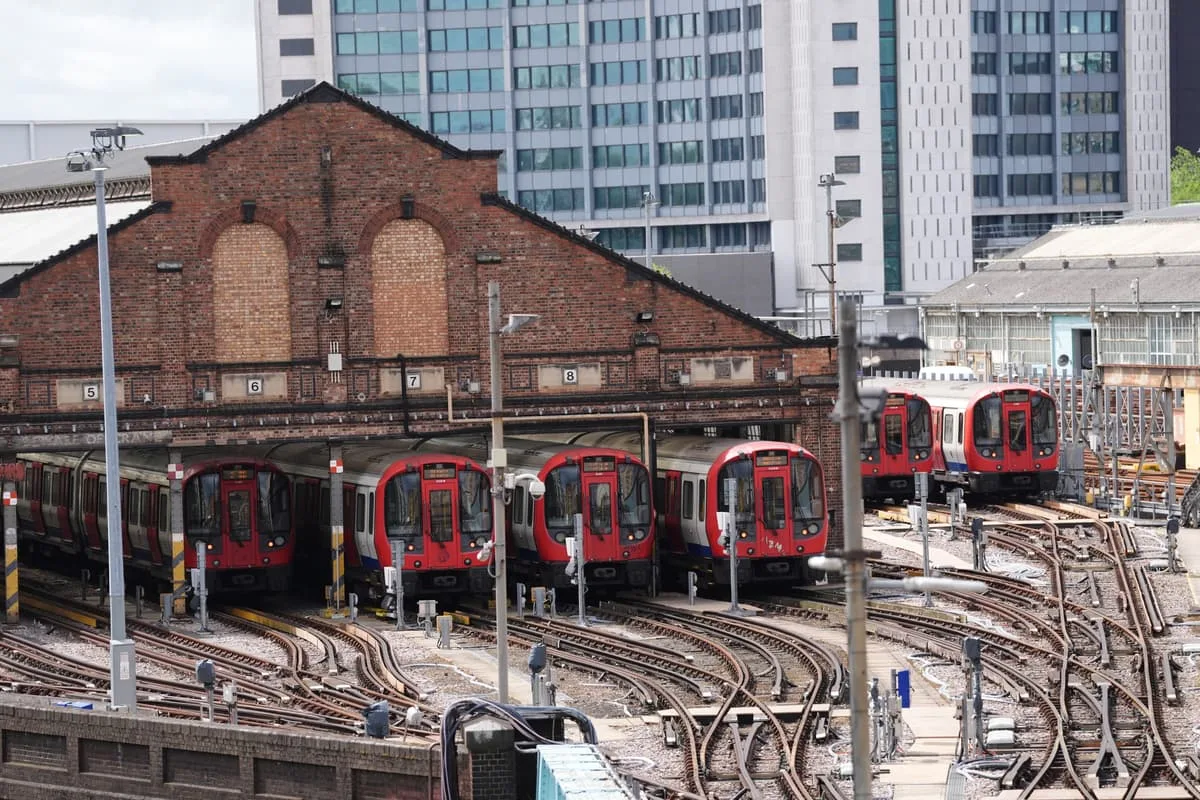
Londoners are staring down a severe winter of transport chaos after the RMT union announced eight 24-hour strikes across 16 days on the London Underground, directly targeting the peak festive shopping season and the return to work in early 2027. The standoff pitches management and a rival union against a workforce anxious that a promised four-day working week is actually a Trojan horse for harsher shifts and eroded protections.
At the center of the dispute is a London Underground proposal to cut rostered driving hours to 34 from the current average of 36, giving drivers more time away from work under a voluntary arrangement. While many drivers earn more than £70,000, the Aslef train drivers union has strongly backed the reforms, welcoming the chance for a shorter working week. But the RMT insists the plan forces drivers to surrender negotiated agreements regardless of whether they choose a four-day or five-day schedule.
Who is fighting over the four-day week and why?
The ideological divide over the changes has fractured the capital's transport workforce and drawn sharp condemnation from political and business leaders. RMT general secretary Eddie Dempsey pulled no punches, stating London Underground is attempting to dress up a wholesale attack on drivers' working conditions as a voluntary four day week.
Dempsey added that members are being asked to spend more time driving trains, accept longer and more unpredictable shifts, and surrender hard-won agreements.
Conversely, Aslef full-time organiser on London Underground Finn Brennan expressed disbelief at the escalating industrial action. We are surprised that the RMT has, once again, decided to take strike action to try to prevent Underground drivers moving to a four-day week on a voluntary basis,
Brennan said, calling a strike designed to block choices for a shorter working week a strange decision.
Political figures have seized on the friction. Shadow Transport Secretary Richard Holden condemned the union leadership, stating These RMT militants who bankroll hand-picked Labour MPs do not care about better services, they do not care about passengers and they do not care about our capital city – all they care about is beating as much cash out of this weak piñata of a Labour Mayor and Government as they can.
Meanwhile, BusinessLDN transport programme director Ed Richardson warned that the strikes will not bring any festive cheer to Londoners and visitors that rely on the Tube to get around the city.
When will the eight walkouts hit the network?
The industrial action is scheduled to begin at noon on 26 November 2026, launching a staggered series of walkouts that extend into February 2027. The RMT staged similar disruptive strikes in April and June of 2026, but the upcoming winter calendar threatens far more commercial damage during peak retail periods.
The exact timing of the upcoming walkouts highlights the strategic pressure points chosen by the union:
- 26 November 2026: Initial 24-hour strike beginning at noon
- 17 December 2026: Walkout starting at noon, hitting the final major pre-Christmas shopping weekend
- 19 December 2026: Second pre-Christmas strike impacting weekend shoppers
- Early January 2027: Two more 24-hour strikes affecting the return to work
- February 2027: Additional action, including dates falling within the half-term school holiday
That timeline leaves commuters and retailers vulnerable during weeks that normally generate vital annual revenue. Previous strikes resulted in widespread disruption across the network, though trains managed to run on most lines.
What else is breaking down across London's transport network?
The Tube strikes arrive alongside major rail engineering works that will compound holiday travel misery across the wider South East network. Paddington station in west London will shut down completely between Christmas Day and New Year’s Eve. As a direct result, Elizabeth line and Heathrow Express trains will not run west of Paddington until December 31.
National Rail has also confirmed that trains into Waterloo will be reduced and operate on an amended timetable on Sunday, December 27, and Monday, December 28, due to track engineering crews working in the Queenstown Road area. At the same time, Southeastern services to Charing Cross, Waterloo East, Canon Street, and via Lewisham will be completely suspended on those same days to accommodate track improvements around New Cross in south-east London.
What can affected passengers check and do right now?
With Transport for London yet to release exact service level predictions for each strike date, travellers must monitor official announcements closely. If you live, work, or plan to shop in London over the coming weeks, take these practical steps:
- Check travel updates via Transport for London channels and National Rail before starting any journey.
- Avoid central London travel on strike days, particularly around the final major shopping weekend on 17 and 19 December.
- Confirm alternative routes if relying on mainline services near Paddington, Waterloo, or south-east London over the Christmas and New Year festive shutdown.
- Allow extra time for travel as reduced services and station closures ripple across connecting bus and rail links.
The unresolved core disagreement remains whether London Underground management can provide watertight guarantees that drivers preferring a five-day schedule will suffer no career detriment. With management insisting the plan is voluntary and the RMT demanding enforceable safeguards against creeping shift unpredictability, how many commuters will find themselves stranded on station platforms this winter depends entirely on whether emergency talks can bridge a deepening industrial chasm.