Henri Kagan and Kenso Soai win 2026 Nobel Prize in Chemistry
French scientist Henri B. Kagan and Japanese researcher Kenso Soai won the 2026 Nobel Prize in Chemistry for discoveries in asymmetric organic synthesis.
- Headline: Henri Kagan and Kenso Soai win 2026 Nobel Prize in Chemistry
- Dispatch Summary: French scientist Henri B. Kagan and Japanese researcher Kenso Soai won the 2026 Nobel Prize in Chemistry for discoveries in asymmetric organic synthesis.
- Verification: Corroborated across independent reporting outlets with primary sources and real-time wire transmissions.
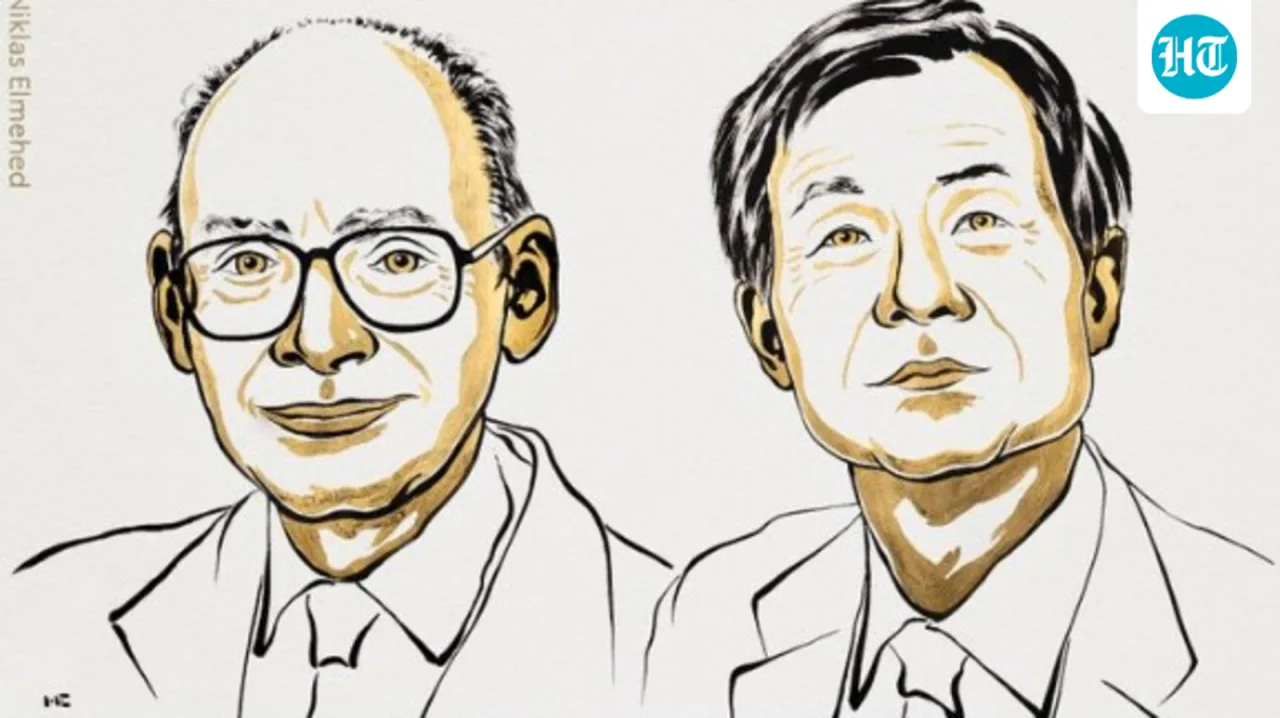
Henri Kagan and Kenso Soai win 2026 Nobel Prize in Chemistry
The 2026 Nobel Prize in Chemistry has been awarded to French scientist Henri B. Kagan and Japanese researcher Kenso Soai for the discovery of non-linear effects and autocatalysis in asymmetric organic synthesis.
For more than a century, organic chemistry lab work produced an equal fifty-fifty mix of mirror-image molecules, leaving scientists baffled as to why living beings use only a single version in their proteins. That enduring puzzle was answered on Wednesday, October 7, when the Royal Swedish Academy of Sciences announced the prize in Stockholm, recognizing how Kagan and Soai solved how homochirality can emerge spontaneously.
Heiner Linke, chair of the Nobel Committee for Chemistry, stated in a news release, Henri Kagan and Kenso Soai have provided a solution to a chemical mystery that is over a century old: how homochirality can emerge spontaneously. The chemical reactions they have developed are spectacular.
How mirror images shape life and industry
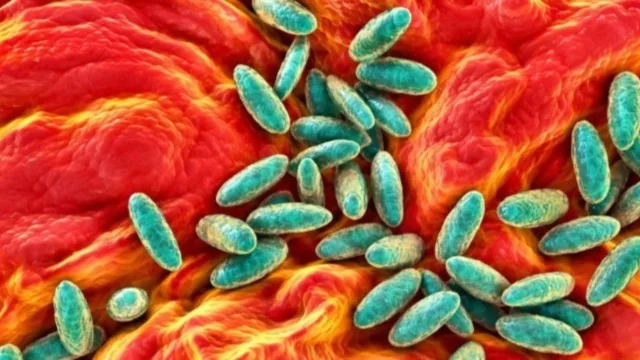
To grasp the breakthrough, it helps to look at human hands, which are mirror images of each other yet cannot be perfectly aligned on top of one another. In nature, biological building blocks like amino acids exist in left-handed and right-handed forms, but living cells exclusively use one mirror version. Standard laboratory experiments always created an equal mix of both until the laureates altered the equation. Kagan made the first major breakthrough in 1986 while working at Université Paris-Sud, discovering non-linear effects that allowed chemists to manipulate chemical reactions and yield a much higher proportion of one mirror image than previously thought possible.
Years later, Kenso Soai took the concept further. Affiliated with the Tokyo University of Science, Soai designed a unique chemical reaction in 1995 that possessed self-amplifying potential. By 2003, Soai achieved a historic milestone by engineering a reaction that produced only a single mirror image. The Nobel committee stated, Other than life itself, no one had ever achieved this feat. The Soai reaction is one of the most spectacular chemical experiments ever conducted.
What are the practical stakes for pharmaceuticals and daily human health?
Controlling molecular mirror images is not just an academic exercise. When pharmaceutical companies manufacture drugs to treat diseases, usually only one mirror form produces the intended medical benefit inside the human body. Kagan's discovery of non-linear effects provides chemical engineers with essential diagnostic data to fine-tune production processes and isolate pure single-form molecules.
Beyond life-saving medicines, these techniques help manufacturers create safer agricultural chemicals, flavours, scents, and novel materials. Furthermore, Soai's self-amplifying reaction has sparked fresh global research into how fundamental life components, such as sugars and amino acids, first originated on Earth. Researchers around the world are now trying to repeat Soai's achievement with the aim of producing homochiral amino acids and sugars, and the duo's discoveries have proved decisive for chemists who design reactions for the manufacture of pharmaceuticals.
Who are the laureates and how do the awards compare?
The 2026 laureates join a distinguished list of recent scientific discoveries recognized by Stockholm. The Nobel Prize in Chemistry 2025 was awarded jointly to Susumu Kitagawa, Richard Robson and Omar M. Yaghi "for the development of metal–organic frameworks". The metal organic frameworks (MOFs) are ultra porous crystalline sponges link metal ions with organic molecules. Their breakthrough allows scientists to trap and manipulate molecules, driving critical technologies that capture carbon, store green hydrogen, and harvest fresh drinking water directly from desert air.
This year's announcements began with the medicine prize on Monday awarded to three scientists whose work led to a tool that uses light to help understand how the brain works, followed by the physics award on Tuesday recognizing a scientist's efforts to demystify a rare group of neutrinos.
| Prize Year | Field | Core Discovery |
|---|---|---|
| 2025 | Chemistry | Molecular structures that can trap vast quantities of gas inside |
| 2026 | Medicine | A tool that uses light to help unravel how the brain works |
| 2026 | Chemistry | Non-linear effects and autocatalysis in asymmetric organic synthesis |
The two laureates will equally share the total prize money of 12 million Swedish kronor, which equals roughly $1.2 million. The amount is the same whether the prize goes to one person, a small group of laureates or an organization.
What comes next for the Nobel announcement week?
The science awards mark the middle of the annual Nobel announcement cycle in Stockholm. Following the science prizes, the literature Nobel will be announced on Thursday, followed by the Nobel Peace Prize on Friday. The Nobel Memorial Prize in Economic Sciences will be announced on Monday.
For the laureates themselves, the recognition brought immediate disruption to ordinary routines. Soai said he was shopping near his home when he was reached by the Nobel committee.
Updated 2 times since publication; last update 7 October 2026, 13:53.