Magnitude 5.0 earthquake strikes off Southern California coast near Los Angeles
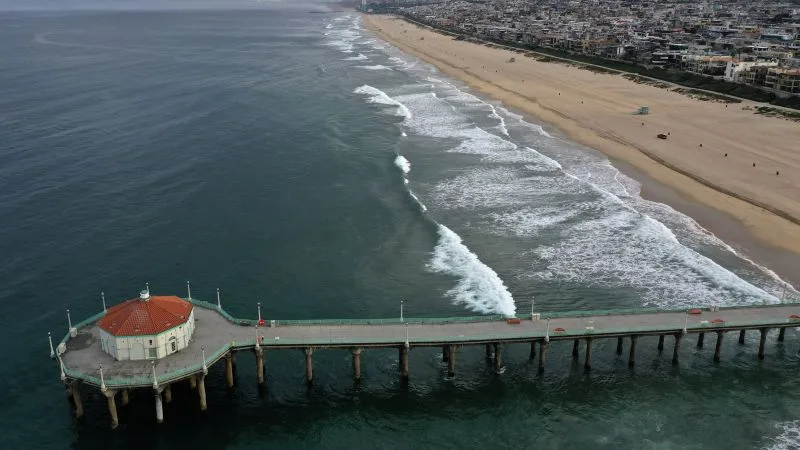
A strong magnitude 5.0 earthquake struck off the Southern California coast near Manhattan Beach on Saturday morning, sending widespread tremors across the Los Angeles basin.
Why did the earthquake strike off Manhattan Beach on Saturday morning?
Southern California was rocked on Saturday morning when a strong earthquake struck off the coast, sending tremors across the Los Angeles basin during the Thanksgiving holiday weekend. The initial event hit at 9:30 a.m. PT. Seismologists and federal agencies worked through shifting initial measurements to pin down the details of the tremor.
The U.S. Geological Survey initially estimated the magnitude at 4.7, briefly considered 5.2, and ultimately settled on a preliminary magnitude of 5.0. The epicenter was located about 3.7 miles west southwest of central Manhattan Beach, at a depth of about 7.6 miles, according to the USGS and reports cited by the San Francisco Chronicle. Other tracking placed the epicenter roughly 6 miles offshore with a depth of about 5.6 miles, or around 6 kilometers out with a 12-kilometer depth.
People ran out of stores in Santa Monica, buildings rattled loudly, and trees swayed while shaking was felt as far away as Pasadena and Venice and Silver Lake. At Los Angeles International Airport, alarms rang out and ceiling tiles fell inside a terminal, scattering shattered glass across the floor. In Manhattan Beach, resident Patricia Blakemore shared photos of minor household damage, noting on Facebook, The range hood took the worst of it, and we lost a few glasses along the way, but those can be replaced.
That combination of an offshore epicenter and a deeper subterranean path muffled the worst potential impacts for millions of residents.
Elizabeth Cochran, an observational seismologist at the USGS, explained during a news briefing that the depth gave the seismic waves a longer distance to travel to the surface, keeping shaking levels lower. Lucy Jones, a faculty associate in geophysics at the California Institute of Technology and director of its Center for Disaster Resilience, added that shaking dies off rapidly with distance. By being offshore, we've reduced that to a certain extent,
Jones said, adding, I can't imagine that we're looking at anything really significant,
and noting that earthquake intensity generally needs to reach around 6 before you’re starting to throw things off of shelves.
How many aftershocks followed the main tremor?
The initial jolt was immediately followed by a rapid succession of smaller tremors that tested the nerves of holiday travelers and local residents alike. Within the first 45 minutes alone, the USGS recorded at least four aftershocks ranging from magnitude 2.5 to 3.7. Broader tracking captured an even more active seismic sequence off the coast.
In total, 31 earthquakes struck the area in the span of around an hour, ranging from magnitude 1.5 to 5.0. Eight of those measured magnitude 2.5 or greater. A 3.7-magnitude tremor hit about 30 minutes after the main shock, followed by three additional quakes including magnitudes of 2.7, 3.8, and 3, with that cluster concluding at 10:32 a.m.
| Seismic Event | Reported Magnitude Range | Distance From Coast / Depth |
|---|---|---|
| Main USGS Estimate | 5.0 (revised from 4.7 and 5.2) | 3.7 miles southwest of Manhattan Beach / 7.6 miles deep |
| Initial Aftershocks (First 45 min) | 2.5 to 3.7 | Offshore Manhattan Beach |
| Subsequent Tremor Cluster | 2.7 to 3.8 (plus 31 total quakes 1.5 to 5.0) | Offshore Manhattan Beach |
Allen Husker, manager of the Southern California Seismic Network, noted that shaking and damage were less because the quake was deep and offshore, compared with the 2014 La Habra quake, which was closer to the
That perspective offers little comfort to emergency planners watching the active fault lines. The USGS estimates there is a 30% chance of an aftershock of magnitude 4.0 or greater.
What emergency protocols and transit impacts are in effect?
City and state agencies swung into action immediately following the initial shock, moving emergency services to high alert while checking transport networks for disruption. The Los Angeles Fire Department activated earthquake mode across its 470-square-mile jurisdiction.
Personnel from all 106 neighborhood fire stations began conducting strategic surveys by land, air, and sea to examine critical infrastructure and local concerns. Los Angeles Mayor Karen Bass shared an update emphasizing that city teams would monitor conditions continuously. A preliminary 5.0-magnitude earthquake centered near Manhattan Beach was felt across Los Angeles at 9:30 AM this morning. So far, while there are no reports of major damage, the LAFD is in earthquake mode to assess potential impacts across the city,
Bass wrote on social media, advising residents to prepare for aftershocks.
Lyndsey Lantz, spokesperson for the Los Angeles Fire Department, confirmed that there were no initial reports of structural damage or injuries. The California Office of Emergency Services also coordinated with local officials. Meanwhile, the National Tsunami Warning Center confirmed that the earthquake posed no tsunami danger to the coastline.
Transportation networks faced immediate scrutiny with major crowds moving across the region. The Rose Bowl in Pasadena was scheduled to host a rivalry college football game between the UCLA Bruins and USC Trojans on Saturday afternoon. Transit officials confirmed that all lanes are open on the Interstate 210 freeway headed toward the stadium, averting a major logistical crisis for sports fans.
Where does this rank among recent Southern California earthquakes?
Geologists point out that while Saturday morning's tremor felt jarring across the metropolitan area, it fits into a known historical pattern of moderate regional earthquakes rather than a catastrophic rupture. Lucy Jones noted at the briefing that this event stands as one of the larger ones we’ve had in the Los Angeles area in quite a while. She identified the 2014 earthquake centered near Brea in Orange County, which registered a magnitude 5.1, as the last time we broke five in the LA metropolitan area.
Other recent comparable events include the magnitude 5.4 earthquake that shook Chino Hills in 2008. By comparison, Saturday's 5.0 magnitude quake delivered significant motion without crossing the threshold into widespread structural destruction. Allen Husker emphasized that proximity to populated inland areas dictates the severity of damage, making an offshore location a fortunate buffer.
That leaves open the critical question of whether this offshore sequence will trigger further seismic activity along neighboring fault segments, and how aging urban infrastructure will hold up if a larger shallow quake strikes closer to population centers next time.