JPMorgan Chase and other US banks hit by outages due to software bug
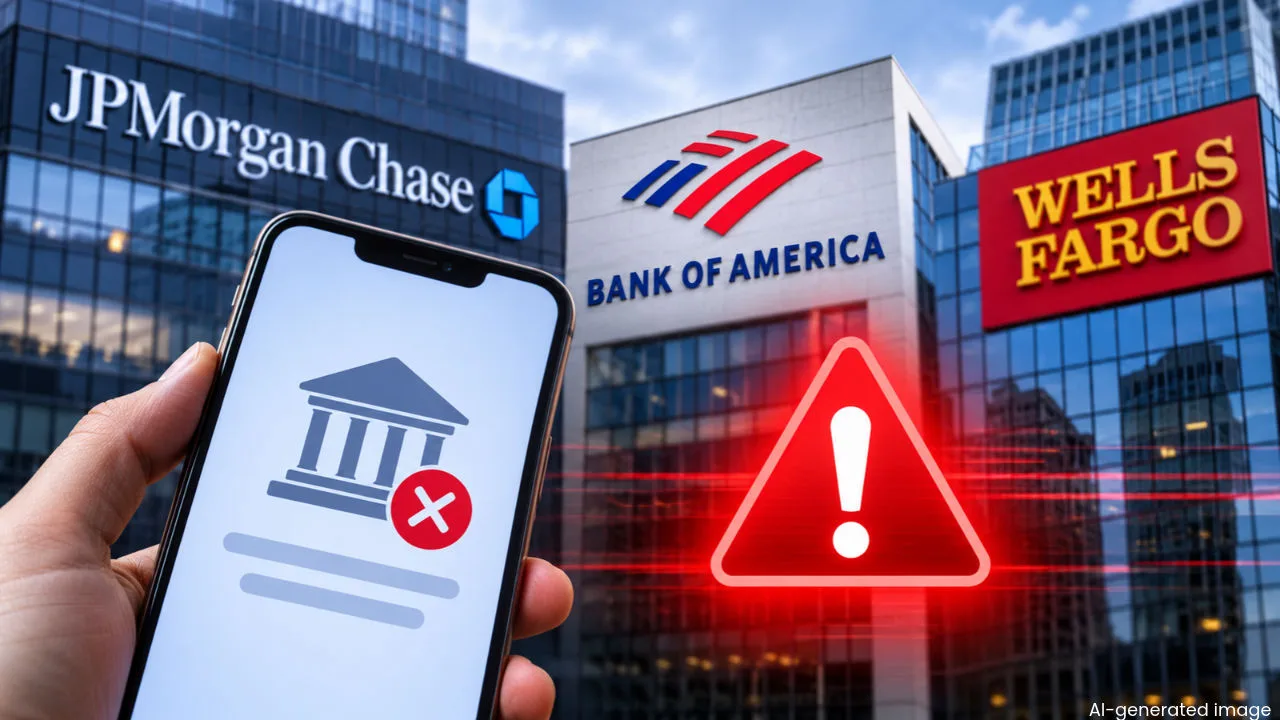
A software bug in JPMorgan Chase on-premises hardware triggered widespread technical disruptions across US banks, locking customers out of online portals and apps.
JPMorganChase has experienced a temporary issue related to a software bug in on premise hardware systems – there is no evidence this is cyber related,
the banking giant stated on X on Monday, November 16, 2026, as a widespread technical disruption locked thousands of American account holders out of online portals, mobile apps, and ATMs.
That announcement came on a day that saw cascading software glitches across the United States financial and transportation sectors, stirring public anxiety just days after a massive Microsoft outage and a rare nationwide Federal Aviation Administration ground stop. Yet while social media users and commentators openly questioned whether the country was facing a coordinated cyberattack or the collapse of aging infrastructure, the reality behind the bank disruptions was far more mundane: a discrete software fault inside the largest bank in the country that rippled outward through interconnected payment rails.
Software Bug at JPMorgan Chase Triggers Multi-Bank Fallout
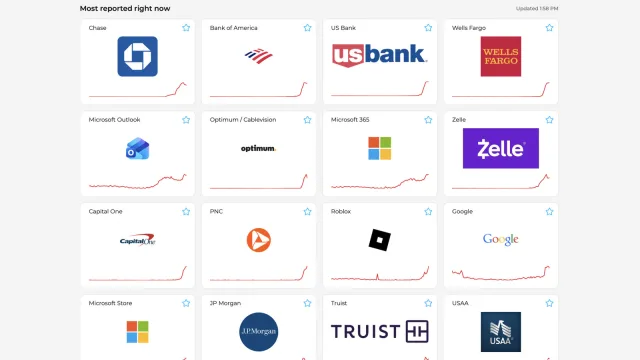
The trouble began on Monday morning when customers attempting to manage their finances encountered blocked logins, missing balances, and frozen wire transfers. According to outage-tracking website Downdetector, complaints peaked around 2:00 PM Eastern Standard Time, with JPMorgan Chase drawing roughly 4,800 reports, the highest number among all affected institutions. Approximately 53 per cent of those users struggled to check account balances and transaction details, 20 per cent faced login failures, and 17 per cent confronted blocked money transfers and wire transactions. Some Chase customers were greeted by an error message stating, Some services aren't available. We're working on them. Please try back later.
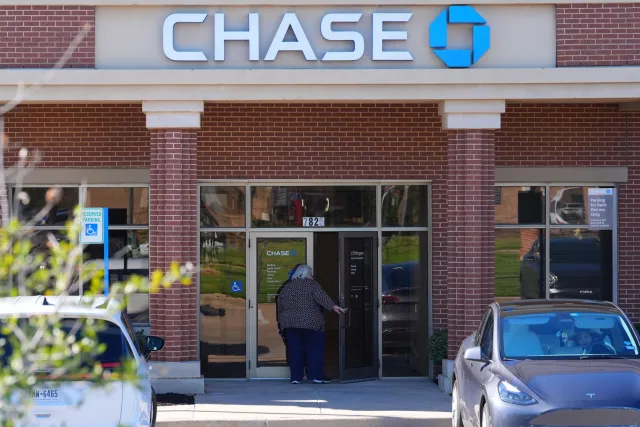
Chase is the consumer-facing brand of JPMorgan Chase, serving more than 86 million customers and 7.4 million small businesses through about 5,000 US branches. When its on-premises hardware servers suffered the bug, the shockwave did not stay contained. Because modern financial transfers require handshake protocols between multiple institutions, partner networks experienced immediate friction. Bank spokesperson Joe Evangelisti clarified the contagion mechanism: This is not a systemic issue — other banks may have been impacted by slowness in transactions only to the extent that they were a party to a transaction with us.
Downdetector Spikes at Bank of America, Wells Fargo, and US Bank
The software failure quickly manifested across competitors, driving thousands of frustrated account holders to report problems on Downdetector. Bank of America logged nearly 2,000 reports at its peak, with clients struggling to use ATMs, online banking, and mobile applications. Wells Fargo and US Bank each recorded about 1,000 user reports at their respective peaks, with customers unable to sign in, check balances, or execute basic transactions. Other major institutions, including Capital One, Truist, and Zelle, also saw sharp increases in customer complaints.
Institutional responses varied widely across the sector. Wells Fargo posted a formal notice on its website advising stranded clients to bypass digital channels and rely instead on physical ATMs, local branches, and telephone banking services. Bank of America declined to comment on the disruption to Reuters. Meanwhile, US Bank stated that its own internal systems were not directly affected, but warned that clients attempting to send or receive peer-to-peer payments through Zelle with another financial institution could experience transaction delays. Zelle itself maintained that its network remained fully operational, pointing the finger back at the participating banks. By 6:00 PM Eastern Time, reports involving Chase, Bank of America, and US Bank had subsided as services steadily returned to normal.
Aging Systems and the Risk of Concentrated Infrastructure
The timing of the bank glitches—hitting immediately on the heels of a Microsoft outage that crippled Outlook, Teams, and Copilot, alongside a Federal Aviation Administration ground stop that delayed more than 5,000 flights—prompted intense public alarm. Social media users flooded X with theories questioning whether the United States was experiencing a sophisticated foreign cyberattack or watching its critical systems collapse under the weight of decades of deferred maintenance. One user posted, It’s almost worse if this isn’t a cyber attack at this point; that’s embarrassing third world sh*t.
Industry experts interviewed by major news outlets pushed back against conspiracy theories, pointing instead to structural vulnerabilities inherent in modern finance. Alex Hamerstone, a cybersecurity expert, told CNN that the root cause lies in aging infrastructure meeting an ever-growing dependence on technology. Mike Chapple, a professor at the University of Notre Dame, told USA Today that modern technological systems are so complex and tightly interwoven that a single error can snowball instantly, wiping out essential services.
Patrick Moorhead, founder of Moor Insights and Strategy, added that these compounding outages highlight how heavily critical national functions rely on highly concentrated systems where a single failure scales nationwide.
What Affected Customers Can Do Right Now
For account holders caught in sudden digital blackouts, financial institutions and consumer advocates recommend specific offline workarounds:
- Check alternative access channels: If mobile apps and online portals return error messages, visit physical bank branches or use proprietary ATMs to check balances and withdraw physical currency.
- Utilize telephone banking: Contact customer service hotlines to execute urgent transfers or verify account statuses when digital interfaces lock up.
- Verify transaction statuses later: Because delays are often caused by slowness in inter-bank processing rather than lost funds, wait for system queues to clear before attempting duplicate wire transfers.
- Monitor official updates: Watch corporate channels on platforms like X for direct restoration timelines issued by bank communications teams.
By Monday evening, JPMorgan Chase announced that it had resolved the underlying software bug, with transactions returning to normal processing speeds by 6:00 PM Eastern Time.