JPMorgan Chase technical issue triggers widespread US bank online outages
A technical failure at JPMorgan Chase caused widespread online banking outages across major US financial institutions, sparking brief fears of a cyberattack.
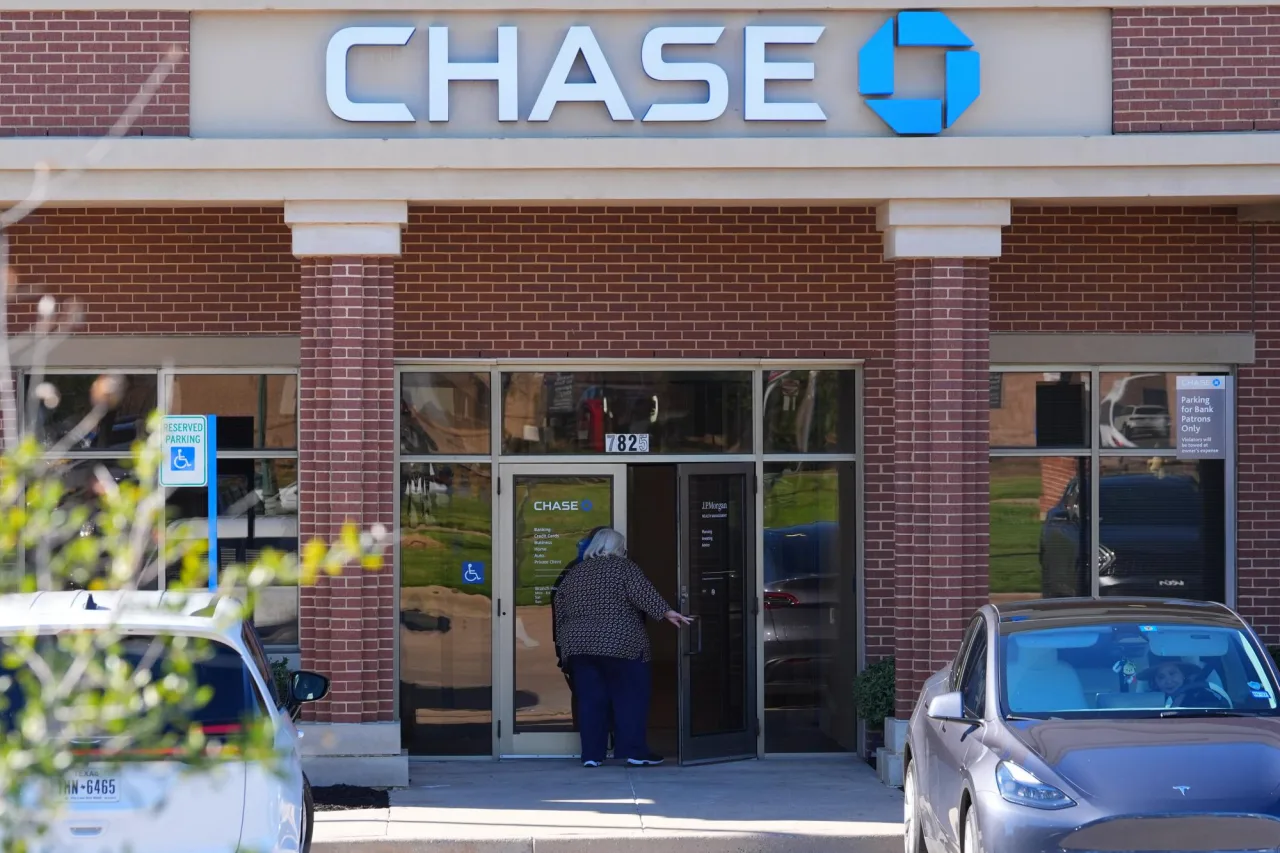
Thousands of American banking customers found themselves locked out of online accounts, staring at error messages, or unable to complete basic money transfers on Monday as a major technology failure at JPMorgan Chase rippled across the nation's financial system. The digital breakdown, which struck at the start of the work week, sent anxious account holders to social media with fears of a coordinated cyberattack before institutions and tracking services traced the root cause to internal hardware and software faults.
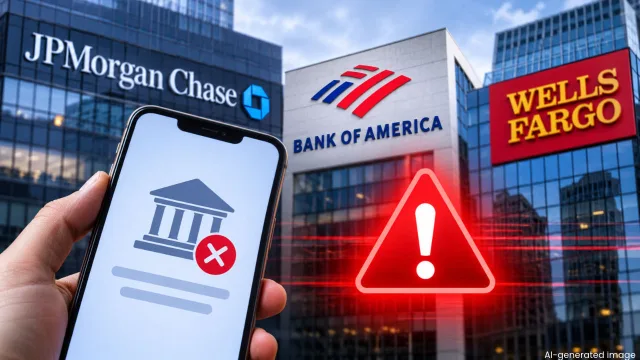
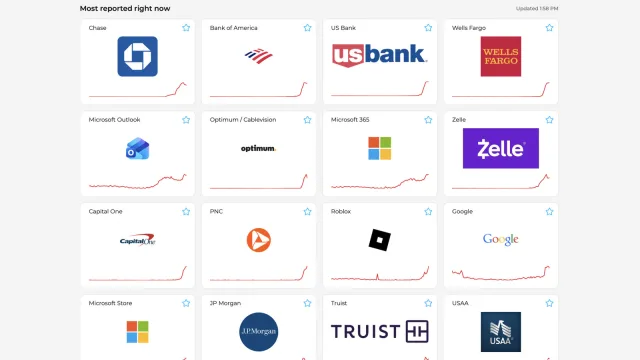
The disruption hit customers attempting to log into accounts at several of the country's largest financial institutions, including JPMorgan Chase, Bank of America, Wells Fargo, U.S. Bank, Truist, Capital One, and PNC, according to outage data from Downdetector.com. Many Chase users were greeted on their screens by a blunt notification: Some services aren't available. We're working on them. Please try back later.
How did a Chase software bug stall transactions at rival banks?
JPMorgan Chase, which serves more than 86 million customers across the U.S. and operates 5,000 branches alongside 7.4 million small businesses, quickly emerged as the epicenter of the disruption. The institution is also the top credit card issuer in the country. Company spokespeople announced that JPMorganChase has experienced a temporary issue related to a software bug in on-premise hardware systems – there is no evidence this is cyber-related
and stated that it is taking longer than usual to service some customers.
Because Chase acts as a transactional partner for other financial institutions, its technical hiccup created bottlenecks for outsiders. By around 2 p.m. Eastern time on Monday, more than 4,700 customers at Chase had reported experiencing problems on Downdetector.com, while reports spiked alongside it with just over 2,000 outage reports at Bank of America and 1,060 at U.S. Bank, alongside hundreds of reports at Wells Fargo, Capital One, and Truist.
The failure also entangled the peer-to-peer payment platform Zelle. Owned by Arizona-based Early Warning Services—which is jointly held by major banks including Bank of America, Capital One, JPMorgan Chase, PNC Bank, Truist, U.S. Bank, and Wells Fargo—Zelle became a secondary casualty. Early Warning Services maintained that the Zelle network itself was fully operational, with a spokesperson stating that an issue at the financial institutions may be delaying Zelle payments for some of their customers
and emphasizing that consumers do not have a separate Zelle account, and Zelle does not hold consumer funds.
U.S. Bank echoed this dynamic, telling outlets that its own systems were not directly impacted, but warning that clients attempting to send or receive Zelle payments involving another financial institution might experience transaction delays.
Were US banks under cyberattack on Monday?
The sudden inability to access money stirred immediate panic online. On X and other social media platforms, users questioned whether the simultaneous spikes in outage reports across Bank of America, Wells Fargo, and Chase pointed to a malicious hack. One user asked Bank of America, Wells Fargo and another banks...Was there a cyberattack?
while another claimed that Chase customers had been turned away while trying to access their funds.
Neither federal authorities nor the banks found any evidence to substantiate those fears. Chase explicitly ruled out malicious interference, stating repeatedly that the problem stemmed from internal on-premise hardware systems and a software bug rather than a security breach. Representatives for the bank assured the public that customers retained access to their accounts and funds, even if processing times were severely delayed. Bank of America and Wells Fargo did not immediately comment on the reported problems, while Truist, PNC, and Capital One told the BBC that their own direct operations had not been impacted.
Are digital financial networks too fragile to trust?
The banking disruptions unfolded against a jittery backdrop for critical American infrastructure. Just days earlier, a massive Microsoft outage that began on Thursday and lasted into Saturday crippled Outlook, Teams, and the Copilot AI assistant, creating worldwide headaches for schools, hospitals, businesses, courts, and police forces. That tech failure followed a separate Friday incident where ageing equipment led to a temporary grounding of all commercial airplanes in the U.S., which transportation secretary Sean Duffy later attributed to a contractor switching telecommunication lines from old copper wire to fiber, causing a newly installed router to flood air traffic control systems.
For account holders caught in Monday's banking gridlock, the string of consecutive infrastructure failures underscored a growing vulnerability in daily digital life. Yet unlike the Microsoft cloud collapse or the FAA telecommunications glitch, the banking system's safeguards largely held the line against permanent data loss or account theft. By 1800 ET (2300G) on Monday, Downdetector metrics showed that outage reports for Chase, Bank of America, and U.S. Bank had begun to fall sharply as technical teams worked through the software glitch.
The remaining question is whether financial institutions will face regulatory scrutiny over the systemic fragility exposed when a single hardware bug at the nation's largest bank can freeze transactions across half a dozen competitors. As digital banking reliance deepens, millions of customers await answers on how banks plan to insulate everyday transactions from localized software failures.