Trump Approves Firing-Squad Execution of Fort Hood Shooter Nidal Hasan
US President Donald Trump has authorized the execution of Nidal Hasan by firing squad, marking the first military death sentence carried out since 1961.
- Headline: Trump Approves Firing-Squad Execution of Fort Hood Shooter Nidal Hasan
- Dispatch Summary: US President Donald Trump has authorized the execution of Nidal Hasan by firing squad, marking the first military death sentence carried out since 1961.
- Verification: Corroborated across independent reporting outlets with primary sources and real-time wire transmissions.
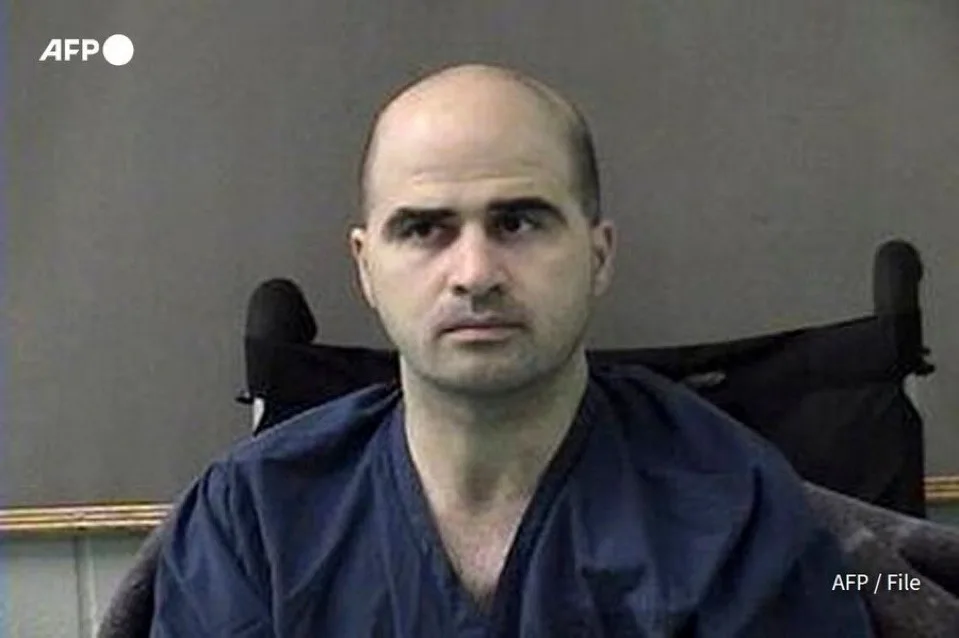
US President Donald Trump has approved the execution of Nidal Hasan by firing squad, marking the first time the US military will carry out a death sentence since 1961. Hasan, a former Army psychiatrist, was convicted in 2013 for the 2009 mass shooting at Fort Hood, Texas, in which he killed 13 people and wounded 32. The Pentagon announced the decision on Monday, with Defense Secretary Pete Hegseth recommending the method and Trump formally endorsing it.
Historical Context of Military Executions
The execution of Hasan would end a decades-long hiatus in military capital punishment. The last US military execution occurred in 1961 when Army Pvt. John Bennett was hanged for murder. Prior to that, the last firing squad execution took place in 1945, when Army Private Eddie Slovik was shot for desertion during World War II. Military officials emphasized that Hasan’s case represents a rare application of the death penalty within the armed forces, which historically has limited its use to specific wartime or disciplinary offenses.
| Detail | Information |
|---|---|
| Crime | 2009 Fort Hood shooting: 13 killed, 32 wounded |
| Conviction Year | 2013 |
| Execution Method | US Army firing squad |
| Last Military Execution | 1961 (hanging) |
| Last Firing Squad Execution | 1945 (desertion) |
Hasan’s Trial and Motivations
Hasan, a US-born Muslim of Palestinian descent, was a major in the Army when he opened fire on November 5, 2009, at a medical facility at Fort Hood. The base, a key staging point for troops deployed to Iraq and Afghanistan, became the site of one of the deadliest mass shootings in military history. Hasan, who was partially paralyzed by a civilian officer during the attack, chose to represent himself during his trial, offering no witnesses or testimony. Court-appointed defense attorneys expressed concerns that he sought execution, a claim he did not dispute.
The military jury convicted Hasan of 13 counts of premeditated murder and 32 counts of attempted premeditated murder. During the trial, prosecutors described Hasan as having created a “personal kill zone” at the base. Evidence presented included his opposition to US military operations in Iraq and Afghanistan, as well as his online communications with Anwar al-Awlaki, a radical cleric linked to Al-Qaeda. Al-Awlaki was later killed in a US drone strike in Yemen.
Controversies and Legal Challenges
The decision to use a firing squad has drawn attention amid recent debates over the death penalty in the US. Trump’s approval comes just days after Christa Pike, a Tennessee woman convicted of murder, survived two lethal injections in 2026, sparking renewed scrutiny of execution methods. Military officials stated that Hasan’s execution must occur within 150 days of the president’s approval but could be delayed by legal challenges. Hasan remains entitled to pursue appeals, though his legal team has not yet commented on the matter.
The Pentagon emphasized that military executions require presidential approval, a process that has been used sparingly. In 2008, a similar case saw a death sentence commuted, highlighting the discretionary nature of such decisions. Hasan’s case also raises questions about the intersection of military justice and civilian legal standards, particularly given the rarity of executions at military facilities compared to state and federal systems.
Broader Implications for Military Justice
The execution of Hasan underscores the unique role of the military justice system in handling crimes committed by service members. While mass shootings at military bases are uncommon, the 2009 Fort Hood attack remains a defining event in US military history. Other incidents, such as the 2015 Tennessee shootings by a Kuwaiti-born US citizen and the 2019 Hawaii base attack by a sailor, have also drawn scrutiny but have not resulted in capital punishment.
Military officials have framed Hasan’s case as a necessary application of the death penalty for “premeditated murder” under the Uniform Code of Military Justice. However, the choice of firing squad—rather than lethal injection—has drawn comparisons to historical practices and raised questions about the symbolic weight of the method. The Pentagon did not elaborate on why the firing squad was selected, though it noted that the Secretary of the Army will determine the execution’s date and location.
Frequently Asked Questions
When will Nidal Hasan be executed?
The Secretary of the Army will set the date and place of the execution, but it must occur within 150 days of Trump’s approval. No specific timeline has been announced.
Why was a firing squad chosen over lethal injection?
The Pentagon has not provided a detailed rationale for the choice of firing squad. However, it aligns with historical military execution practices and avoids the controversies surrounding lethal injection protocols, which have faced legal and ethical challenges in recent years.
Can Hasan’s execution be stopped?
Yes. Hasan’s legal team may pursue appeals, and the execution could be delayed or halted if new legal challenges emerge. The military justice system allows for such proceedings, though the final outcome remains uncertain.
The execution of Nidal Hasan by firing squad represents a significant moment in US military history, blending legal precedent, historical tradition, and contemporary debates over capital punishment. As the Secretary of the Army prepares to set the execution’s details, the case will continue to draw attention to the intersection of military justice, religious motivations, and the evolving landscape of the death penalty in America.
How significant is this wire dispatch?
Cast your anonymous vote to register reader consensus across journalism and intelligence sectors.
Dateline Wire is dedicated to independent, evidence-backed reporting. This briefing was synthesized from primary source reporting, corroborated across independent newsrooms, and verified against our Editorial Standards.