France accuses Iran of cyberattacks on supermarket fridges
French authorities accuse Iran's Islamic Revolutionary Guard Corps of orchestrating a digital sabotage campaign that raised supermarket refrigerator temperatures across roughly 700 stores, spoiling food worth millions of euros.
Business Desk. (2026, November 9). France accuses Iran of cyberattacks on supermarket fridges. Dateline Wire. https://www.datelinewire.com/business/france-accuses-iran-supermarket-cyberattacks/
@article{datelinewire1557,
  author  = "Business Desk",\n  title   = "France accuses Iran of cyberattacks on supermarket fridges",\n  journal = "Dateline Wire",\n  year    = 2026,\n  url     = "https://www.datelinewire.com/business/france-accuses-iran-supermarket-cyberattacks/"\n}
[France accuses Iran of cyberattacks on supermarket fridges](https://www.datelinewire.com/business/france-accuses-iran-supermarket-cyberattacks/) — *Dateline Wire* (2026).
France accuses Iran of cyberattacks on supermarket fridges
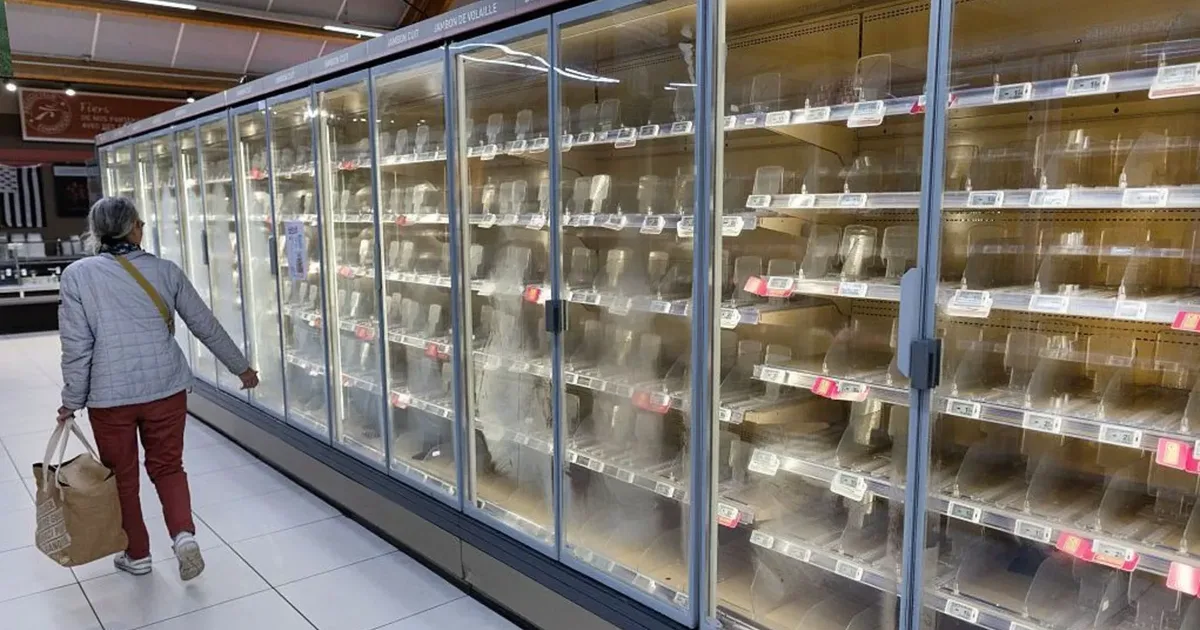
France on Monday blamed Iran for last month’s cyberattack on supermarket refrigerators, summoned the Iranian ambassador and said it would seek European sanctions against those responsible for the attack. The October 12 attack sent refrigerator temperatures soaring, affecting about 700 of the country’s 10,000 supermarkets. In a statement Monday, prosecutors in Paris said they found that Iran’s paramilitary Revolutionary Guard was behind the large-scale cyberattack.
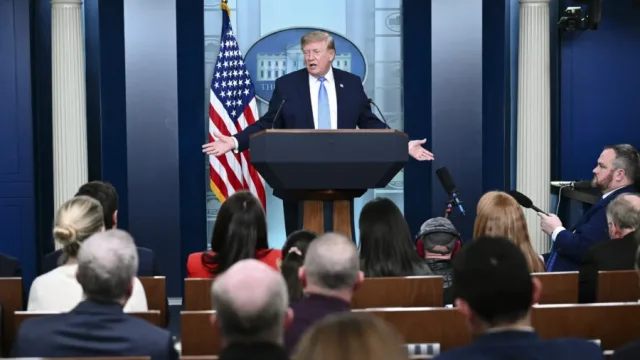
The French Foreign Ministry condemned the attack in the strongest possible terms, and French Foreign Minister Jean-Noël Barrot, speaking on the sidelines of G7 talks in Paris, said the Iranian ambassador was being summoned to strongly protest against this extremely serious act.
This is an attack of unprecedented scale and aggressiveness. It is the first large-scale cyberattack aimed at sabotage on French soil, and it represents a major threat to our national interests and the security of the French people. That is why it will not go unanswered.
Video: Hackers turn up heat in supermarket fridges and freezers in France | DW News — DW News (YouTube)Jean-Noël Barrot, French Foreign Minister
We will impose sanctions at the European level against all those responsible for this attack, Barrot added, vowing to take any other measures needed to respond to it and deter future attacks.
The sabotage marks a distinct expansion of the cyber warfare accompanying the conflict between the United States and Iran that began in February, shifting digital disruption away from traditional targets such as the Los Angeles transport system in March, US water treatment plants in July, and shipping bound for the United States in August. For corporate investors, retail operators, and supply chain managers across Europe, the incident exposes an alarming vulnerability in commercial infrastructure where outdated firmware and obsolete hardware left critical cooling systems exposed to remote override.
The Islamic Revolutionary Guard Corps is a branch of the Iranian Armed Forces founded after the 1979 Islamic Revolution, operating parallel to Iran's regular army and commanding substantial political, economic, and military influence. Within the IRGC, specialized technical cells such as the Shahid Kaveh unit carry out offensive cyber operations directed against foreign infrastructure.
Judicial Probes and International Ramifications
Paris prosecutor Laure Beccuau announced in a statement that a formal judicial investigation had been opened Monday into the head of an offensive cyber unit associated with Iran's Islamic Revolutionary Guard Corps as well as his two deputies, targeting suspected organized cybercrime with the aggravating circumstance of having been committed to serve the interests of a foreign power — in this case, Iran.
France’s national cybersecurity agency, ANSSI, attributed the attack to Shahid Kaveh, describing the group as a cyber unit affiliated with the electronic and cyber centre of the IRGC. Investigators discovered that the attackers utilized Farsi and IP addresses linked to devices located in Iran, prompting the Paris prosecutor's office to seek international arrest warrants for the suspects.
ANSSI also stated it was able to attribute some other cyber attacks carried out against France since 2020 to another group named Shahid Shoostari, likewise affiliated with Iran’s Islamic Revolutionary Guard Corps. Those include attacks targeting satirical newspaper Charlie Hebdo in 2023 and the organization of the Paris Olympic Games in 2024.
The diplomatic fallout was immediate. Iran’s mission to the United Nations did not respond to messages seeking comment, and Tehran routinely denies carrying out malicious cyber operations, maintaining silence in New York on the mounting digital accusations.
Date
Target / Region
Impact
October 11-12, 2026
Approx. 700 supermarkets in France (including Coopérative U and Intermarché)
Temperatures reached 50C (122F) for about six hours; widespread food spoilage; losses estimated in tens of millions of euros.
Early November 2026
Dozens of supermarkets in seven European countries (including Sweden, Belgium, Luxembourg, Ireland, and Estonia)
Refrigerators and freezers compromised; food discarded.
Early November 2026
French blood banks
Refrigerators targeted to raise temperatures to extremely high levels, but attack thwarted before blood products or samples were damaged.
That leaves European retail executives scrambling to audit connected operational technology before subsequent waves of disruption hit their facilities.
Corporate Losses and Wider European Spillovers
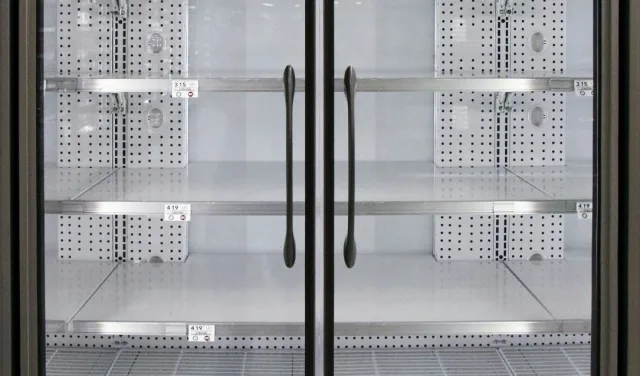
The operational toll on supermarkets was severe. More than 100 of Coopérative U's supermarkets were hit, alongside 180 stores from Intermarché and its Netto brand. In the hours following the breach, supermarket employees were forced to cart boxes full of perished meat and melted ice cream into giant rubbish bins. The Intermarché supermarket chain reported losses of tens of millions of euros in a single day.
Cybersecurity experts previously told Reuters that the October 11 cyberattack appeared to have been easy to carry out because many stricken refrigeration units were obsolete or running outdated firmware. The initial breach in France was followed last week by a second wave of hacking that struck more than 100 establishments across seven other European countries, affecting grocery stores from Sweden to Belgium, Luxembourg, Ireland, and Estonia. It remains officially unknown whether the initial French incident and the subsequent European waves are directly linked.
The second wave also breached refrigerators used by French blood banks, though that attempt was thwarted before it could do any damage to blood products or samples. Both ANSSI and Paris prosecutors are investigating that incident. Meanwhile, the UK meat processing industry was affected by the broader technological disruption, though Paul Chichester, director of operations at the National Cyber Security Centre (NCSC), noted that the domestic impact there was minimal.
Parallel US Investigations and Deterrence Measures
The sabotage of European commercial cooling systems follows a remarkably similar incident in the United States. In August, refrigerators at at least half a dozen US military commissaries stopped working in what Pentagon investigators suspect was a cyberattack, according to Reuters reports. US investigators consider Iran a suspect in that incident and are actively working alongside French officials to establish what happened, though the Pentagon declined to comment further for security reasons.
The convergence of state-sponsored cyberwarfare and basic industrial control systems has created a complex security challenge for Western governments. French officials have warned that there will be concrete consequences for Tehran, signaling that Paris and its allies intend to combine criminal prosecutions with coordinated economic penalties. As investigators in Paris await responses from Tehran and push forward with international arrest warrants, the Iranian mission maintains its silence.
Updated 1 time since publication; last update 10 November 2026, 04:41.
The Business Desk covers markets, central banks, corporate earnings, energy and the economics behind the headlines. Every figure is reproduced exactly as its source published it and tied to a date, reported results are kept separate from analyst forecasts, and when outlets disagree on a number the disagreement is reported rather than settled silently. Story tips: [email protected].