DWP confirms cyber attack on pensions and benefits services
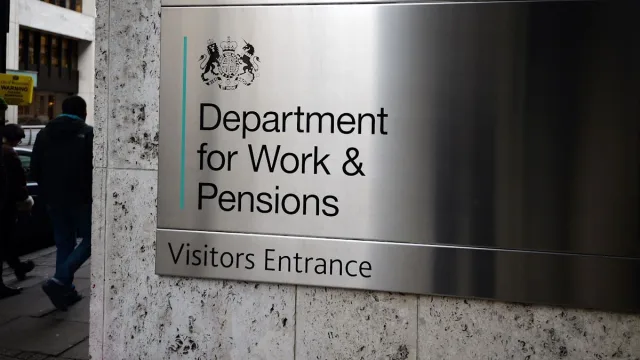
The Department for Work and Pensions has confirmed that a cyber incident affecting pension and benefit systems was an attack, forcing services offline.

Our team and specialist cyber experts continue to investigate a cyber-attack on DWP's systems,
a spokesperson for the Department for Work and Pensions told the BBC. The Department for Work and Pensions (DWP) has confirmed the cyber incident affecting pension and benefit systems was an attack and not accidental. Online portals for the state pension, Universal Credit, Personal Independence Payment applications, and the Tell Us Once service for registering deaths remained dark on Saturday morning.
Portals offline as millions face benefit freezes
The incident was detected on Thursday night after administrators noticed unusual activity, prompting the government to pull down citizen-facing services as a precautionary measure. John Curry, a cybersecurity expert based at Bath Spa University, told BBC News that the DWP had almost certainly
detected hacking activity taking place and shut down its systems in an effort to stop data being stolen, explaining that when hackers are found inside a network, the best response is to slam the front door shut. David Knott, the UK's former chief technology officer, told BBC Newsnight that his strong suspicion was that hackers had mounted an attack through the front door of citizen-facing services.
The shutdown hit a vast digital estate. The DWP makes around 2.5 million payments every day and is the primary source of income for millions of people. While Downing Street would not be drawn on whether the DWP had been targeted by hackers, stating that other departments had not been accessed by a malicious actor, the impact on individual claimants was immediate and severe.
Claimants report delays and fear sanctions
Some benefits claimants have reported delays in receiving their money and said they fear being penalised for not submitting information to the DWP on time. Jacob Dwight, a 21-year-old design graduate from Stockport, found himself unable to access his Universal Credit account to explain a missed meeting, leaving him concerned he could lose a quarter of his income and unable to buy Christmas presents. More importantly, UC is essentially paying my heating bill at the moment,
Dwight added. Benyamin Abdollahi, a 19-year-old part-time university student and full-time carer for his mother from Birmingham, told BBC News he had to borrow money from friends after his Carer's Allowance failed to land. I now have to go a weekend without any pay, with the risk of all my payments bouncing,
Abdollahi said. The DWP has insisted that regular pension and benefit payments are not affected and will be paid as normal, with a spokesperson stating that customers directly affected by the incident will not face sanctions.
Experts point to legacy infrastructure and state-backed motives
The breach has drawn sharp scrutiny regarding the resilience of government networks and the vulnerability of aging systems. Matthew Gould, former Cabinet Office head of cyber security, told BBC News that hundreds of legacy systems are kept going with huge commitment and skill from the people doing it, but where frankly the system is relying on very old infrastructure. What is needed a lot of the time is quite boring investment in upgrading what is already there, moving platforms on to more stable bases, making systems more resilient,
Gould said. Amanda Finch, chief executive of the Chartered Institute of Information Security, told the Daily Mail that the disruption carries the hallmarks of a state-sponsored operation. This is a significant attack – whatever the cause, it is going to worry people,
Finch said, adding that it is more likely to be something that would undermine confidence in government rather than go after money. Technology critic Bill Thompson told BBC Radio 4's Today programme that shutting down the department's systems was an extreme measure but also a very sensible one.
Political fallout and union criticism
The attack triggered immediate political sparring. Dame Chi Onwurah, chair of the House of Commons Science and Technology Committee, told BBC News that the incident should be a wake-up call for the government, noting that people rely on these systems for some of the most essential services the state provides, and they should be able to trust that the tech and data underpinning them are secure and resilient. Meanwhile, the PCS trade union, which represents some civil servants working at the department, criticized investment levels in IT infrastructure, and said the DWP had opened a voluntary redundancy scheme in its technology division days before the incident. The government defended its record by pointing towards a £210m cyber action plan.
Shadow AI minister Ben Spencer called the incident deeply concerning, arguing that the government cannot demand higher standards of cyber security from others without demonstrating that government are taking the necessary action to protect their own systems. Downing Street stated that it was working with GCHQ's National Cyber Security Centre to investigate the breach. As investigations continue and cybersecurity specialists sift through network logs, officials have urged the public to remain vigilant and to keep an eye out for phishing attempts while awaiting the restoration of online portals.