US Treasury launches new sanctions on Iran targeting trading partners
The U.S. Treasury Department launched a sweeping expansion of secondary sanctions targeting nations and entities that maintain business ties with Iran.
- Headline: US Treasury launches new sanctions on Iran targeting trading partners
- Dispatch Summary: The U.S. Treasury Department launched a sweeping expansion of secondary sanctions targeting nations and entities that maintain business ties with Iran.
- Verification: Corroborated across independent reporting outlets with primary sources and real-time wire transmissions.
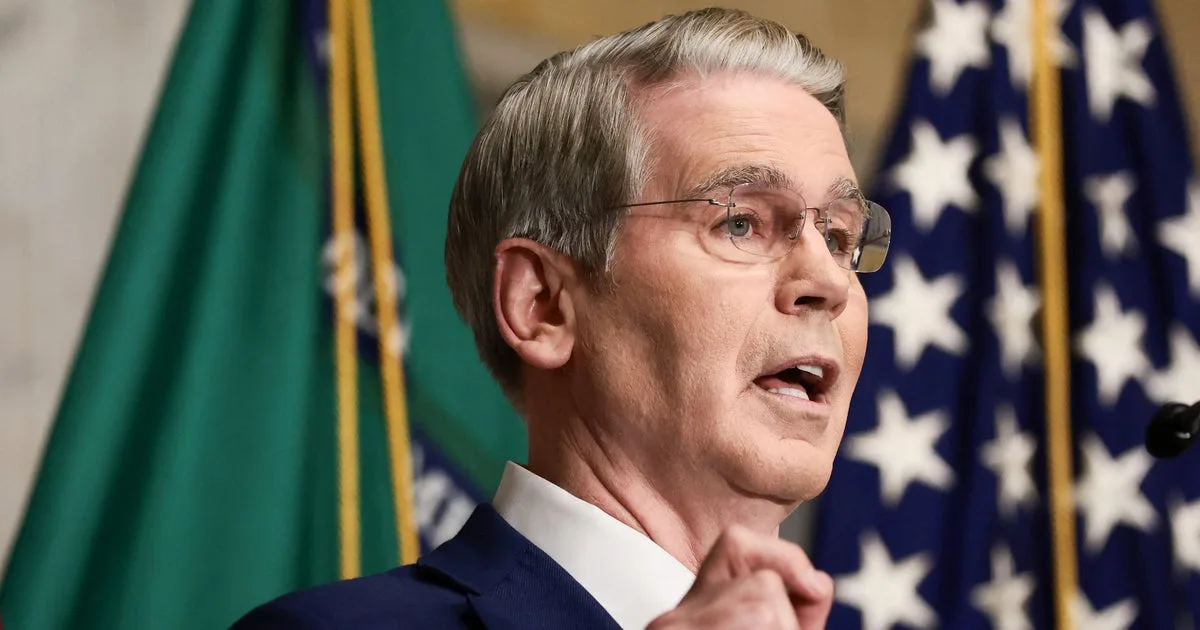
The U.S. Treasury Department on Monday launched a sweeping expansion of secondary sanctions targeting nations and entities that maintain business ties with Iran, marking a significant escalation in Washington’s economic campaign against Tehran. The move, described as "Operation Economic Outcast" by Treasury Secretary Scott Bessent, aims to isolate Iran economically by severing its financial lifelines and pressuring global partners to cut off trade, with a focus on sectors including digital assets, technology, gold, aviation, and shipping. The initiative, framed as an "economic D-Day" by President Donald Trump, represents a shift from military strikes to financial warfare, as the U.S. seeks to force Iran to abandon its military operations and comply with demands to reopen the Strait of Hormuz.
Bessent announced the sanctions during a press conference, stating that the U.S. has mapped Iran’s networks for smuggling oil and evading restrictions and will target "every potential source of revenue that funds the IRGC and the evil Iranian regime." The Treasury also imposed sanctions on nearly 60 entities, individuals, and vessels linked to illicit trade, while seizing $1 billion in Iranian cryptocurrency assets. "No nation should expect to enjoy the rewards of our system while helping those who seek to destroy it," Bessent declared, warning that countries failing to comply would face "tremendous economic consequences."
The sanctions come amid a six-month-old conflict between the U.S., Israel, and Iran, which has disrupted global shipping, driven up energy prices, and intensified regional tensions. Iran has dismissed the measures as ineffective, citing its history of withstanding decades of U.S. sanctions. Abdolnaser Hemmati, Iran’s central bank governor, argued that the regime had previously endured similar pressure under Trump’s "maximum pressure" campaign and would do so again. "The country stood and got through that period," he said, adding that the U.S. has a greater interest than Iran in ending the conflict. Iranian Foreign Ministry spokesman Esmail Baghaei warned that any escalation would bring "consequences," while Supreme National Security Council head Mohsen Rezai accused the U.S. of waging an "economic war" and threatened to harm the interests of nations aiding it.
China, Iran’s largest oil buyer, criticized the sanctions as counterproductive, with Foreign Ministry spokesperson Lin Jian stating they would "exacerbate tensions" and "disrupt global economic development." Despite this, the U.S. has intensified efforts to curb Chinese purchases of Iranian oil, though it has avoided targeting major Chinese banks ahead of upcoming talks between Trump and President Xi Jinping. The Treasury’s focus on secondary sanctions reflects a broader strategy to pressure allies and trading partners, with Trump urging "all of our allies" to join the effort. "You know who you are," the president wrote on Truth Social, vowing an "economic D-Day" for those who assist Iran.
Pakistan’s role as a mediator has drawn attention, with Army Chief Asim Munir visiting Tehran on Monday to discuss regional stability. The U.S. has relied on Pakistan to facilitate dialogue, though Trump has repeatedly dismissed talks as futile. Meanwhile, Iran’s Houthi allies in Yemen claimed responsibility for attacking a Saudi oil tanker in the Red Sea, underscoring the conflict’s spillover effects. The U.S. has also redirected 71 commercial ships in its blockade of Iran, while Iranian-linked hackers reportedly targeted a UK power plant and U.S. water systems, raising concerns about cyber threats.
The sanctions coincide with a deepening economic crisis in Iran, where the rial has hit record lows against the dollar. Despite this, Tehran has refused to capitulate, with President Masoud Pezeshkian defending a June memorandum of understanding with the U.S. as a path to "neither war nor peace." However, the agreement collapsed last week, and Iran has continued attacks on shipping in the Strait of Hormuz and Red Sea. The U.S. has also canceled joint military exercises with South Korea, citing force limitations, further straining alliances.
As the conflict enters its sixth month, the U.S. faces mounting challenges in balancing economic pressure with diplomatic efforts. While Bessent framed the sanctions as a "financial offensive ever marshalled against an adversary," Iran’s resilience and the risk of global economic fallout remain significant hurdles. The coming weeks will test whether the "economic D-Day" strategy can achieve its goal of isolating Tehran—or if it will further entrench the stalemate. For now, the battle over Iran’s economy continues, with both sides staking their claims in a high-stakes game of escalation and survival.