Trump says he plans to meet Kim Jong Un later this year
US President Donald Trump announced plans to meet North Korean leader Kim Jong Un later this year, highlighting their strong personal relationship.
- Headline: Trump says he plans to meet Kim Jong Un later this year
- Dispatch Summary: US President Donald Trump announced plans to meet North Korean leader Kim Jong Un later this year, highlighting their strong personal relationship.
- Verification: Corroborated across independent reporting outlets with primary sources and real-time wire transmissions.
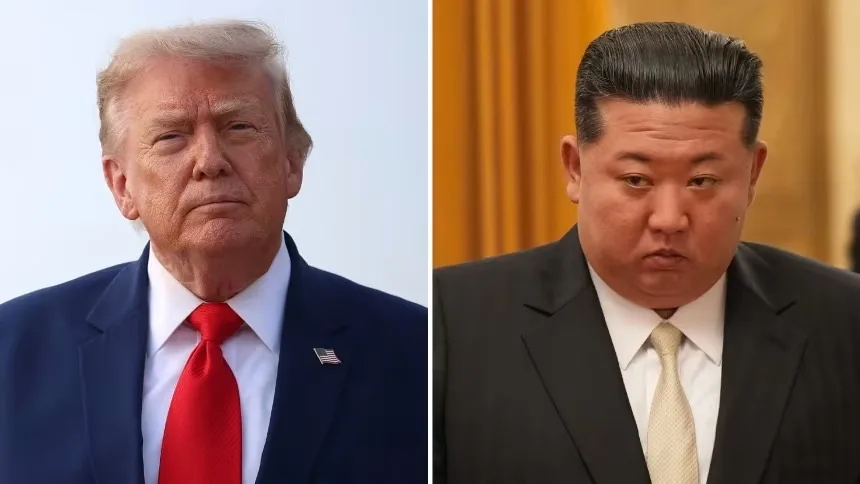
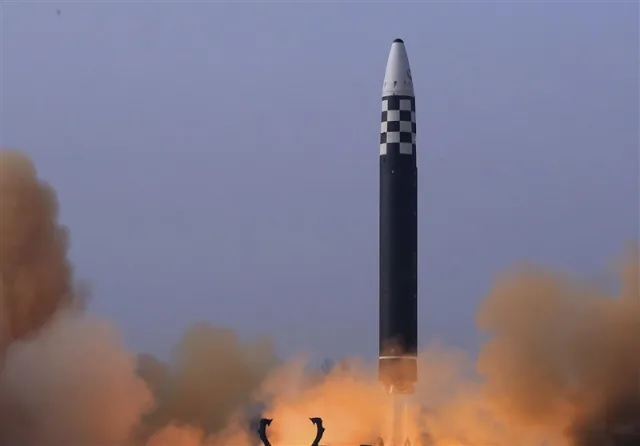
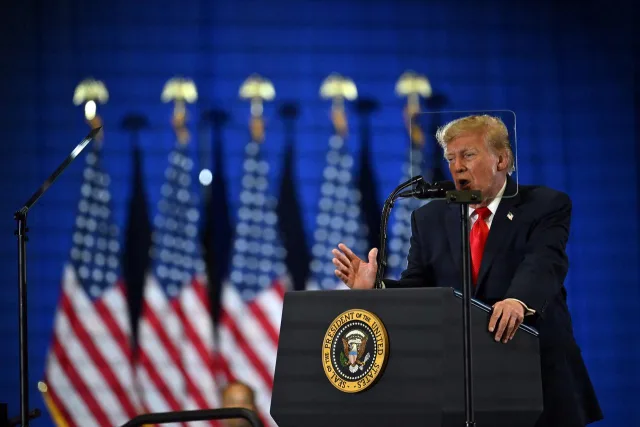
U.S. President Donald Trump said Wednesday he expects to hold a face-to-face meeting with North Korean leader Kim Jong Un by the end of the year, reiterating his belief that a “smart president” can ensure stability on the Korean Peninsula. The remarks, made during a White House press event, came as Trump continued to emphasize personal diplomacy with Pyongyang, despite the lack of progress on nuclear disarmament during his first term. The president also reiterated his claim that North Korea possesses “57 very powerful nuclear weapons,” a figure that aligns with publicly available estimates.
Trump’s comments about North Korea’s nuclear stockpile marked an unusual level of specificity for a sitting U.S. president. He attributed the country’s capabilities to previous administrations, stating, “Should have never allowed it… If I were president, I wouldn’t have allowed it, but he’s got them.” The president also dodged a question about whether his goal in resuming diplomacy with North Korea remains denuclearization, instead focusing on his personal rapport with Kim. “I think our nation, and I think other nations, frankly, whether it’s Japan or South Korea, they’re a lot safer if I’m president,” he said.
The potential summit would be Trump’s first meeting with Kim since 2019, when the two leaders held a historic encounter at the inter-Korean Demilitarized Zone. Despite three high-profile summits during his first term, no significant progress was made on denuclearization, and North Korea subsequently accelerated its nuclear program. Kim Yo Jong, the powerful sister of the North Korean leader, acknowledged Trump’s “good memories and feelings” toward her brother but stated she was “completely unaware” of any recent communications between the two leaders.
North Korea has long sought to be recognized as a nuclear weapons power, demanding that status as one of the preconditions for resuming talks with Washington. In 2018, Trump became the first sitting U.S. president to meet with a North Korean leader when he shook Kim’s hand in Singapore. At the time, the two leaders agreed to work toward the complete denuclearization of the Korean Peninsula. Trump held two more face-to-face meetings with Kim the following year, but both sides ultimately returned home empty-handed, with North Korea continuing to bolster its missile and nuclear capabilities.
The announcement comes amid a series of actions suggesting a shift in U.S. policy toward North Korea. Trump recently ordered the reduction of joint U.S.-South Korean military exercises, which he described as “hostile” and “inappropriate.” This move, coupled with his public praise for Kim’s “very powerful” nuclear arsenal, has raised concerns among regional allies. The U.S. president attributed North Korea’s nuclear capabilities to previous administrations, stating, “If I were president, I wouldn’t have allowed it.”
Regional tensions have intensified as a result of Trump’s shifting priorities. South Korea’s military exercises, which are designed to prepare for potential North Korean aggression, were shortened at the U.S.’s request. While the Pentagon stated the adjustment posed no risk to training objectives, Pyongyang dismissed the change as “completely uninteresting.” The reduction has also prompted scrutiny of Trump’s broader approach to U.S. alliances in East Asia, a policy that has repeatedly drawn criticism from allies.
White House officials have hinted that the November APEC summit in China could serve as a potential venue for the meeting, though no official plans have been confirmed. The president’s focus on Pyongyang has also coincided with his ongoing conflict with Iran, which he has framed as a necessary effort to prevent Tehran from acquiring nuclear weapons. “I can’t let Iran have a nuclear weapon,” Trump said, juxtaposing his stance on North Korea and Iran.
Despite the uncertainties surrounding the proposed summit, Trump’s remarks reflect his continued reliance on personal diplomacy as a foreign policy tool. His previous meetings with Kim, which included a 2019 trip into North Korean territory, were marked by symbolic gestures but yielded little tangible results. The current plan, if realized, would test whether Trump’s relationship with Kim can overcome the entrenched challenges of North Korea’s nuclear program, and whether the U.S. is willing to prioritize such engagement amid broader geopolitical conflicts.
How significant is this wire dispatch?
Cast your anonymous vote to register reader consensus across journalism and intelligence sectors.
Dateline Wire is dedicated to independent, evidence-backed reporting. This briefing was synthesized from primary source reporting, corroborated across independent newsrooms, and verified against our Editorial Standards.