South Africa Mob Beats Foreign National to Death in Durban
A foreign national was beaten to death by a crowd in Durban, South Africa, as anti-immigrant protests and unrest unfold in the port city.
- Headline: South Africa Mob Beats Foreign National to Death in Durban
- Dispatch Summary: A foreign national was beaten to death by a crowd in Durban, South Africa, as anti-immigrant protests and unrest unfold in the port city.
- Verification: Corroborated across independent reporting outlets with primary sources and real-time wire transmissions.
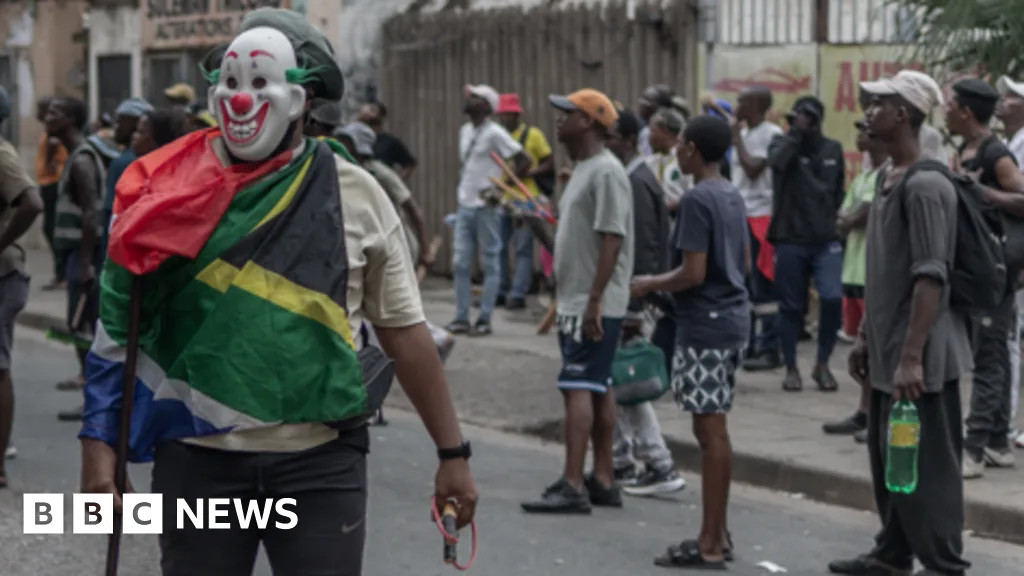
A foreign national has been beaten to death by a crowd of about 50 people in the port city of Durban, South Africa, during a demonstration that targeted immigrants. Yet even as investigators launch a murder inquiry into the roadside attack, provincial police spokesperson Robert Netshiunda refuses to speculate on whether xenophobia drove the killing.
The unidentified male victim, believed by authorities to be in his late 30s or early 40s, was standing by the roadside in the city center when two participants separated from a marching demonstration and approached him. That initial confrontation drew a larger crowd of roughly 50 individuals who assaulted the man, leaving him dead at the scene. Police state the official motive remains unverified, while police say at least four people have died and more than 200,000 foreigners have been forced to flee the country during a year marked by xenophobic unrest. Army troops were recently deployed to central Durban to assist police following two days of unrest involving looting and arson.
That leaves local law enforcement walking a fine line between maintaining public order and managing volatile street protests.
Why is Durban the center of the latest violence?
Tensions have concentrated heavily in Durban as the city prepares for contested local elections scheduled for November 4. While protest movements have waned nationwide in recent weeks, unrest has repeatedly flared in the port city, where shops and cars were set on fire earlier this month alongside similar violence in Soweto near Johannesburg. The anti-immigrant demonstrations are spearheaded by groups such as March and March, which initially set a June 30 deadline for all undocumented migrants to leave South Africa. Ahead of that deadline, anti-migrant protesters blocked foreigners from healthcare facilities, operating under the slogan We have to prioritise South Africans.
This localized volatility builds on nearly two decades of anti-foreigner attacks in South Africa, most notably in 2008 when more than 60 people were killed and tens of thousands displaced. The current wave of unrest unfolds against a backdrop of widespread poverty, deep inequality, and unemployment affecting roughly a third of the workforce. Migrants are frequently accused of taking jobs, contributing to crime, and placing pressure on public services, although researchers say such sweeping claims are not supported by evidence. Despite these economic difficulties, South Africa remains one of the continent's main destinations for migrants seeking employment, safety, and better opportunities.
That makes the political calendar a direct accelerant for street-level confrontations.
How are foreign governments responding to the crackdown?
The escalation in violence has triggered regional diplomatic rows and prompted several African nations to take protective measures for their citizens. Zimbabwe, Nigeria, and Ghana have all initiated steps to repatriate their nationals amid fears of further violence. Nigeria has gone further, accusing South African authorities of direct responsibility for the deaths of two of its citizens earlier this year. Meanwhile, Ghana confirmed the death of Bashiru Isak, a father of three who was fatally shot in Cape Town during demonstrations targeting foreign nationals. That killing sparked a diplomatic row after South Africa publicly argued that the scale of the violence had been exaggerated.
The South African government has responded by urging demonstrators to act peacefully while simultaneously accepting the root need for immigration reforms. Authorities report that tens of thousands of foreign nationals have been deported or repatriated since the government launched a major crackdown earlier this year. These competing pressures place national leaders between international condemnation and domestic political demands.
That leaves foreign nationals caught between diplomatic repatriation efforts and hostile local deadlines.
What do the protest organizers say about the accusations?
Leaders of the anti-immigrant movement strongly reject allegations of bigotry, framing their actions instead around economic survival and resource limits. Jacinta Ngobese-Zuma, a leader of the March and March movement, denied that her organization is xenophobic during an interview on the BBC's Focus on Africa programme. We can't be living with these people for so many years and now when we say it is too much, it is enough, we are told that we are xenophobic,
she told the BBC.
Provincial police spokesperson Robert Netshiunda maintained a cautious stance when questioned about the latest fatality, telling the BBC that officials cannot speculate on the motive for the killing in Durban and that more information would be shared once verified. With local elections approaching on November 4 and police investigations into the roadside murder ongoing, neither the street demonstrations nor the government crackdown show signs of abating.