Holocaust survivors' heirs sue museums over Nazi-looted art
New lawsuits filed in California seek the return of Nazi-looted art from the Norton Simon Museum and Auschwitz-Birkenau Memorial.
- Headline: Holocaust survivors' heirs sue museums over Nazi-looted art
- Dispatch Summary: New lawsuits filed in California seek the return of Nazi-looted art from the Norton Simon Museum and Auschwitz-Birkenau Memorial.
- Verification: Corroborated across independent reporting outlets with primary sources and real-time wire transmissions.
Two lawsuits filed in California this week have reignited the decades-old debate over Nazi-looted art, as Jewish heirs of Holocaust victims demand the return of paintings held by the Norton Simon Museum in Pasadena and the Auschwitz-Birkenau Memorial in Poland. The cases, the first to emerge under recent state and federal legal reforms, spotlight the complex interplay between historical justice, museum stewardship, and the lingering trauma of wartime looting.
Legal Challenges Target Iconic Works Stolen During the Holocaust
The lawsuits, filed on Monday in Los Angeles Superior Court and federal court, target two distinct artworks: “Adam and Eve,” a pair of 1530 life-size oil-on-panel paintings by Lucas Cranach the Elder, and watercolor portraits created by Dinah Gottliebova Babbitt, a Holocaust survivor who was forced to document Nazi medical experiments at Auschwitz. Both cases are anchored in newly enacted laws that expand the ability of survivors and their heirs to reclaim cultural property seized during World War II.
The Jewish Federation of Greater Los Angeles, representing Marei von Saher — sole heir to Dutch art dealer Jacques Goudstikker — filed a suit against the Norton Simon Museum, alleging that the Cranach paintings were stolen by Nazi official Hermann Göring and later acquired by the museum. The federation plans to use proceeds from the potential recovery to support approximately 2,500 Holocaust survivors in the Los Angeles area. Meanwhile, the daughters of Gottliebova Babbitt, who died in 2009, sued the Auschwitz Memorial, arguing that the watercolors, created under coercion for Josef Mengele, should be returned to their family.
Museums Defend Legal Ownership, Citing Historical Records
The Norton Simon Museum, which houses “Adam and Eve,” has rejected the claim, asserting that it holds valid legal title to the paintings. A 2018 federal court ruling and subsequent U.S. Supreme Court decision in 2019 affirmed the museum’s ownership, tracing the works’ provenance to the Stroganoff family, who sold them in a 1931 Soviet auction. The museum emphasized that the Cranach panels have been on public display for nearly 50 years and will remain accessible to visitors.
The Auschwitz Memorial, which holds the Gottliebova Babbitt watercolors, has taken a different stance. Pawel Sawicki, a spokesperson for the memorial, argued that the portraits, created by an imprisoned artist without legal ownership, should not be classified as “Nazi-looted art” and must remain in the collection as irreplaceable evidence of Mengele’s atrocities. “The loss of even the smallest part of the documentation is an irreparable loss and blemish on the memory of the victims,” he stated.
New Laws Expand Claims, But Legal Pathways Remain Uncertain
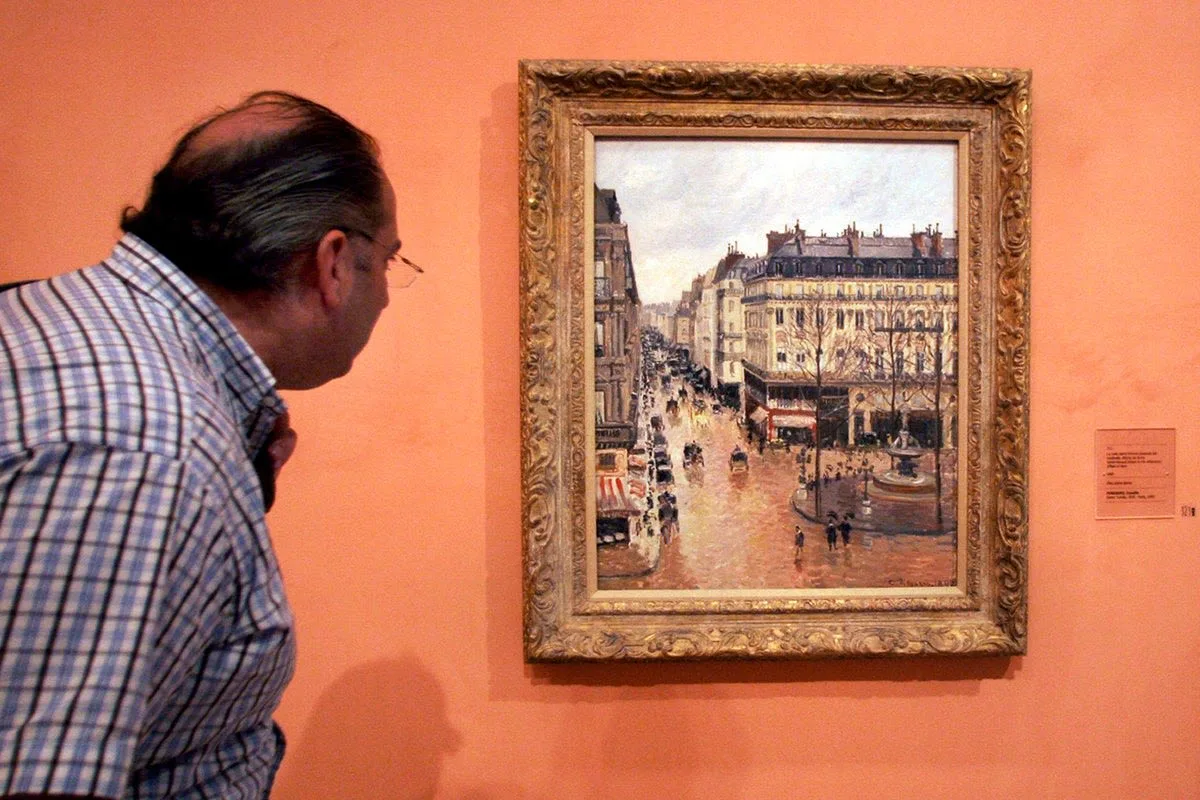
The lawsuits follow the passage of California’s Assembly Bill 2867 in 2024, which mandates that state law govern restitution claims by residents or their heirs. The measure was spurred by a federal ruling that allowed Spain’s Thyssen-Bornemisza National Museum to retain a Camille Pissarro painting looted from a Jewish family in 1939. A related federal case, set for a hearing next month, could further shape the legal landscape.
Federal legislation, including the Holocaust Expropriated Art Recovery Act of 2025, also plays a role. Signed by President Donald Trump, the law eliminated statute-of-limitations deadlines, allowing heirs to pursue claims indefinitely. Joel Greenberg of the nonprofit Art Ashes noted that the reforms ensure “every case will be heard on its merits,” though museums and institutions continue to challenge claims on procedural grounds.
| Artwork | Artist/Creator | Alleged Origin | Current Holder | Legal Dispute |
|---|---|---|---|---|
| “Adam and Eve” | Lucas Cranach the Elder | Jacques Goudstikker’s collection | Norton Simon Museum | Claimed stolen by Hermann Göring; museum asserts legal title |
| Watercolor portraits | Dinah Gottliebova Babbitt | Created under coercion at Auschwitz | Auschwitz-Birkenau Memorial | Family seeks return; memorial argues for preservation as historical evidence |
Historical Context of Nazi Art Looting
The Nazi regime’s systematic looting of Jewish-owned art between 1933 and 1945 resulted in the seizure of over 600,000 works across Europe. Many pieces were later acquired by museums, galleries, and private collectors, often through opaque transactions. The persistence of these artworks in institutional collections has fueled decades of legal and ethical debates, with advocates for restitution arguing that the cultural theft must be addressed to acknowledge historical wrongs.
Rabbi Noah Farkas of the Jewish Federation of Los Angeles described the Cranach paintings as “stolen from a Jewish family to enrich the Nazi party.” He emphasized that proceeds from their recovery would directly benefit Holocaust survivors, many of whom are now elderly. “It’s our honor to take on this role on behalf of the community,” he said.
Frequently Asked Questions
What legal changes enabled these lawsuits?
California’s Assembly Bill 2867, signed in 2024, requires state law to apply to restitution claims by residents or heirs. A federal law updated in 2025 eliminated statute-of-limitations deadlines, allowing indefinite pursuit of Nazi-looted art claims.
Why is the Auschwitz Memorial resisting the return of the watercolors?
The memorial argues that the portraits, created by Dinah Gottliebova Babbitt under duress, are not “Nazi-looted art” but historical artifacts essential to documenting Mengele’s crimes. They claim their removal would cause “irreparable harm” to the preservation of Auschwitz’s history.
The outcome of these lawsuits remains uncertain, with both sides citing legal precedents and ethical imperatives. As the cases proceed, they will test the balance between institutional preservation and the rights of descendants seeking to reclaim stolen heritage. For the families involved, the fight is not just about art, it is about justice, memory, and the enduring legacy of the Holocaust.
How significant is this wire dispatch?
Cast your anonymous vote to register reader consensus across journalism and intelligence sectors.
Dateline Wire is dedicated to independent, evidence-backed reporting. This briefing was synthesized from primary source reporting, corroborated across independent newsrooms, and verified against our Editorial Standards.