Hashim Thaci sentenced to 25 years in prison for war crimes
Former Kosovo president Hashim Thaci has been sentenced to 25 years in prison for war crimes by a tribunal in The Hague, sparking protests.
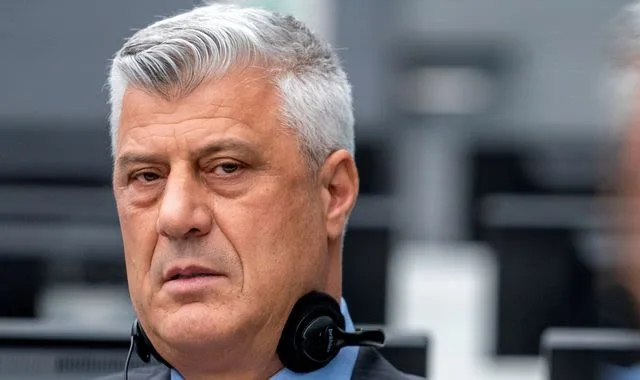
Thaci Convicted of War Crimes in Historic Hague Trial
Kosovo's former president, Hashim Thaci, was sentenced to 25 years in prison on Wednesday after being found guilty of war crimes by a tribunal in The Hague. The conviction, delivered by the Kosovo Specialist Chambers, marks a landmark moment in the prosecution of atrocities committed during the 1998-99 conflict between Kosovo's ethnic Albanian majority and Serbian forces.
Thaci, 58, was charged with murder, torture, cruel treatment, and arbitrary detention as the top commander of the Kosovo Liberation Army (KLA) during the territory's violent break from Serbia. The court ruled he was directly responsible for the deaths of 96 political opponents and perceived collaborators with Serbian security forces, as well as the illegal detention of 385 individuals and the torture of 303 others. Approximately 50 people were subjected to cruel treatment, according to the verdict.
Thaci, who had denied the charges, stood in silence as Presiding Judge Charles Smith announced the sentence. The tribunal emphasized his "active participation in and encouragement of crimes," citing his leadership role in the KLA. The conviction followed a nearly three-year trial that also involved three other former KLA commanders—Kadri Veseli, Rexhep Selimi, and Jakup Krasniqi—who faced similar charges. All four men were widely regarded as national heroes in Kosovo, where their actions during the conflict are celebrated as pivotal to the territory's independence.
| Charge | Details |
|---|---|
| Murder | 96 political opponents and perceived collaborators with Serbian forces |
| Arbitrary Detention | 385 individuals |
| Torture | 303 individuals |
| Cruel Treatment | Approximately 50 individuals |
Public Outcry and Protests in Kosovo
The verdict triggered immediate backlash in Kosovo, where Thaci and his co-defendants are revered as symbols of resistance against Serbian rule. Thousands gathered in Pristina's central square, waving red and black Albanian flags and demanding the men's acquittal. Banners reading "In the name of the people, declare them innocent" were displayed, reflecting the deep divide between the tribunal's findings and public sentiment.
Prosecutors at the Kosovo Specialist Chambers had sought a maximum 45-year sentence for Thaci and the other defendants, arguing that their actions constituted crimes against humanity. The four men were accused of targeting political opponents and civilians deemed disloyal to the KLA during the conflict. Despite the conviction, the tribunal acknowledged the complexity of the war, noting that the KLA's actions were often framed as self-defense against Serbian oppression.
Thaci, who resigned as Kosovo's president in 2018 to face charges, defended his actions during the trial. "Throughout my life, I stood with the people of Kosovo defending freedom, life, and dignity," he told judges in February. "I was always guided by the Western ideals of democracy, equality, and justice." His statement underscored the tension between his self-image as a freedom fighter and the tribunal's characterization of his conduct as criminal.
Context of Kosovo's Independence and Ongoing Tensions
The trial unfolded against the backdrop of unresolved tensions between Kosovo and Serbia, which refuses to recognize Kosovo's 2008 independence. The conflict, which claimed an estimated 13,000 lives, ended with NATO airstrikes against Serbian forces in 1999. Kosovo's subsequent declaration of independence remains a point of contention, with Belgrade and its allies continuing to challenge its legitimacy.
The Kosovo Specialist Chambers, established with EU backing, has faced scrutiny over its operations, including allegations of witness intimidation. In 2022, two leaders of a Kosovo war veterans' association were convicted for leaking confidential documents. Thaci himself faces a separate trial for allegedly intimidating witnesses, which is set to begin later this month.
The case has also drawn international attention, with Western leaders initially viewing Thaci as a key figure in Kosovo's path to independence. His role in 1999 peace talks in France highlighted his perceived alignment with Western values, even as the tribunal's verdict underscores the legal consequences of wartime actions.
Frequently Asked Questions
What charges led to Hashim Thaci's 25-year sentence?
Thaci was convicted of murder, torture, cruel treatment, and arbitrary detention for his role as a top commander of the Kosovo Liberation Army (KLA) during the 1998-99 conflict. He was found responsible for the deaths of 96 political opponents and the detention and torture of hundreds of others.
Why are Thaci and his co-defendants seen as national heroes in Kosovo?
Thaci and the other defendants are celebrated as leaders of the KLA, whose actions during the conflict are viewed as critical to Kosovo's independence from Serbia. Their convictions have sparked protests in Pristina, where many argue the tribunal's findings overlook the broader context of the war.
What is the significance of the Kosovo Specialist Chambers?
The EU-backed tribunal, based in The Hague, was established to prosecute war crimes committed during Kosovo's conflict. Its rulings aim to address atrocities while navigating the complex political and historical tensions surrounding Kosovo's independence.
The case highlights the enduring challenges of reconciling wartime actions with legal accountability. As Thaci begins his 25-year sentence, the verdict underscores the difficulty of balancing historical narratives with the pursuit of justice. Meanwhile, the separate trial over witness intimidation and ongoing tensions between Kosovo and Serbia ensure the story remains far from resolved.
Dateline Wire is dedicated to independent, evidence-backed reporting. This briefing was synthesized from primary source reporting, corroborated across independent newsrooms, and verified against our Editorial Standards.