Hardeep Singh Puri elected unopposed to Rajya Sabha from Madhya Pradesh
Hardeep Singh Puri secured his Rajya Sabha seat after Returning Officer Umesh Kumar Sharma rejected the nominations of two independent candidates.
Union Petroleum and Natural Gas Minister Hardeep Singh Puri was formally declared elected unopposed to the Rajya Sabha from Madhya Pradesh on Thursday, November 5, 2026. The election was confirmed after the nomination papers of two independent candidates were rejected by Returning Officer Umesh Kumar Sharma.
The by-election was prompted by the October 14 resignation of Union Minister of State L. Murugan, whose term was originally set to expire in April 2030. Mr. Puri, 74, has now secured his seat in the Upper House.
Why the path cleared for the Union Minister
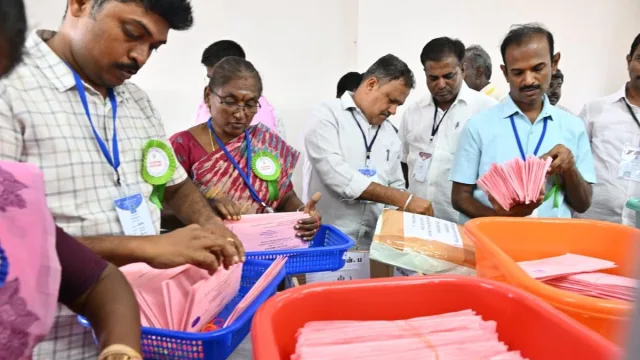
Mr. Puri’s unopposed victory was finalized following the scrutiny process that concluded on November 3. The Returning Officer rejected the bids of two independent contenders, Rajkumar Lohani and Kante Sayanna, effectively removing any contest for the seat. According to official records, Mr. Sayanna’s nomination failed to meet the threshold for proposer signatures — specifically, the requirement of 10 elected members of the State Legislative Assembly or 10 percent of the house, whichever is fewer. Mr. Lohani’s candidacy was invalidated for failing to submit the mandatory Form 26 affidavit, which discloses a candidate’s assets, liabilities, and potential criminal records, by the 3 PM deadline on November 2.
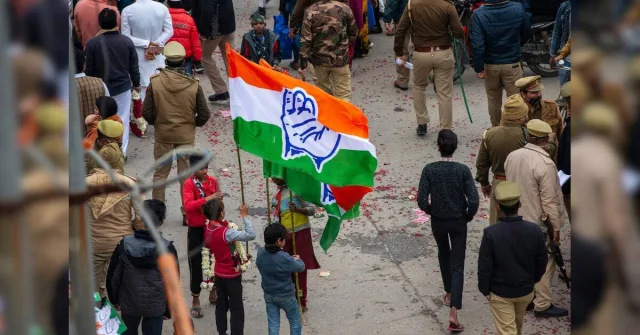
While the Congress party had formally challenged Mr. Puri’s own nomination, questioning aspects of the documents submitted with his papers, the Returning Officer rejected the objections after examining the documents and hearing the parties. With the withdrawal window closing at 3 PM on November 5 and no other candidates remaining, the election was declared official without the need for a vote.
Securing a seat for the only Sikh minister
Mr. Puri occupies a distinct role in the BJP-led National Democratic Alliance, serving as the only Sikh minister currently in the Union Cabinet. This election is viewed as a strategic move to ensure his continuity in government ahead of the 2027 Assembly elections in Punjab. The political stakes were heightened following the removal of BJP leader Ravneet Singh Bittu from the Cabinet in July 2026, a move linked to his failure to secure a re-nomination to the Rajya Sabha. For the ruling party, maintaining a consistent cabinet presence is a priority as they look toward electoral outcomes in northern India.
The timing of the election — ahead of Diwali, was highlighted by Madhya Pradesh Chief Minister Mohan Yadav, who expressed satisfaction at the association between the state and a minister with extensive administrative experience. Mr. Puri, a former Indian Foreign Service officer who previously served as India's Permanent Representative to the United Nations from 2009 to 2013, has held various ministerial portfolios since entering the Rajya Sabha in January 2018. His current standing, however, has faced external pressure. The Congress party raised concerns regarding Mr. Puri’s alleged links with the convicted U.S. sex offender and trafficker Jeffrey Epstein, as referenced in the files released in that country.
What does this mean for the state and the party?
The logistics of the election show the coordination between the Union government and the Madhya Pradesh leadership. Because Mr. Puri was attending a meeting in New Delhi, he was not present at the State Legislative Assembly to receive his certificate. Instead, it was collected on his behalf by:
- Hemant Khandelwal, BJP state president
- Jagdish Devda, Deputy Chief Minister
- Rameshwar Sharma, BJP MLA
- Bhagwandas Sabnani, BJP MLA
The support from Chief Minister Mohan Yadav was explicit, as he publicly thanked BJP national president Nitin Nabin for facilitating the candidature. The result silences, for the moment, the rumors of an early cabinet exit for the Minister. It also suggests that the party leadership opted for a stable transition in the Rajya Sabha by filling the vacancy left by Mr. Murugan with a senior minister rather than risking a contested election.
The lingering questions of the Epstein Files
Despite the official nature of the victory, the political friction remains visible. The Congress party’s attempts to block the nomination via formal challenges to his affidavit demonstrate a strategy of using parliamentary procedure to highlight the minister’s controversial background. By focusing on the Epstein files, the Opposition has signaled that they intend to keep this narrative active in the public record, even as the legal hurdles to his election have been cleared.
The question that remains is whether the parliamentary immunity granted by his re-election will insulate Mr. Puri from further domestic political pressure regarding these international associations. Whether the Opposition chooses to escalate this matter on the floor of the House once the winter session convenes will serve as the next measure of the political cost of this appointment. For now, the Minister has secured the stability he needed to remain in the Cabinet, yet the controversy that shadowed his nomination is unlikely to vanish as he returns to his parliamentary responsibilities.