Christa Pike is up, walking and 'angry' about botched execution, lawyer …
Christa Pike has regained consciousness and begun walking in her hospital room after surviving a failed execution at a Tennessee prison.
- Headline: Christa Pike is up, walking and 'angry' about botched execution, lawyer …
- Dispatch Summary: Christa Pike has regained consciousness and begun walking in her hospital room after surviving a failed execution at a Tennessee prison.
- Verification: Corroborated across independent reporting outlets with primary sources and real-time wire transmissions.

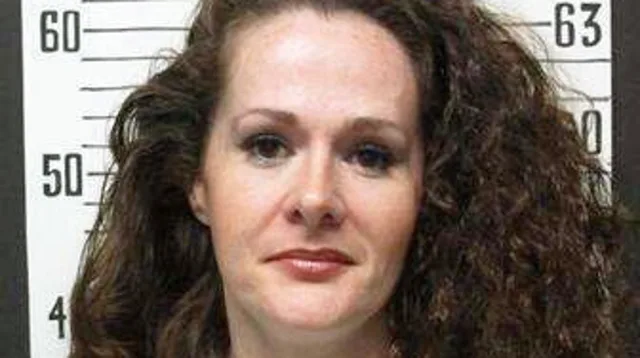
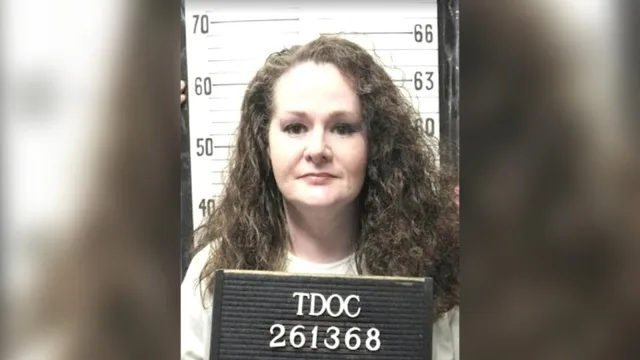
Christa Pike is up, walking around her hospital room and speaking again after surviving two lethal doses of the drug pentobarbital in a Tennessee prison. Her lawyers report she is mentally foggy and unable to move her arms, but very aware that the state tried to take her life.
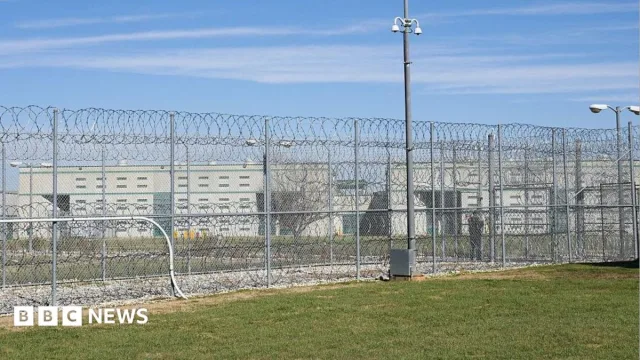
Pike, 50, woke up in the hospital on Tuesday, just one day after her legal team was told she was brain dead and would be removed from life support. Her unexpected recovery follows a failed execution on September 30 at the Riverbend Maximum Security Institution in Nashville, an ordeal that has shocked observers and drawn fierce scrutiny to Tennessee’s capital punishment procedures.
Why Is Christa Pike Awake and Walking Now?
Pike’s return to consciousness stunned her own legal representation, hospital staff, and state officials alike. Randy Spivey, one of her attorneys, noted that medical professionals believed she was beyond recovery as recently as Monday night. When she regained consciousness on Tuesday, her first words to the medical staff surrounding her bed were, Where am I?
and Who are you?
By Thursday, her attorney Stephen Ferrell told the BBC that she had taken her first steps. She is up and walking for the first time today, but just around the room, not very far,
Ferrell said, adding that she remains somewhat foggy and can easily lose her train of thought. Alongside her cognitive confusion, Pike is battling pneumonia, a blood clot in her arm, and extreme swelling that leaves her unable to move her arms or hands or swallow food.
Dr. He noted that generalized muscle weakness remains a major risk, observing that as a simple rule of thumb, I tell patients that one day in bed is one week of recovery.
What Led to the Botched Execution at Riverbend?
The catastrophic failure began inside the death chamber when executioners attempted to administer two doses of pentobarbital, a barbiturate that slows brain and nervous system activity. Witnesses watched as Pike raised her head five minutes into the procedure to say her arm was hurting before she eventually lost consciousness and was rushed to the hospital in an ambulance.
- Pike received two doses of pentobarbital at Riverbend Maximum Security Institution on September 30.
- She suffered heavy breathing and physical distress as executioners worked for an hour before medical transport was called.
- Medical experts suggest the drugs may have pooled in surrounding tissue because veins blew or IV lines were improperly placed.
- Her legal team previously warned that officials would struggle to locate her veins.
Randy Spivey criticized the execution team's methods, stating that they worked for an hour, stabbing her arm with needle after needle, and then she felt the burn of the pentobarbital.
Stephen Ferrell similarly counted seven needles in her left arm during the procedure, noting that one appeared bent when pulled out. The Death Penalty Information Center confirms that Pike is the first person to survive after receiving lethal injection drugs during an execution.
How Are the Courts and State Officials Responding?
The legal fallout began immediately on Wednesday when Chancery Court Judge I’Ashea Myles granted a motion requiring the Tennessee Department of Correction to preserve all physical and digital evidence from the execution chamber. The sweeping order covers recordings, witness accounts, emails, drugs, syringes, and IV lines. The Tennessee Attorney General's Office had argued the order was unnecessary because some evidence was already logged, but assistant attorney general John W Ayers declined to comment further after the hearing.
Political pressure is mounting rapidly in Nashville. Republican Governor Bill Lee called the incident deeply disturbing,
suspended the state's remaining executions scheduled for the year, and ordered a comprehensive, third-party review. Meanwhile, Frank Strada, the commissioner for the Department of Correction, announced his resignation in the wake of the failure.
Pike’s lawyers are using the botched attempt to push for a complete halt to her punishment. Spivey argued that after all we have seen and all that we still do not know, it is unimaginable that the state would try to execute her again,
calling on Governor Lee to commute her sentence.
What Arguments Surround Her Original Case and Current Plea?
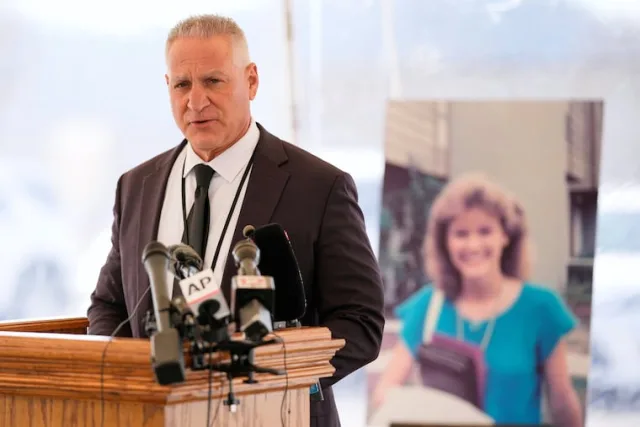
Pike has spent three decades on death row following her conviction for the 1995 murder of 19-year-old Colleen Slemmer at a Knoxville job training camp. Prosecutors established that an 18-year-old Pike, fearing Slemmer was trying to take her boyfriend Tadaryl Shipp away from her, lured the victim into a wooded area where she was cut with a box cutter and beaten with a large chunk of asphalt. Shipp received a life sentence with the possibility of parole, while Pike received the death penalty.
Supporters and defense attorneys emphasize her background of severe trauma, noting she survived childhood sexual abuse, multiple rapes, and a suicide attempt at age 12. Christa is a survivor. She survived child sexual abuse. She survived rapes of multiple men. She survived a suicide attempt when she was 12, and she survived the state's attempt to execute her,
Spivey said at a press conference, adding that she deserves transparency and answers regarding what happened on the gurney.
What Happens Next in the Hospital and the Courts?
Pike remains tethered to her hospital bed under heavy physical restrictions. Her legal team stated that she is still shackled by her feet and right arm despite medical staff formally requesting that the restraints be removed.
The immediate future depends entirely on her medical trajectory. Because she is currently unable to swallow, dealing with a blood clot, and fighting pneumonia, her recovery is expected to take time. Her attorneys are actively seeking specialized psychological support to help her process the trauma.
The third-party review ordered by Governor Bill Lee will investigate the specific mechanical and pharmacological failures of the execution team. Meanwhile, the Tennessee Attorney General's Office faces strict judicial oversight to ensure that all evidence from the Riverbend chamber remains intact for upcoming legal battles.
John W Ayers, assistant attorney general, declined to comment after the Wednesday court hearing regarding the state's future litigation strategy.