Microsoft offers voluntary buyouts to 60,000 workers to fund AI push
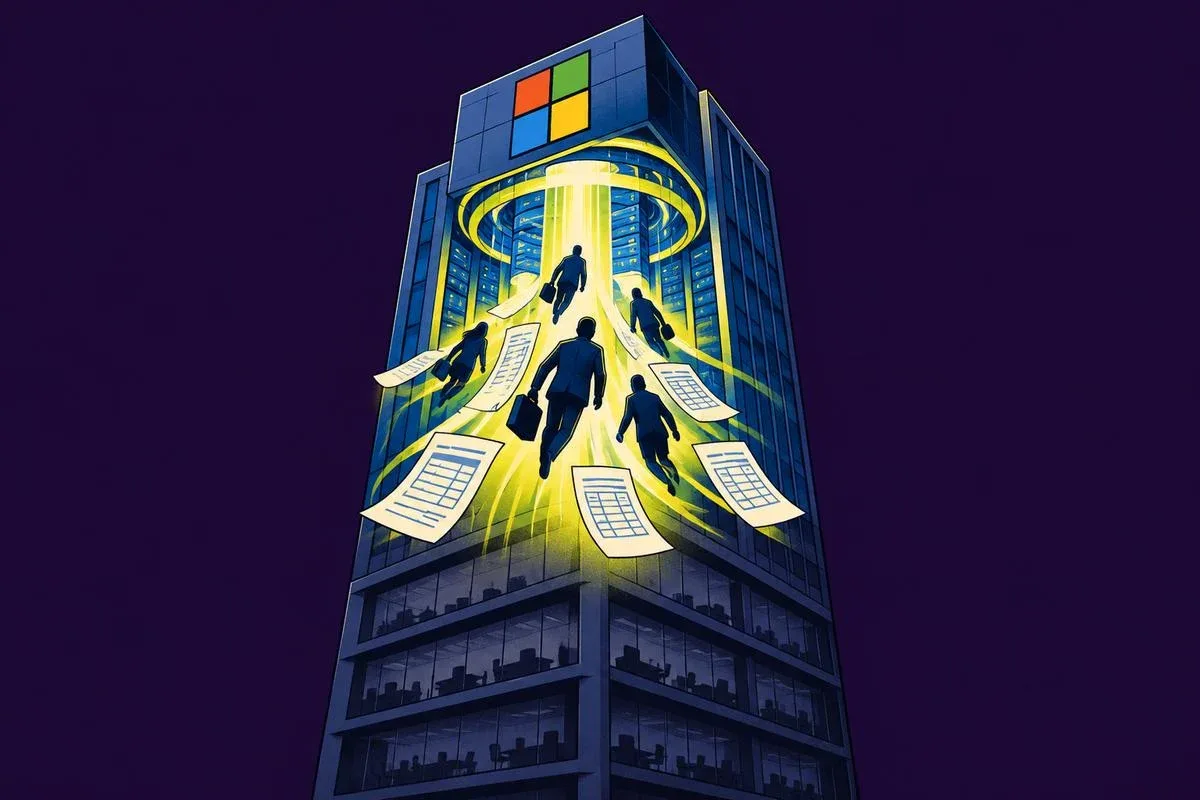
Microsoft has launched a voluntary exit program reaching up to 60,000 employees as the tech giant reallocates capital to fund its artificial intelligence push.
- Headline: Microsoft offers voluntary buyouts to 60,000 workers to fund AI push
- Dispatch Summary: Microsoft has launched a voluntary exit program reaching up to 60,000 employees as the tech giant reallocates capital to fund its artificial intelligence push.
- Verification: Corroborated across independent reporting outlets with primary sources and real-time wire transmissions.
Microsoft offers voluntary buyouts to 60,000 workers to fund AI push
Ordinary readers at Microsoft who fall below the executive ceiling now face a momentous career choice, as the tech giant rolls out a sweeping voluntary departure scheme aimed at roughly a quarter of its global workforce. On Monday, October 26, 2026, Microsoft launched its Voluntary Exit Offer, extending buyout packages to approximately 60,000 employees across the United States, Canada, India, and the United Kingdom. The program targets personnel at level 70 and below, a tier that stretches up to senior directors and vice presidents.
The move represents a major recalibration of labor costs as the company funnels billions of dollars into artificial intelligence infrastructure, Azure cloud services, and enterprise Copilot applications. While Wall Street rewarded the cost-control strategy by pushing Microsoft shares up 1.1% to $530.38 on October 26, 2026, compared with a 0.8% increase in the S&P 500, and shares hit an all-time high this month, the reality on the ground is far more selective. The 60,000 figure represents eligible headcount rather than confirmed departures, and participation depends entirely on whether individual business units opt into the scheme. The company releases its quarterly financial results Wednesday.
Microsoft recorded a total workforce of 223,000 full-time employees at the end of June, meaning the latest voluntary exit program reaches roughly 27% of that global total. Severance terms mirror standard corporate packages, typically combining base pay tied to tenure, equity vesting provisions, health care, and career transition resources.
Targeted Restructuring Versus Universal Cuts
The central tension in Microsoft’s strategy lies in how the company decides which workers are essential to its future and which are not. Amy Coleman, Executive Vice President and Chief People Officer at Microsoft, outlined the framework in a blog post on Monday. Today, we’re introducing a new Voluntary Exit Offer (VEO) to eligible employees within participating organisations. This offer gives eligible employees who may be considering a future outside the company a new choice to make that transition now with support,
Coleman stated, adding, It also gives participating organisations another way to adapt their workforce to changing needs.
Despite the massive headline number, the program is far from universal. Heads of each internal organization determined eligibility based on business priorities, customer commitments, and workforce requirements. Certain teams, including sales, marketing, and specific engineering groups, have opted out of the departure program entirely. Furthermore, while general corporate headcount faces pressure, the company has explicitly drawn a protective ring around data center personnel and AI infrastructure staff.
This selective approach exposes a deeper corporate pivot. Microsoft is attempting to expand operating margins not simply through defensive downsizing, but by reallocating capital away from legacy operations and into specialized AI talent and heavy-duty computing power. Yet this strategy creates internal friction. Sources familiar with the matter noted that while prior cost-cutting initiatives included targeted layoffs in July — such as eliminating 4,800 roles, or 2.1% of global staff, primarily across the Commercial and Xbox organizations — management is now relying on voluntary measures to manage payroll without triggering broad forced layoffs. Earlier, in May, Microsoft planned to offer buyouts to about 8,750 people, or 7% of its U.S. workforce, according to two people familiar with the plan who were not authorized to speak about it publicly.
Competing interpretations of the restructuring highlight the stakes for investors and workers alike. Cryptonomist and Bloomberg analyses frame the workforce reduction strictly as capital reallocation toward artificial intelligence, designed to fund Azure cloud services and enterprise Copilot seats. Conversely, a Microsoft spokesperson told KUOW that artificial intelligence is not driving the buyout programs, pointing instead to routine organizational evolution. Regardless of the official motivation, the financial objective remains clear: lowering payroll spending to free resources for the AI boom, mirroring similar headcount reductions at peers like Meta Platforms Inc. And Google.
At the same time, the broader industry gusher of investment in data centers, likely topping $700 billion this year, to power artificial intelligence has made memory chips, computer processors and other equipment, as well as electricity, more expensive. Economists expect it will continue to push up inflation at least through the end of this year. Microsoft has been ramping up its AI capabilities for several years. In 2024 the company revealed a new class of AI-imbued personal computers that centered on fusing its AI assistant, called Copilot, into the Windows operating system for PCs, where Microsoft already has the eyes of millions of consumers. In October 2025 Microsoft introduced a new artificial intelligence character called Mico, a floating cartoon face shaped like a blob or flame that embodies the software giant’s Copilot virtual assistant.
Evaluating the Terms and What Comes Next
For employees weighing whether to accept the Voluntary Exit Offer, understanding the mechanics of the package is paramount. Eligible staff received emails on Monday containing a link with specific offer details. According to a Microsoft spokesperson speaking to KUOW, the exit compensation is comparable to the company's standard severance package. That package varies by market but typically incorporates base pay determined by tenure, stock options granted over time, health care coverage, and dedicated career planning services.
Company leadership expects a smaller adoption rate for this broad buyout than was seen in earlier exit programs. Last April, Microsoft introduced a voluntary retirement program aimed at employees of a certain tenure at level 67 and below, which offered more generous terms and saw roughly 30% of eligible staff accept. By contrast, Coleman acknowledged in her blog post that the current Voluntary Exit Offer is a novel mechanism for the firm. The Voluntary Exit Offer is new for us. We’ll learn from it. At the same time, we’ll keep helping people focus on the work that matters most, build new skills and, where it makes sense, find new opportunities across Microsoft,
Coleman wrote.
Affected employees navigating this transition can take concrete steps based on guidance provided in the corporate rollout:
- Check corporate email accounts for individual communication containing the unique link to voluntary exit terms and eligibility confirmation.
- Review tenure calculations, severance pay formulas, healthcare continuation provisions, and stock vesting schedules outlined in the offer documentation.
- Utilize the dedicated career planning resources and financial support pledged by Microsoft to map out transition paths.
- Inquire internally about redeployment opportunities, noting that Microsoft successfully redeployed more than 4,000 employees into new roles over the past year.
The ultimate question left open by these developments is whether reducing baseline headcount by up to 60,000 workers will successfully generate the anticipated revenue growth in Azure and enterprise Copilot applications to justify billions in AI capital expenditure. Management and investors will receive their next major checkpoint on January 30, when Microsoft reports earnings and provides updated operating-margin guidance.
Updated 1 time since publication; last update 26 October 2026, 21:37.