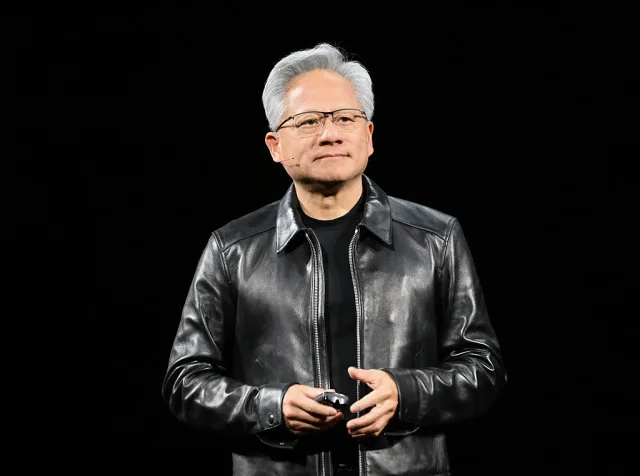
Wall Street Rallies as Jensen Huang Returns to Nvidia Leadership Role
Nvidia shares surged 31.5% as Jensen Huang was reinstated as CEO, ending a fourteen-day leadership vacuum and adding over $900 billion in market value.

Jensen Huang’s Return Restores Over $900 Billion to Nvidia in a Single Session
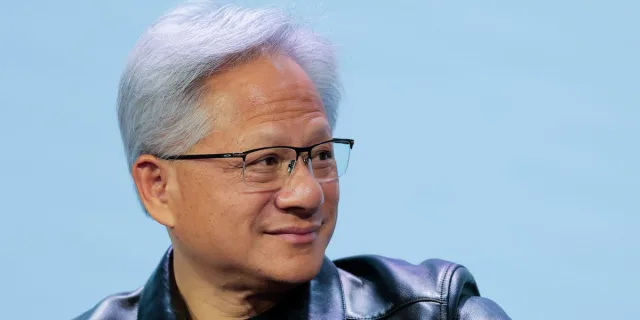
When the board of directors reinstated Jensen Huang as chief executive officer on Monday, the resulting market reaction erased weeks of mounting anxiety with staggering speed. Nvidia shares surged 31.5 percent, marking one of the largest single-day jumps in the company's history and adding more than $900 billion to its market value, with the stock closing at $164.99 on the Nasdaq. That single announcement brought an end to an intense fourteen-day leadership vacuum that had begun when Huang stepped down on November 12 over extramarital affairs, including contact with an alleged Chinese spy. The Silicon Valley giant's brief rudderless period had sent shockwaves through global financial centres, threatening the entire artificial intelligence infrastructure buildout that has driven the broader tech sector for years.
The euphoria quickly spilled over across the broader US equity market. The Dow Jones Industrial Average gained approximately 3 percent, the S&P 500 rose by 4.73 percent, and the Nasdaq Composite Index surged 6.51 percent, with the S&P 500 and Nasdaq experiencing their largest rises since April 9, 2025. Semiconductor and AI-related stocks rebounded in tandem, lifting the PHLX Semiconductor Sector Index (SOX) by 14.03 percent from the previous session to 9,588.05. Memory chip makers stood out as expectations for high bandwidth memory and DRAM demand revived, pushing Micron Technology up 19.05 percent to $707.75, while SK hynix ADRs soared 19.86 percent to $124.14. Across the wider industry, Intel traded 16.03 percent higher at $59.50, AMD rose 5.80 percent to $449.02, Broadcom gained 2.95 percent to $313.37, and Dell Technologies climbed 20.5 percent ahead of its earnings announcements. Neocloud firms including CoreWeave, Nebius, and IREN also recorded gains exceeding 20 percent.
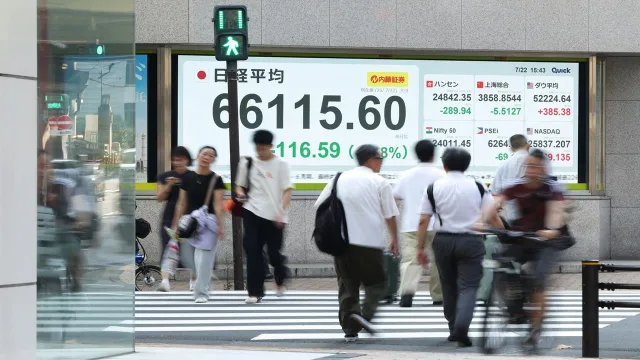
That wave of buying confidence immediately propagated across international borders, igniting major rallies throughout Asian markets on Tuesday. Taiwan's exchange was a standout, blasting more than 9 percent higher from an eight-month low as primary contract chip manufacturer TSMC and assembler Foxconn both hit their daily limits with gains near 10 percent. South Korea's KOSPI surged 6.32 percent to 5,006.03, powered by advances of around 8 percent in market heavyweights SK hynix and Samsung. Tokyo's Nikkei 225 jumped 4 percent as traders returned from a local holiday, lifted by spikes of 14 percent in Advantest, 11 percent in Tokyo Electron, and 8 percent in Kioxia. Hong Kong, Singapore, Sydney, Wellington, and Manila also posted healthy advances, though Chinese shares remained an exception, with the blue-chip CSI 300 Index edging up only 0.4 percent and Hong Kong shares dipping 0.5 percent amid concerns over tighter US chip export curbs.
Behind the headline-grabbing recovery lies a structural reality: the artificial intelligence trade depends entirely on individual relationships and operational momentum that few executives can replicate. Jensen's return takes away one of the biggest unknowns hanging over the AI trade,
said Saxo Markets' Charu Chanana. He is not just Nvidia's CEO; he is arguably the biggest salesman for the entire AI ecosystem. His relationships with customers, suppliers and capital providers are difficult to replicate.
That sentiment was echoed by National Australia Bank's Gavin Friend, who noted that the relief rally temporarily assuaged fears regarding the unravelling of circular financing activity supporting the sector. Yet analysts emphasize that the fundamental questions regarding profitability remain unanswered. Saxo's chief investment strategist Charu Chanana added that turning the relief recovery into a sustainable path will prove difficult because the bigger questions around returns on AI investment, sustainability of hyperscaler spending and elevated valuations remain unanswered.
Regulatory Scrutiny and Macroeconomic Pressures Persist Beneath the Surface
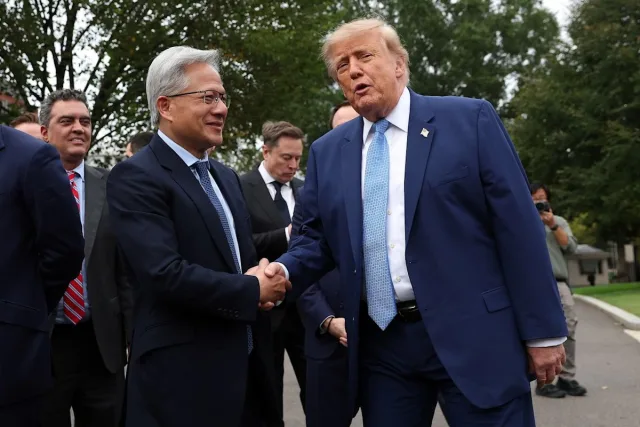
Despite the euphoria on trading floors, Huang's reinstatement does not erase the legal and regulatory investigations that triggered the initial crisis. The company remains under active scrutiny from the Federal Bureau of Investigation and lawmakers on Capitol Hill. Those inquiries center around his relationship with Alice Huang, a former executive at Singapore-based Megaspeed who is not related to the CEO. Investigators are examining whether Megaspeed helped Chinese firms gain access to Nvidia's top-line chips, with The New York Times reporting over the weekend that Alice Huang had maintained contact with China's top spy agency during the affair. Compounding these pressures, the United States government placed Megaspeed on a trade blacklist barring it from purchasing advanced chips, while President Donald Trump acknowledged that his own direct contacts with the company's board helped pave the way for Huang's return.
This persistent regulatory cloud contrasts sharply with shifting macroeconomic conditions that are complicating monetary policy paths on both sides of the Pacific. US economic data released alongside the market rally pointed to a gradual cooling of activity, with the services PMI falling in November to 54.7 points versus expectations of 55.7 points, and the Composite PMI declining from 55.9 to 54.6 points. Even with these softer readings, the Federal Reserve faces growing pressure from hawkish signals. New York Fed official John Williams explicitly noted that the central bank does not rule out interest rate hikes at upcoming meetings if incoming data indicates persistent inflationary pressure, reinforcing expectations for monetary tightening in 2027. CME Group's FedWatch tool showed traders pricing in a December rate hike as a certainty, with odds jumping from 89 percent on Friday to near 100 percent, alongside front-end Treasury yields rising with the 2-year note at 4.6767 percent.
- Technology and semiconductor manufacturers experienced record single-day surges, led by Nvidia's 31.5 percent jump and Micron's 19.05 percent advance.
- Global institutional and retail investors engaged in heavy two-way trading volumes, driving retail brokerage apps and overseas account activity.
- Central banks in the United States and South Korea weighed imminent monetary tightening amid strong export growth and persistent inflation threats.
- Energy and commodity markets moved in the opposite direction, with Brent crude falling to three-month lows near $88.80 per barrel.
- Chinese equities remained subdued under the weight of state-backed fund interventions and lingering fears over stricter US semiconductor export curbs.
While equity investors celebrated the return of stability to the artificial intelligence sector, other asset classes demonstrated that broader risk appetite has not returned uniformly. Precious metals remained under selling pressure, with gold futures dropping approximately 0.4 percent toward the $3,600 level and silver plunging over 2 percent to hover around $42. Cryptocurrencies mirrored this defensive posture, as Bitcoin lost over 1 percent to approach the $60,000 mark and Ethereum slipped below $1,700. Meanwhile, the oil market shrugged off geopolitical tensions in the Middle East—even after reports that three tankers struck mines in the Strait of Hormuz—as rising supply, inventory builds, and the resumption of production in Libya pushed WTI crude futures down to $79.90 per barrel.
The Divergence Between Market Euphoria and Underlying Economic Realities
The speed with which institutional and retail participants chased the semiconductor rebound highlights the fragile psychology governing modern capital markets. This dynamic explains why retail trading platforms such as StoneX Group, Futu Holdings, and Stifel Financial experienced intense transactional engagement as participants tested whether the volatility breakout would hold. StoneX benefits from futures scale through its R.J. O'Brien acquisition completed in July 2025, Futu relies on rapid growth in funded accounts reaching approximately 3.84 million in the second quarter of 2026 with overseas markets contributing nearly 60 percent, and Stifel leverages AI tools to boost adviser productivity. Yet these business models remain tightly bound to the very headline-driven volatility that defines the current trading environment.
The divergence between soaring tech equities and cooling macroeconomic indicators leaves investors navigating a treacherous landscape where a single governance headline can override months of fundamental caution. As central bankers prepare for crucial policy decisions and trade investigators continue probing semiconductor supply chains, the market has traded short-term existential dread for elevated valuation risk. The durability of this relief rally will be tested immediately by incoming consumer confidence metrics, the final PCE inflation data ahead of the December Federal Reserve meeting, and concrete earnings confirmations from the broader technology ecosystem.
Markets have priced in the immediate operational rescue of their most vital architect, leaving the harder question of whether future demand can justify a trillion-dollar valuation increase still entirely on the table.