Putin says Russia will respond in kind if EU nations seize Russian vessels
Russian President Vladimir Putin warned that Moscow will retaliate in kind if European nations seize vessels from its shadow fleet.
- Headline: Putin says Russia will respond in kind if EU nations seize Russian vessels
- Dispatch Summary: Russian President Vladimir Putin warned that Moscow will retaliate in kind if European nations seize vessels from its shadow fleet.
- Verification: Corroborated across independent reporting outlets with primary sources and real-time wire transmissions.
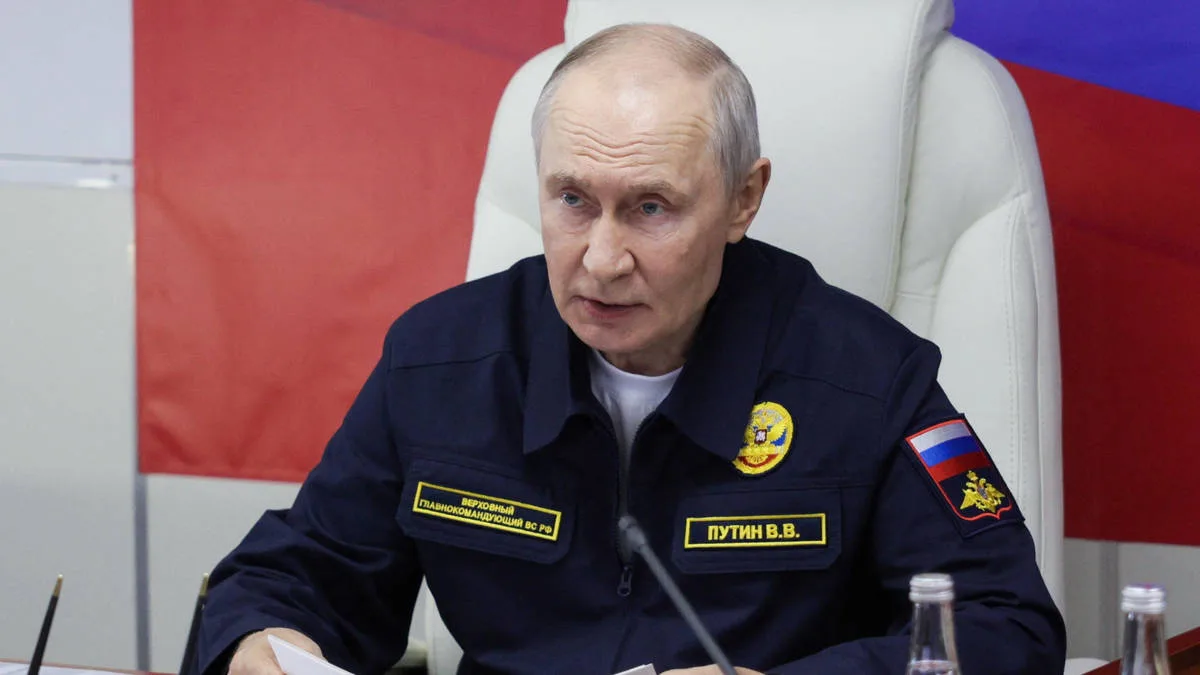
Russian President Vladimir Putin warned on Wednesday that Moscow would retaliate "in kind" if European nations seized vessels from its shadow fleet, accusing Western countries of "piracy" and "banditry" in a stark escalation of maritime tensions. The remarks, reported by state news agency TASS, came as the European Union intensified efforts to curb Russia’s network of aging, sanctioned tankers used to evade oil export restrictions and fund its war in Ukraine.
Putin’s statement was delivered during a visit to Russia’s far eastern Sakhalin Island, where he observed military exercises involving the Pacific Fleet. He framed European actions as a violation of international maritime law, claiming that "some countries, in violation of international maritime law, are attempting to restrict the movement of vessels belonging to our economic operators." The Russian leader specifically criticized plans by EU member states to seize and sell cargo from Russian ships, calling such measures "nothing short of piracy and banditry."
The threat of retaliatory seizures was not confined to the waters where Russian vessels were detained. Putin asserted that any Russian response would occur "wherever we deem it necessary and appropriate," signaling a potential expansion of hostilities beyond the Black Sea and into European waters. This rhetoric coincided with recent European actions, including the seizure of the tanker Smyrtos by British forces in June—a first for UK troops boarding a shadow fleet vessel—and Swedish courts ordering the handover of the Caffa, a shadow fleet ship carrying grain looted from Ukraine, to Kyiv.
The EU’s crackdown on the shadow fleet has intensified since the adoption of new sanctions last month, which allow member states to auction seized oil and cargo. Russian officials have long dismissed these measures as politically motivated, with Putin framing them as part of a broader Western effort to isolate Moscow. During his speech, he also accused NATO of "making inroads into the Asia Pacific region" and deploying "new weapons systems that pose a threat to Russia," though he did not specify which systems.
Meanwhile, the UK has ramped up naval surveillance of Russian vessels, with the Royal Navy reporting a 25% increase in operations monitoring Russian ships in July compared to the previous year. Frigates like the HMS Tyne and HMS Somerset have been deployed to track Russian warships and shadow fleet tankers, while the Ministry of Defence noted that Russian naval activity around UK waters has risen 30% over the past two years. The MoD cited a report stating that Russian ships escorting shadow fleet vessels are "using up valuable operational capacity," a claim Russia has not directly addressed.
Russia’s shadow fleet, composed of aging and poorly insured vessels, has been central to its strategy of circumventing sanctions. These ships often sail under third-country flags and transport oil and other goods, with some implicated in hybrid operations such as drone launches targeting Western military sites. The U.S. recently seized a Russian-flagged tanker in the Atlantic for the first time in recent history, despite Moscow dispatching a submarine to protect it. Western governments and watchdogs have raised concerns about the environmental risks posed by the fleet’s deteriorating infrastructure, citing the potential for oil spills.
Putin’s remarks also touched on broader regional tensions, including Russia’s military cooperation with North Korea. Ukrainian President Volodymyr Zelenskyy accused Moscow of using North Korean missiles in recent attacks, while Pyongyang has sent thousands of troops and weapons to support Russia’s invasion. This alignment has heightened fears of a deepening security crisis in East Asia, with Russia’s Pacific Fleet exercises set to coincide with upcoming US-South Korean joint military drills aimed at countering North Korean threats.
The latest developments underscore the volatile interplay between economic pressure and military posturing as the war in Ukraine enters its fifth year. While the EU and its allies continue to tighten sanctions, Russia’s threats of maritime retaliation risk further destabilizing an already precarious global order.
How significant is this wire dispatch?
Cast your anonymous vote to register reader consensus across journalism and intelligence sectors.
Dateline Wire is dedicated to independent, evidence-backed reporting. This briefing was synthesized from primary source reporting, corroborated across independent newsrooms, and verified against our Editorial Standards.