Fontainebleau forest wildfire burns 800 hectares near Paris
A virulent wildfire near Paris has forced evacuations and significant transport disruptions as extreme heat affects the Fontainebleau forest region.
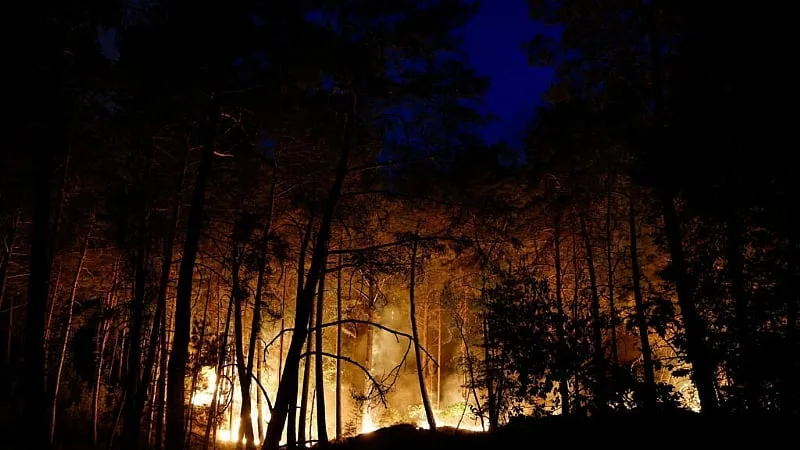
A massive wildfire consuming 800 hectares of the Fontainebleau forest near Paris has forced evacuations, disrupted transportation, and intensified concerns about the region’s escalating climate crisis. The blaze, described as “very virulent” and of “exceptional scale,” erupted late afternoon on July 12 in the sprawling woodland 60 kilometers southeast of the capital, a former royal hunting ground now dotted with quiet villages. By early Monday, the fire had spread rapidly, prompting the deployment of firefighting aircraft and straining local emergency resources.
The flames, which spread across an area larger than Gibraltar, prompted the partial closure of the A6 highway, France’s primary north-south artery, and disrupted high-speed rail services connecting Paris to southeastern cities. Train delays of up to six hours were reported at Gare de Lyon, while sections of the motorway remained shut. Around 15 homes in the village of Vaudoue were evacuated, with firefighters working to protect additional towns in the Seine-et-Marne region. “Without the firefighting planes, other villages would already have been evacuated,” said Olivier Compta, overseeing the operation.
French authorities deployed two Canadair water-bombing planes from the south, marking the first time such aircraft were used in the greater Paris region. Firefighters also utilized helicopters and observation planes to combat the blaze, which advanced despite efforts to contain it. “The aim is to save lives and property,” said Eric Brocardi of France’s national firefighters’ federation. The fire’s intensity was exacerbated by a third heatwave gripping the region, with temperatures exceeding 40°C in parts of western France. This heatwave, part of a broader pattern of extreme weather across Europe, has already led to thousands of excess deaths and the shutdown of three nuclear power stations.
The wildfire coincided with the start of the summer holiday season, complicating travel for residents and tourists. The A6 highway closure and rail disruptions added to the challenges, while the fire’s proximity to the historic Fontainebleau forest — home to Napoleon’s château — highlighted its cultural and ecological significance. Local residents described the chaos, with one evacuee, Sophie Guiot, noting a water-dumping plane flying over her home. “My parents in the south of the country had been worrying about fires, but it’s here that it happened,” she said.
Climate scientists have linked the increasing frequency of such extreme weather events to human-driven climate change. The World Weather Attribution group stated that the June heatwaves in Europe would have been “virtually impossible” without global warming. France’s civil security director, Julien Marion, noted that wildfires this year have scorched 25,000 hectares, double the area burned during the same period in 2025. The fire in Fontainebleau underscores a broader trend of escalating wildfires across the continent, with Spain also grappling with deadly blazes that claimed at least 12 lives in a recent incident.
As the fire raged, France’s interior minister, Laurent Nunez, announced plans to visit the affected area, emphasizing the government’s commitment to managing the crisis. Meanwhile, the ongoing heatwave is expected to persist until France’s national holiday on Tuesday. The situation has reignited debates about climate policy, with some residents attributing the disasters to “global warming” and calling for urgent political action. “It’s the disruption of the seasons,” said 34-year-old physiotherapist Kelly at Paris’s Gare de Lyon, where delays were a daily reality.
The Fontainebleau fire adds to a summer of extreme weather, including the cancellation of parts of the Tour de France due to heat. As firefighters continue their efforts, the incident serves as a stark reminder of the growing threats posed by climate change to both natural landscapes and urban centers. With temperatures projected to remain high, the region faces a prolonged battle against both fire and heat, testing its resilience in an era of accelerating environmental challenges.