Harmeet Dhillon resigns as head of Justice Dept.’s civil rights division
Harmeet Dhillon has resigned as head of the Justice Department's Civil Rights Division, following a private rift with Donald Trump and a mass staff exodus.
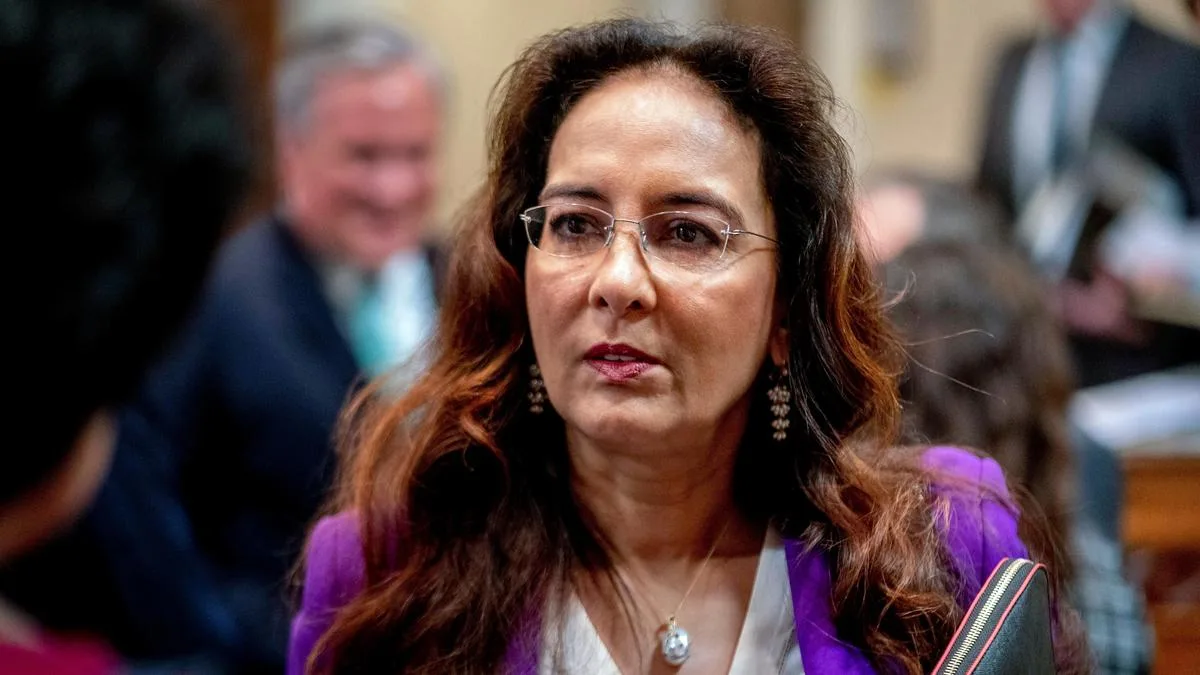
Harmeet Dhillon has resigned as head of the Justice Department's Civil Rights Division, becoming the first senior official to leave the Trump administration following the midterm elections in which Democrats retook control of the House and Senate. Behind her departure lies a private rift with Donald Trump, who sources say demanded she be fired after an October 18 appearance on 60 Minutes where the president felt she was insufficiently forceful discussing election integrity efforts.
Attorney General Todd Blanche announced the resignation on Thursday in a post on X, stating that Assistant Attorney General Dhillon had led the Civil Rights Division with conviction
and defended the civil liberties of every American and enforced the law without fear or favour.
Dhillon stated she resigned of her own volition, telling Fox News she withheld her announcement at the request of White House chief of staff Susie Wiles until after Election Day. In her resignation letter to President Trump, Dhillon noted that she informed White House chief of staff Susie Wiles in early October that she intended to step down after the midterms. White House spokesperson Lauren Bis said Dhillon did a fantastic job
in her role and expressed gratitude for her service.
How did Dhillon transform the Civil Rights Division?
During her 18 months in charge, Dhillon radically reshaped the unit's mission and oversaw a mass exodus of career staff. Roughly 300 career attorneys departed, representing more than 75% of the division's staff, and were replaced by inexperienced ideological allies. Created roughly 70 years ago during the civil rights movement to end racial segregation, the division traditionally focused on protecting minority rights in housing, employment, education, and policing.
Under her tenure, the division dropped many cases alleging discrimination against racial minorities, dismissed more than 50 decades-old consent decrees with public schools in the Deep South, and nixed two pending consent decrees with the Minneapolis and Louisville Police Departments over systemic abuses. The unit also targeted universities over diversity policies and alleged antisemitism, though a whistleblower alleged those investigations were conducted with a predetermined outcome. In her statement on X, Dhillon celebrated these shifts, saying, We ushered in the downfall of illegal DEI, we fought to protect women and girls’ sports, and so much more.
What were the division's legal battles and courtroom losses?
The division pursued high-profile litigation that frequently stumbled in federal courts. To advance claims related to voter fraud, the Civil Rights Division sued more than two dozen states demanding unredacted voter rolls, ultimately losing every single case. Lawyers admitted in court that the department intended to share voter information with the Department of Homeland Security for criminal and immigration enforcement. Several judges who ruled against the department were appointed by Donald Trump.
The unit also faced intense scrutiny over high-profile officer-involved shootings. When immigration agents shot and killed American citizens Renee Good and Alex Pretti in Minneapolis, the division did not initially open criminal civil rights investigations, violating longstanding practice. The division eventually got involved in the Pretti case following staunch criticism, though no charges have been filed and state officials are investigating separately.
What timeline of events preceded her departure?
- May 2025: Dhillon addresses the Moms for Liberty event in New York, recounting her family's emigration from India.
- Sept. 29, 2025: Dhillon speaks during a news conference at the Justice Department in Washington, D.C.
- Early October 2026: Dhillon informs Donald Trump and White House chief of staff Susie Wiles of her plan to return to private practice after the midterms.
- Oct. 18, 2026: Dhillon appears on 60 Minutes to discuss government election integrity efforts.
- Nov. 3, 2026: Democrats retake control of the House and Senate in midterm elections, while the Civil Rights Division deploys over 1,000 monitors to polling sites.
- Nov. 5, 2026: Attorney General Todd Blanche announces Dhillon's resignation on X.
What do critics and supporters say about her tenure?
Critics offered scathing assessments of Dhillon's legacy. Stacey Young, a former division attorney who leads the alumni group Justice Connection, called Dhillon the most destructive, lawless, and hateful head of the Civil Rights Division in DOJ history,
adding that she decimated an institution built over nearly seven decades. Kristen Clarke, who led the division under Joe Biden and is now general counsel at the NAACP, stated that Dhillon abandoned cases, purged the work force and weaponized the division to target institutions to achieve illegitimate, partisan goals.
Supporters pointed to her alignment with conservative priorities and direct communication style. Dhillon frequently posted videos on X about her division's work, acknowledged generating investigation ideas from social media posts, and handed out challenge coins to attorneys printed with the term FAFO
(f--k around and find out
). With Democrats taking control of Congress, lawmakers are expected to use that power to aggressively investigate executive agencies, including the justice department.