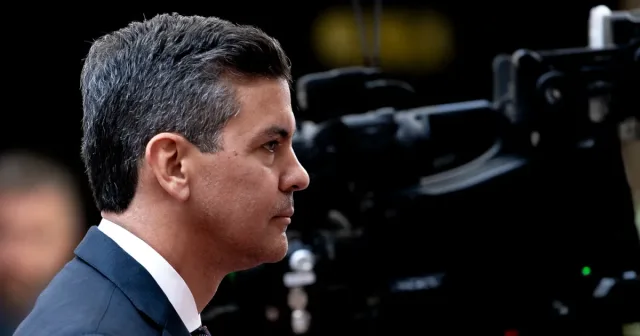
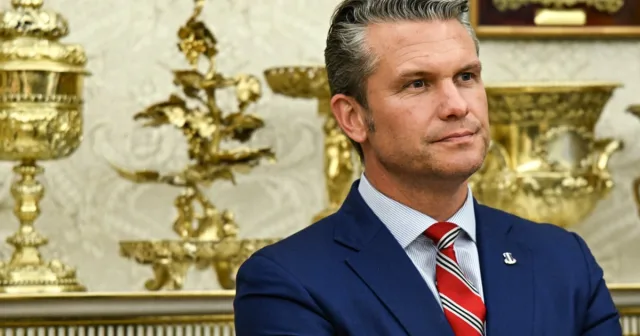
Paraguay President Santiago Peña resigns after bank collapse
Paraguay's President Santiago Peña resigned following the collapse of Ueno Bank, which froze accounts for 60 per cent of adults and sparked protests.
Paraguay President Santiago Peña resigns after bank collapse
Paraguayan President Santiago Peña resigned on Thursday, November 5, bowing out of office as the rapid collapse of the prominent digital lender ueno — a bank administering close to $850 million in public funds — consumed his administration and triggered an extraordinary session in Congress.
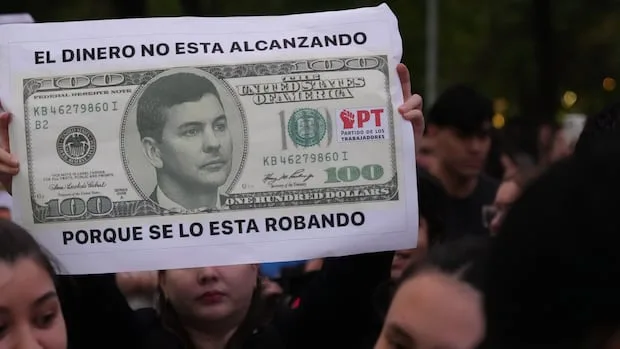
That political crisis shifted immediately into a high-stakes standoff as protesters outside Congress urged lawmakers not to accept the president's resignation, demanding instead that he be tried and impeached. As Al Jazeera Latin America editor Lucia Newman reported from Asunción while the session was underway, lawmakers moved to impeach both the president and the vice president.
Inside the Fall of ueno Bank
The financial crisis began on November 3, when the board of the Central Bank of Paraguay approved resolution proceedings for ueno Bank after financial adjustments revealed a solvency ratio below half the regulatory minimum. The lender’s digital app became inaccessible, freezing personal savings, pension payments, and corporate funds for roughly 3 million customers in a country of 6.5 million people. Protests erupted in the capital as citizens demanded access to their money.
The political crisis moved at high speed in Asunción. Lawmakers accused Peña of conflicts of interest, misuse of pension funds, and institutional cover-ups linked to ueno, which had grown quickly from a niche fintech player into a mid-tier bank. He is accused of negligence at the very least and complicity in covering up the fact that the bank was insolvent,
said Lucia Newman, Latin America editor via Al Jazeera.
The opposition called an extraordinary session for Thursday to begin filing an impeachment motion in Congress, as protesters demanded Peña's resignation in the streets. Peña, an ally of US President Donald Trump, also lost backing from members of his own conservative party, including sectors of the ruling Partido Colorado that withdrew their political support. Congress scheduled a meeting at 2 pm local time to officially receive the resignation, with a Senate spokesperson noting lawmakers would likely move quickly to ensure a swift transition, and Vice President Pedro Alliana expected to be sworn in around 3:30 pm local time.
In a recorded video address and a message on his official social media account, Peña cited a desire to preserve national stability, social peace, and democratic institutions, stating, I have made the decision to submit my resignation as president of the republic.
He added, My greatest wish is that the return of those funds be guaranteed, that the deposit guarantee fund fulfill its purpose, and that public funds - as well as the resources that belong to all Paraguayans - be protected.
Detention of Bank Executives and Reimbursement Steps
The fallout widened sharply when prosecutors issued arrest warrants for eight ueno executives on Tuesday, November 3, forcing the central bank chief to resign that same day. The executives turned themselves in, courts ordered their assets frozen as the investigation widened, and some executives were subsequently placed under house arrest.
To stanch the panic, the central bank and the Deposit Guarantee Fund began initial reimbursement efforts on Thursday. According to the regulator, these advances cover up to 40 monthly minimum wages per depositor, equivalent to 121.76 million guaraníes, or approximately $18,700 at Thursday’s retail exchange rate, slated for completion within five business days. The full guarantee fund provides coverage up to 75 monthly minimum wages, or approximately $37,000, per depositor.
International Repercussions and Legal Exposure
The collapse has undermined Paraguay's hard-won reputation as a stable destination for foreign investment, especially from neighboring Brazil. JPMorgan issued a note to clients on November 3 maintaining an underweight recommendation on Paraguay’s U.S. dollar-denominated sovereign bonds, stating that the ueno developments had rapidly acquired a political dimension. JPMorgan noted that wider financial risks hinge on the speed and transparency of the official response.
Scrutiny has centered on close government ties to the lender. Central Bank President Carlos Carvallo was forced to resign due to his previous leadership role at the digital bank. Peña faced intense political scrutiny because of his past business ties as a shareholder of Grupo Vázquez, the group that owned ueno until March 2025. Peña has repeatedly rejected suggestions of improper ties, describing the controversy as the political escalation of a technical and regulatory issue and arguing that any wrongdoing should be addressed through the courts.
Legal fallout also looms for investors. Jorge Shreiner, a former board member of the Central Bank of Paraguay, indicated that investors who purchased ueno corporate bonds in March might pursue fraud claims.
Depending on who holds the bonds issued in March of this year, there's a strong possibility they could file fraud lawsuits, arguing that the bank borrowed money while concealing its true financial condition from investors, Shreiner said. I wouldn't be surprised if this ends up in a U.S. court.
Jorge Shreiner, Former Board Member of the Central Bank of Paraguay
While the central bank maintains that ueno’s failure does not represent a general condition or a broader systemic crisis for the financial system, the immediate roadmap relies on the five-day reimbursement window administered through the Deposit Guarantee Fund.
Updated 3 times since publication; last update 8 November 2026, 05:11.