Mamdani sets plan to close NYC's notorious Rikers Island jail
Mayor Zohran Mamdani has released an official timeline to close Rikers Island by the end of 2032, pushing back the original 2027 deadline while aiming to scale down the jail population.
Mamdani sets plan to close NYC's notorious Rikers Island jail
New York City Mayor Zohran Mamdani has unveiled an official roadmap to shut down the notorious Rikers Island jail complex by the end of 2032, abandoning a legally mandated 2027 deadline while wagering that aggressive population reductions and borough-based facilities will finally succeed where decades of dysfunction have failed. The announcement on Friday pits the administration's new comprehensive strategy against a stark reality: construction delays, rising incarceration numbers since 2020, and a jail holding roughly 6,700 people currently while the replacement plan scales down capacity to roughly 4,500 beds across four smaller borough facilities, with a target population capped at no more than 4,100 people when Rikers shuts down entirely.
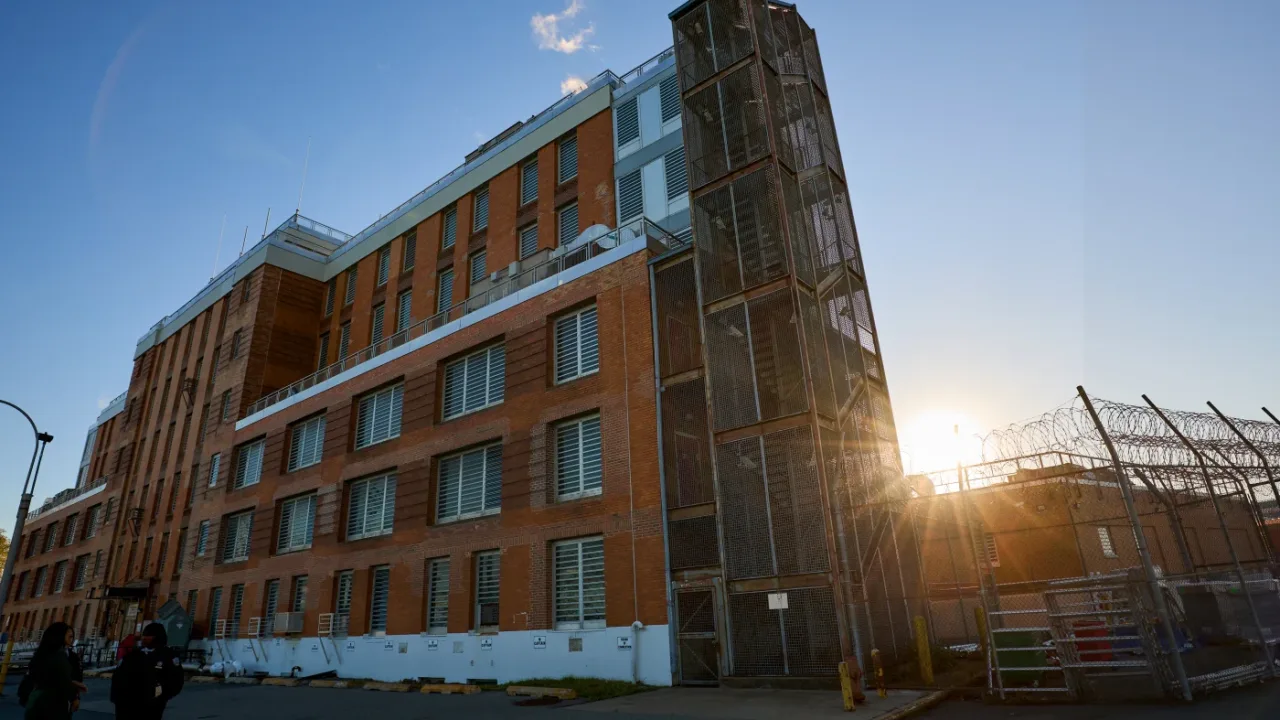
Perched on a 413 acre (167 hectare) island between Queens and the Bronx, the jail has earned a variety of nicknames over the years because of its dilapidated conditions, including Gladiator School and Torture Island, and has housed a number of high-profile inmates awaiting trial, including Tupac Shakur, DMX and Harvey Weinstein.
Confronting Mass Incarceration and Past Delays
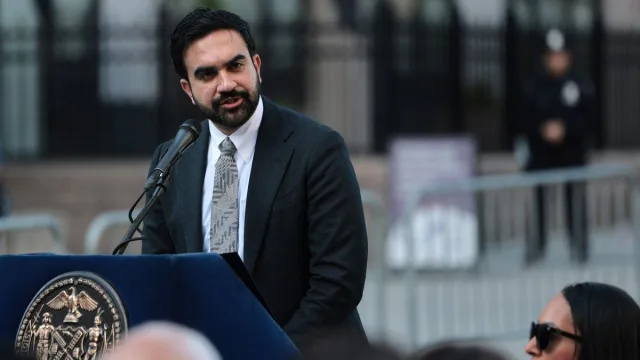
We have a legal and moral obligation to close Rikers,
Mayor Zohran Mamdani said, describing the jail as a place the city had avoided confronting for decades. In an 88-page report released on Friday, Mamdani said Rikers was a product of deteriorating infrastructure
and that officials had a moral imperative
to close it.
Our nation has a very real mass incarceration problem,
he said, adding: We are making a conscious decision to advance a new model of a criminal legal system in our city, one that takes on that problem head on.
Video: Mamdani working to close Rikers Island Jail — PIX11 News (YouTube)
Dana Kaplan - who Mamdani appointed as the city's "Close Rikers Czar" told the BBC News channel on Friday that his latest proposal is not just about getting rid of a decrepit facility. It is also a generational opportunity
to build a different type of detention system
and figure out how to detain people more appropriately, she said. Kaplan added that it's actually possible to have fewer people in jail in New York City - and that is what we should be planning for.
That ambition collides directly with the logistical constraints of a court-supervised jail system that has seen average stays nearly double between 2015 and 2025, according to the policy journal Vital City. Nearly a quarter of those held on the island between Queens and the Bronx have been awaiting trial for more than a year, tangled in evidentiary discovery backlogs and court delays that operate outside mayoral control. Mamdani's plan acknowledges that the city cannot unilaterally alter the 2019 legislation passed under then-mayor Bill de Blasio requiring closure by August 2027, meaning the administration will need the City Council to pass a new law extending the deadline.
Plans to shutter the troubled facility date back to 2019, when the city council first voted to close it by this year, but plans have been delayed over the years in part due to the logistical difficulties over where to place inmates. Mamdani blamed lags under former Mayor Eric Adams' administration as well as the Covid pandemic for the delays.
Shifting Deadlines and Staggered Construction Timelines
The newly released strategy establishes calendar targets for opening replacement facilities across the city, stretching the transition across the next six years while population caps are gradually enforced. Under the updated schedule, the Brooklyn detention center will open first, followed by facilities in the Bronx and Queens, concluding with Manhattan.
- 2027: The city intends to restore its online bail payment portal, which has been unavailable since 2023.
- 2029: The Brooklyn-based jail is scheduled to open, with the city aiming to bring the overall jail population down to no more than 5,500 people.
- 2031: Facilities in the Bronx and Queens are slated to open.
- 2032: The Manhattan facility opens, completing the four borough-based jails as Rikers Island shuts down entirely with a target population capped at no more than 4,100 people. Some people requiring medical or psychiatric care would be transferred to specialised facilities, and the city plans to reduce the number of beds for women while expanding community-based alternatives.
The mayor's office argues the new, smaller facilities will provide inmates access to daylight, fresh air and clean space
leading to better outcomes for detainees. The facilities will be easier for families to access as well, as travel to the remote Rikers can take hours.
Since 2022, more than 50 people have died in the custody of the New York City Department of Correction, including nine this year, leading a federal judge to strip the city of its direct authority and place operations under an independent remediation manager after describing conditions at the complex as abnormal and unacceptable.
City Council Speaker Julie Menin supported the pivot in a Friday statement, noting that delays under previous administrations have made it clear that more time is needed to fulfill the commitment the City Council made to New Yorkers in 2019 when we legislated closing Rikers Island, adding that the city was finally getting the project back on track. New York City Council must approve the updated timeline, with members, including the city's speaker, indicating they support the plan.
Even so, critics and former officials warn that population reduction targets are perilous if crime rates rebound or diversion metrics fall short. The NYC Correction Officers' Benevolent Association met the 4,100 inmate reduction goal with skepticism.
NYC Correction Officers' Benevolent Association
[B]uilding a new system that puts an arbitrary cap on the City's available jail beds is ill-conceived, irresponsible and jeopardizes the safety of all New Yorkers, including our Officers. The City cannot keep the jail population at around 4,100 without irresponsibly releasing individuals who committed violent felony charges.
It's really hard to have the guts to forecast lower incarceration numbers. Because if you are wrong, then you have crowded jails and you're in trouble,
Vincent Schiraldi, who served as Department of Correction commissioner under Bill de Blasio and now runs a philanthropic fund to close Rikers, via NPR
Elizabeth Glazer, founder of Vital City and former head of the Office of Criminal Justice under de Blasio, urged the administration to maintain contingency plans, warning via NPR that if you're going to move the very same system into the new buildings, you're going to move the problem of violence as well.
Financing Diversion Programs and Reforming Internal Culture
To safely shrink the inmate population, the Mamdani administration proposes investing $146 million next fiscal year into evidence-based supports designed to break cycles of incarceration. This funding includes $50 million dedicated to expanding access to vocational training, educational programming, mental health counseling, and substance use services both inside jails and within communities. An additional $76 million will bolster community-based diversion programs such as supportive housing and reentry services, while $16 million goes toward mental health and legal support services for crime victims and survivors. Additional proposed measures include expanding supervised release programmes and reducing delays in court proceedings to help prevent repeat offences and reduce the time people spend behind bars. The mayor also wants to open up hundreds of beds in therapeutic housing units for prisoners with serious mental health issues, and Kaplan noted that the administration had already opened 100 therapeutic beds at Bellevue Hospital in Manhattan, moving 100 people off of Rikers Island.
The administrative structure of the correctional system itself is also undergoing structural overhaul. Earlier this year, Mamdani appointed Stanley Richards as commissioner of the New York City Department of Correction — making him the first formerly incarcerated person to lead the agency, alongside the appointment of a dedicated Close Rikers Czar. Richards has emphasized adopting elements of European carceral philosophies observed during delegation trips organized by the Vera Institute of Justice to facilities like the Moabit jail in Berlin, where operations center on human dignity. In June, the administration closed the North Infirmary Command, a facility at Rikers that first opened in 1932.
Everybody wants something to happen by tomorrow. And we are in a moment of urgency. But it takes time to turn., Stanley Richards, via NPR
That urgency is punctuated by the daily reality inside the jail system, where the New York City Board of Correction recently listened to anonymous phone calls from detainees reporting black mold, denied medications, and rampant violence. Christopher Watler, recently appointed chair of the Board of Correction, noted that a German jail's inclusion of inmate comforts communicates foundational respect.
New York City's a great city. Our jail system isn't great. It's a broken thing. But how do you repair broken things?, Christopher Watler, via NPR
Navigating Legal Oversight and External Pressures
The path forward requires complex coordination among the mayor's office, the City Council, the courts, and independent oversight figures. Last year, under former mayor Eric Adams, who opposed federal oversight and the borough jail proposal, a federal judge appointed outside remediation manager Nicholas Deml to control jail operations following findings of an unconstitutional danger to staff and detainees. Deml released an independent reform plan earlier this year focusing on baseline security protocols, such as proper door-securing mechanisms.
Meanwhile, criminal justice advocates who have spent decades fighting the facility's brutal conditions see the current moment as a fragile opening. Tina Luongo, who leads the criminal defense practice at the Legal Aid Society, noted via NPR that we wait for these perfect plans, and for all the reasons we know, including funding, those perfect plans never come to pass. And so what do we do? We do nothing.
The administration plans to issue quarterly progress reports to maintain public accountability as the 2032 deadline approaches. Whether the city can successfully sustain lower detention numbers across successive decades will determine if the borough-based model fulfills its promise or merely relocates systemic violence to four new sites by December 2032.
Updated 3 times since publication; last update 21 November 2026, 03:06.