New Orleans cruise ship struck by tanker with all passengers rescued
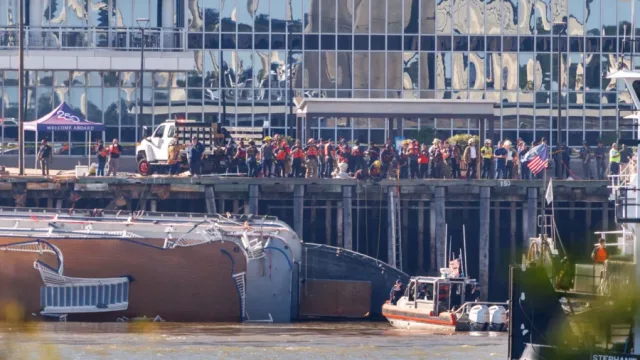
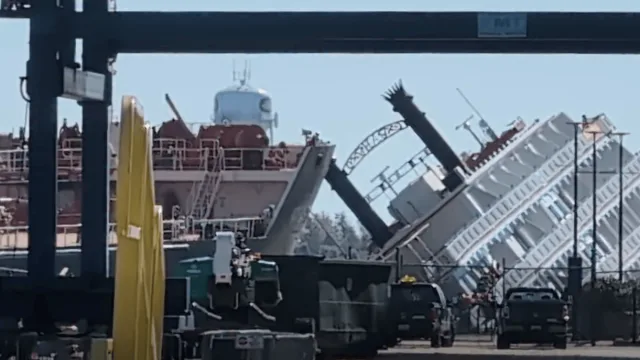
The tanker Atlantic Asphalt collided with the docked cruise ship American Heritage on the Mississippi River, causing it to capsize and resulting in thirty-two hospitalizations.
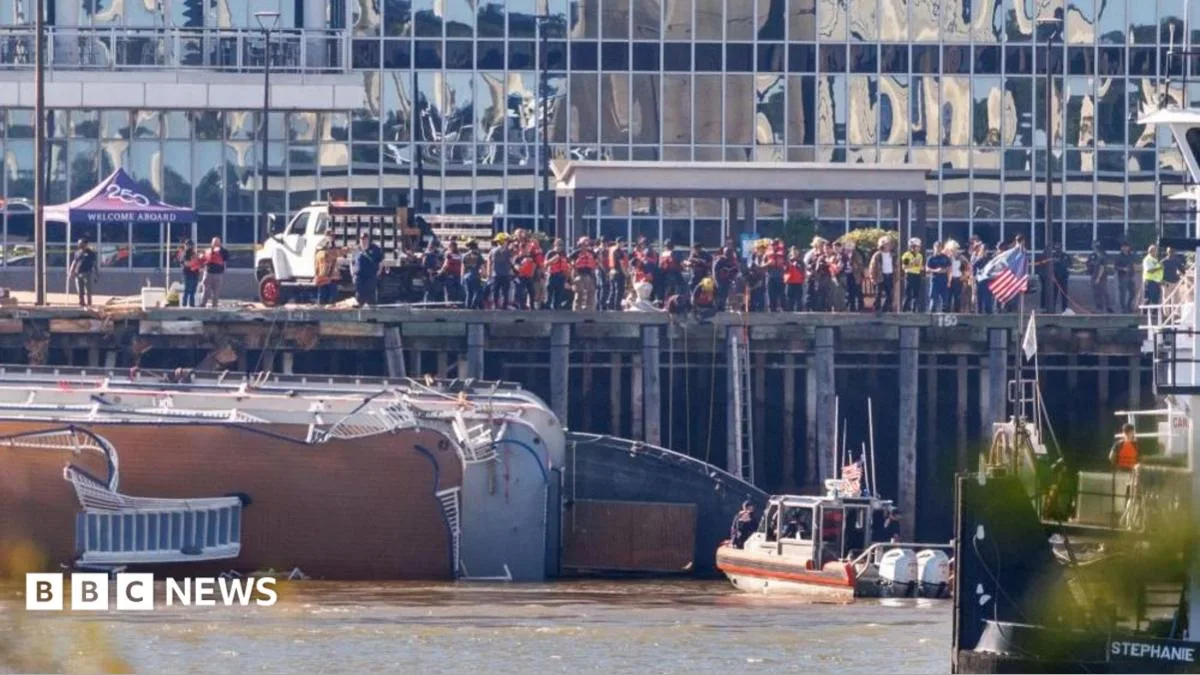
'Miracle on the Mississippi': Coast Guard Confirms Zero Fatalities After Tanker Strikes Cruise Ship
All passengers have been accounted for following a frantic rescue mission that left 32 people hospitalised, with the U.S. Coast Guard confirming no reported casualties. Approximately 129 passengers were aboard the riverboat American Heritage at the time of the incident, according to the Port of New Orleans. Louisiana Governor Jeff Landry praised the quick emergency response to the crash, dubbing it the miracle on the Mississippi. The Coast Guard's focus now shifts to safely reopening the river and coordinating salvage operations, with the river will at first likely be reopened to one-way traffic, with the Coast Guard's vessel monitoring service helping direct all the traffic coming through, says Burnham.
That positive news follows initial confusion over casualty counts during Friday's disaster, when a report of a fatality was later clarified by officials confirming zero deaths alongside the 32 hospitalizations. The incident highlights the vulnerability of major commercial arteries like the Mississippi River, the second-longest river in North America, which is a major commercial waterway carrying 669 million tons of cargo across the US every year, according to the US Army Corps of Engineers.
Loss of Steering and Tanker Background
The crash happened on Friday as the American Heritage was docked about two hours earlier to disembark passengers, concluding an eight-day cruise along the Mississippi River in Louisiana and Mississippi. The five-story paddlewheeler, operated by American Cruise Lines and built in 2015, had about 180 people aboard in total including crew, according to Mayor Helena Moreno. The vessel can accommodate up to 150 passengers and was sailing under a flag for the Marshall Islands.
The tanker, identified as the Atlantic Asphalt, slammed into the cruise ship at around 12:30pm local time while travelling upriver against the current at a relatively slow speed. U.S. Coast Guard Captain Melanie Burnham stated that the tanker was being handled by a river pilot at the time of the impact, adding that There seems to be some type of a loss of steering.
Martin Davies, a maritime law expert at Tulane University, said it was too early to establish the cause of the collision, but videos indicated a possible catastrophic system failure on the vessel and described the timing as super bad luck because the collision occurred as passengers were departing. Davies noted that for something like this to happen to an upbound ship indicates that something must have gone really badly wrong, adding that the ship had already made the difficult Algiers Point turn on the Mississippi River before the crash.
According to the International Maritime Organisation, the tanker is owned by Nave Shipping SA, a company registered in Monrovia, Liberia. MarineTraffic identifies it as a subsidiary of the China State Shipbuilding Corporation, a Chinese state-owned conglomerate. A report by the Stockholm International Peace Research Institute noted that the Chinese company overseeing the asphalt tanker in 2022 accounted for nearly a quarter of the global commercial shipbuilding market and was the largest military shipbuilder in the world at the time. The China State Shipbuilding Corporation did not respond to an emailed request for comment on Friday afternoon. During his first term, President Donald Trump listed the corporation among more than two dozen Chinese-owned companies he accused of exploiting United States investors to finance the development and modernisation of the Chinese military, issuing an executive order that placed limits on the types of transactions they could participate in on U.S. soil without freezing all economic transactions.
The Atlantic Asphalt specializes in transporting large quantities of asphalt and bitumen, a semi-solid substance used for road construction and roofing.
Emergency Response and Passenger Roll Call
Thirty-two people were hospitalized with non-critical injuries after the collision caused the vessel to take on water, list sharply, and eventually overturn as emergency workers tried to get everyone off the ship. Tugboat operators, nearby workers, police, and other rescuers rushed to the scene as dozens of people and at least two police officers were dragged from the 66-degree Fahrenheit (19-degree Celsius) river onto nearby ships.
Devon Flanagan, who was working nearby at the Port of New Orleans, saw workers rush down the dock and got out of his truck to find the American Heritage on its side and passengers in the water. It was just chaos,
Flanagan said. You had all types of ships, like other barges and other companies down there trying to help out, which also was a little convoluted because you had people still in the water.
Local, state, and federal leaders mobilized public statements commending the rescue operation. Mayor Helena Moreno credited first responders who literally jumped right in to help and confirmed at a news conference that We have zero people unaccounted for, which truly is a miracle on the Mississippi.
Uninjured passengers were brought to the Port of New Orleans Administration Building, Port NOLA said, where cruise officials conducted a roll call to make sure everyone was accounted for. Moreno noted that many passengers lost their identification documents, car keys, and phones, requiring basic arrangements including food, hotel rooms, transportation, and chargers to contact their families.
| Metric | Figure |
|---|---|
| Passengers on Board | About 129 |
| Total People on Board (Passengers and Crew) | About 180 |
| Maximum Guest Capacity | 150 |
| Hospitalized Individuals | 32 |
| River Water Temperature | 66 degrees Fahrenheit (19 degrees Celsius) |
Port of New Orleans and Safety Verification
- Monitor updates from the Port of New Orleans and American Cruise Lines regarding passenger reunification centers.
- Avoid the Crescent City Connection river zones while officials handle the aftermath of the collision.
The exact cause of the crash remains under investigation by the National Transportation Safety Board, alongside the US Coast Guard.
Updated 3 times since publication; last update 14 November 2026, 09:46.